Early Japanese Yakuza Films
Honor, Duty, and the Birth of a Genre
Before Japanese yakuza films became associated with silence, disillusionment, and moral collapse, they were built around order. Early yakuza cinema, especially from the 1950s through the 1960s, was structured by clear ethical frameworks: honor (ninkyō), obligation (giri), and emotional restraint.
These films did not present yakuza life as realistic crime reportage. Instead, they functioned as moral dramas, using the yakuza figure to explore how a person should act when loyalty, duty, and personal feeling come into conflict.
The historical background
The rise of early yakuza films coincided with Japan’s postwar reconstruction. In the 1950s and early 1960s, Japanese cinema frequently addressed questions of order, responsibility, and social belonging. Yakuza films emerged as one way to stage these questions in heightened form.
Scholars and film historians generally describe this period as the era of the ninkyō eiga (chivalry films). These works were not concerned with organized crime as it actually functioned, but with an idealized code of conduct attributed to yakuza figures in popular imagination.
The yakuza as a moral figure
In early yakuza films, the protagonist is not defined by ambition. He is defined by role.
Typically, the central character:
- belongs to an organization that demands loyalty,
- inherits obligations he did not choose,
- and faces situations where fulfilling one duty violates another.
What matters is not whether he survives or succeeds, but whether he acts correctly within the code he has accepted.
This structure distinguishes early Japanese yakuza films from many Western gangster narratives, which often emphasize individual rise, dominance, or rebellion. Here, individuality is secondary to responsibility.
Honor over victory
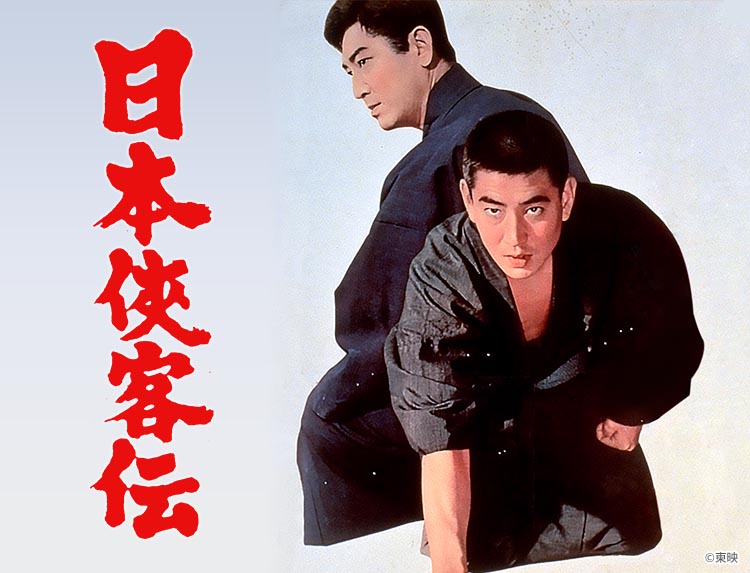
Used for commentary and critical discussion purposes.
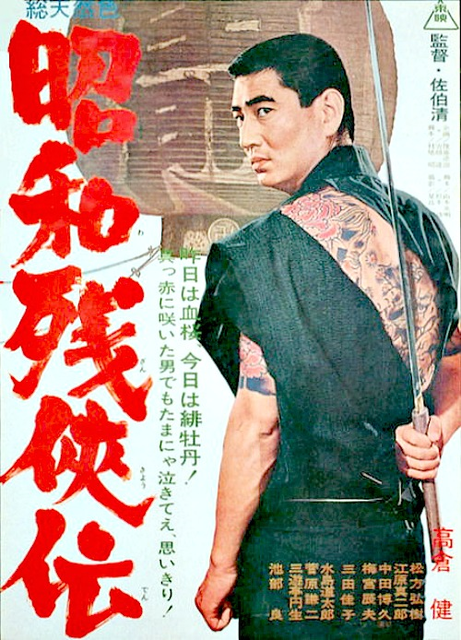
Used for commentary and critical discussion purposes.
One consistent feature of early yakuza cinema is that moral correctness does not guarantee a good outcome.
Films such as 日本侠客伝, 昭和残侠伝, establish a pattern in which the protagonist upholds honor even when doing so leads to isolation, injury, or death.
This recurring tragedy is not framed as failure. On the contrary, it confirms the value of the code itself. The films suggest that acting correctly matters more than being rewarded.
Obligation as structure
Early yakuza films repeatedly stage conflicts between:
- giri (social obligation),
- ninjō (personal feeling),
- and loyalty to hierarchical relationships.
These tensions were not unique to yakuza narratives; they appeared across Japanese literature and drama. Yakuza films intensified them by placing characters in rigid systems where compromise was impossible.
Importantly, these films do not ask whether the system is just. They ask whether a person can maintain integrity inside it.
Visual and narrative style
Stylistically, early yakuza films favor clarity and formality.
- Compositions are stable.
- Characters are positioned clearly within hierarchies.
- Dialogue is often explicit about duty and obligation.
- Silence exists, but it functions as restraint rather than emptiness.
This visual language reinforces the moral structure of the stories. The world is legible. Rules are known. Tragedy arises not from confusion, but from inevitability.
Repetition and ritual
Many early yakuza films repeat similar story patterns, character types, and emotional beats. Rather than diminishing their impact, this repetition serves a ritual function.
Audiences were not watching to be surprised by outcomes. They were watching to see how the protagonist would uphold the code under pressure.
This predictability is central to understanding why the genre worked. The films offered emotional stability during a period of rapid social change.
The limits of the code
By the late 1960s, however, the distance between cinematic codes and social reality became harder to ignore. Economic growth, urbanization, and shifting labor structures made the idealized yakuza figure feel increasingly abstract.
This growing tension did not immediately destroy the genre, but it weakened its moral certainty. When later filmmakers dismantled yakuza mythology in the 1970s, they were responding to a code that had already begun to feel out of place.
Why early yakuza films still matter
Early Japanese yakuza films are valuable not because they depict historical yakuza accurately, but because they reveal how Japanese cinema once imagined ethical order.
They present a world in which:
- rules exist,
- obligations are binding,
- and personal sacrifice is meaningful, even when it leads nowhere.
Understanding this foundation is essential for understanding why later yakuza films feel empty, silent, or bitter. Collapse only has meaning when there was once something solid to collapse from.
Leave a Reply