Category: Art

  • Utagawa Hiroshige (歌川広重, 1797–1858)

    Utagawa Hiroshige (歌川広重, 1797–1858) is often introduced through The Fifty-Three Stations of the Tōkaidō, and for good reason. The series became one of the most celebrated achievements of ukiyo-e landscape printmaking. Yet Hiroshige’s significance extends far beyond a single famous set of images.

    What makes Hiroshige distinctive is not simply that he depicted well-known places. It is the way he shaped atmosphere. In his prints, rain, mist, snow, evening light, and shifting seasonal conditions are not background details. They are central compositional forces. Familiar roads, bridges, and riverbanks become emotionally charged environments.

    To look at Hiroshige is not only to recognize a place.
    It is to enter a mode of seeing.


    Landscape as Experience, Not Just Topography
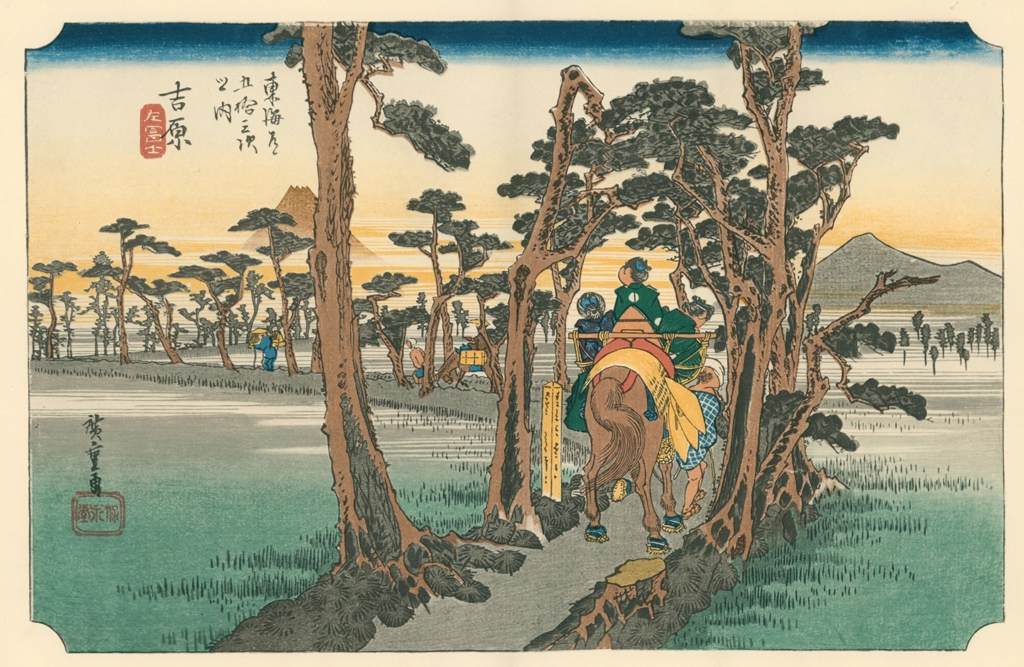
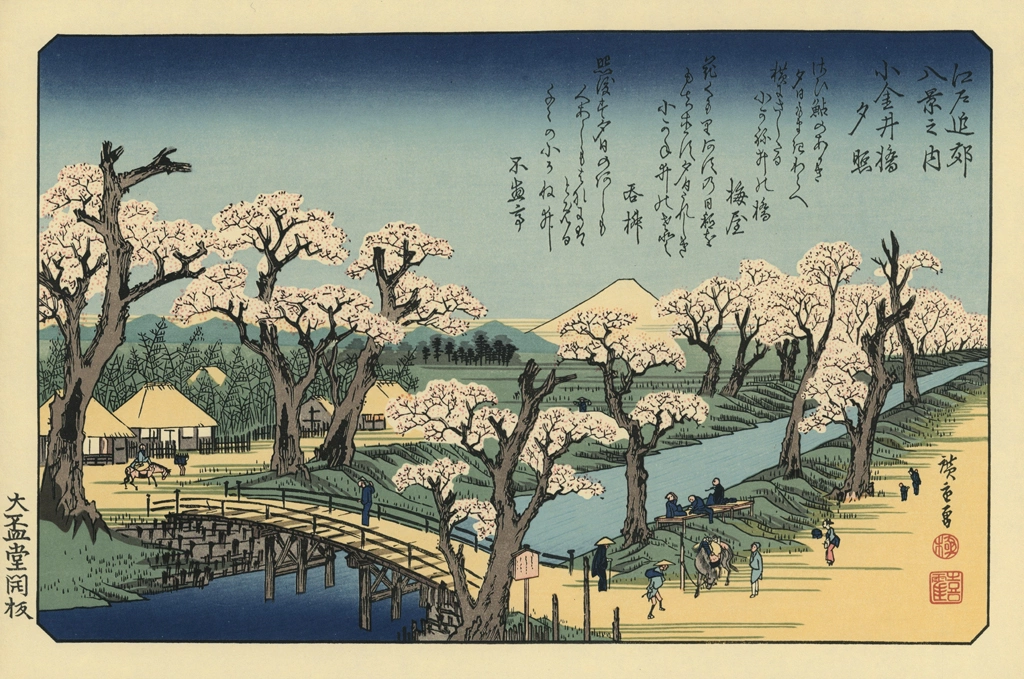
    Hiroshige’s prints are often tied to specific locations, stations, routes, and scenic sites. But they rarely function as neutral records. They are carefully structured visual experiences.

    Roads curve and recede. Bridges divide and connect space. Travelers gather, pass, and disappear. Weather alters visibility. Distance becomes something felt rather than merely measured. The viewer’s eye is guided through the image with remarkable control, moving between foreground detail and atmospheric depth.

    This is one reason Hiroshige’s prints remain compelling even when the physical landscapes themselves have changed. Their power lies not only in what they depict, but in how they organize movement, pause, and attention.

    Hiroshige does not simply document place.
    He stages the experience of passing through it.


    Weather as Structure, Not Decoration
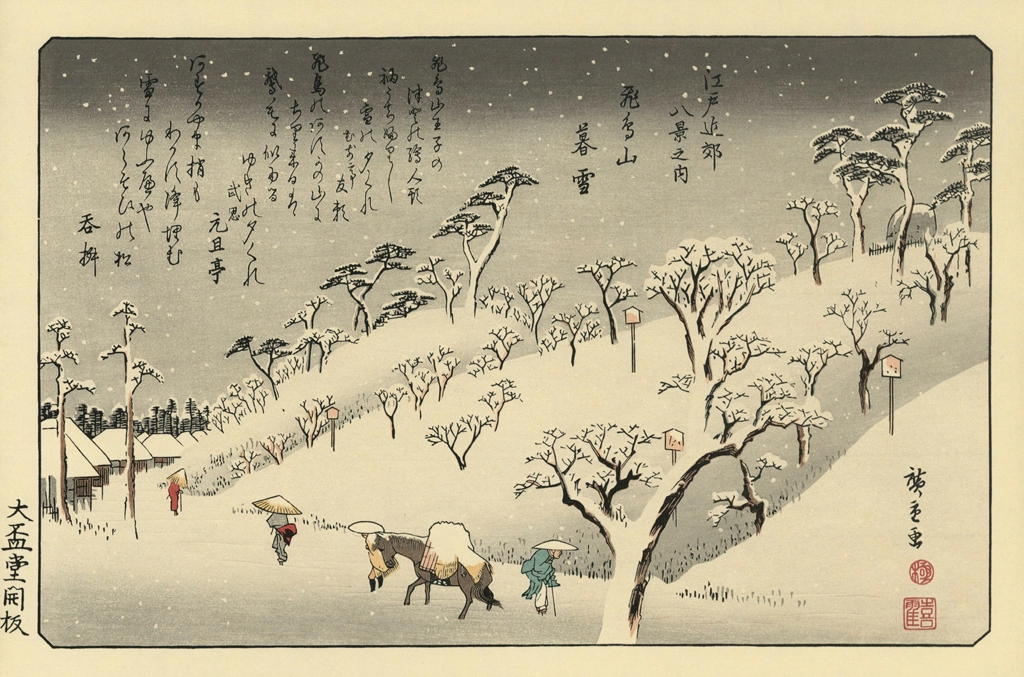
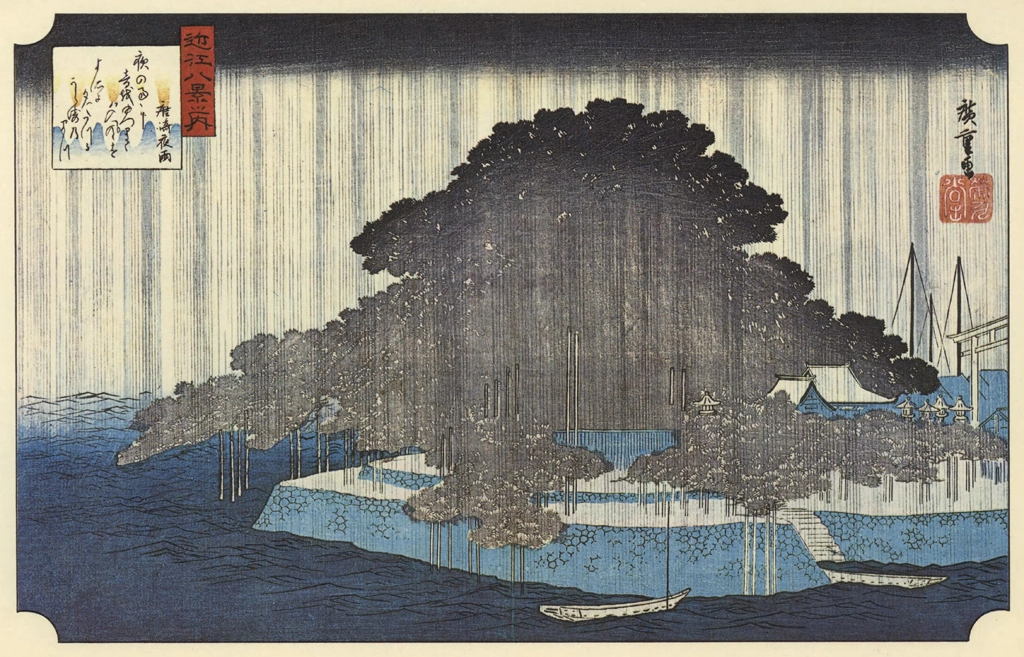
    Rain showers, snowfall, haze, wind, twilight, and moonlight are among Hiroshige’s most recognizable motifs. But in his work, weather is not an ornamental effect added to a scene. It is part of the scene’s architecture.

    A slant of rain can energize the entire composition. Mist can flatten distance and dissolve boundaries. Snow can quiet a city and make even crowded places feel hushed. Evening light can soften edges and shift the emotional register of an ordinary route.

    Through these effects, Hiroshige transforms landscape into a medium of feeling without relying on overt drama. A print does not need a climactic event to hold attention. Weather itself becomes the event.

    This quality helps explain why Hiroshige still feels so fresh. His work rewards patient looking. It trains the viewer to notice subtle environmental changes rather than only spectacle.


    Travel Culture and the Expanding Imagination of Place
    Hiroshige worked during a period when roads, travel culture, guidebooks, and famous-place imagery were increasingly important to popular life. Routes such as the Tōkaidō were not only practical infrastructure. They were also cultural and imaginative pathways.

    Prints of stations and scenic points circulated widely. For some viewers, they functioned as souvenirs or visual memories. For others, they offered a form of imagined movement through places they had never visited. A series of prints could create a journey on paper.

    Hiroshige participated in this visual circulation, but he also shaped it. His landscapes did not merely reflect an interest in travel. They helped define what travel felt like visually: the rhythm of departure and arrival, the change of weather across distance, the sense of moving through time as well as space.

    In that sense, Hiroshige’s work belongs to both geography and media culture.


    The Poetics of Everyday Landscape
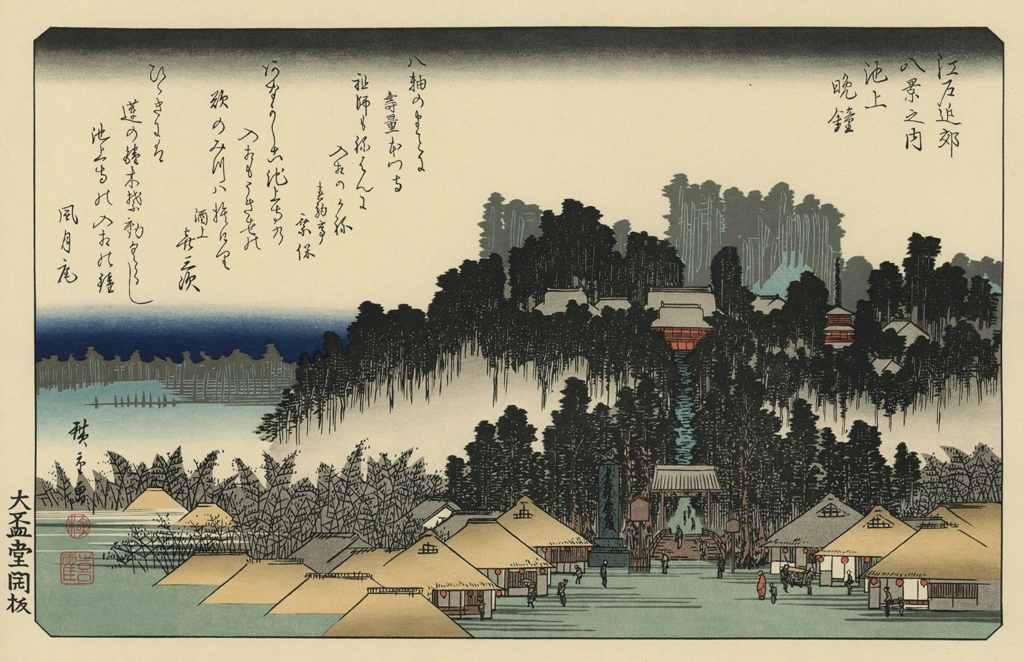
    One of Hiroshige’s most remarkable achievements is his ability to make ordinary movement through space feel aesthetically meaningful. Roadsides, riverbanks, ferries, bridges, and town edges become worthy of sustained attention.

    This does not mean his landscapes are empty or detached from human life. Human figures are often present, and their small scale is important. They appear as travelers, workers, boatmen, pedestrians, or passing groups. Rather than becoming individualized protagonists, they function as markers of rhythm and relation, helping us sense distance, weather, and terrain.

    The result is a kind of pictorial poetry in which place, season, and motion interweave.

    Hiroshige’s landscapes are not simply views.
    They are temporal scenes, shaped by weather, passage, and the feeling of “in-between.”


    Why Hiroshige Still Feels Contemporary

    Hiroshige’s landscapes continue to resonate because they do not depend on a single heroic event or dramatic climax. Their strength often lies in transitions: a sudden rain shower, fading light, snow settling on a bridge, travelers crossing a road, the pause between departure and arrival.

    In a visual culture saturated with speed and noise, Hiroshige still offers something rare: disciplined attention to atmosphere and a way of seeing place as lived time rather than static scenery.

    That is why Hiroshige remains more than a historical master of landscape prints.
    He remains an artist of perception.
  • Utagawa Kunisada (歌川国貞, 1786–1865)

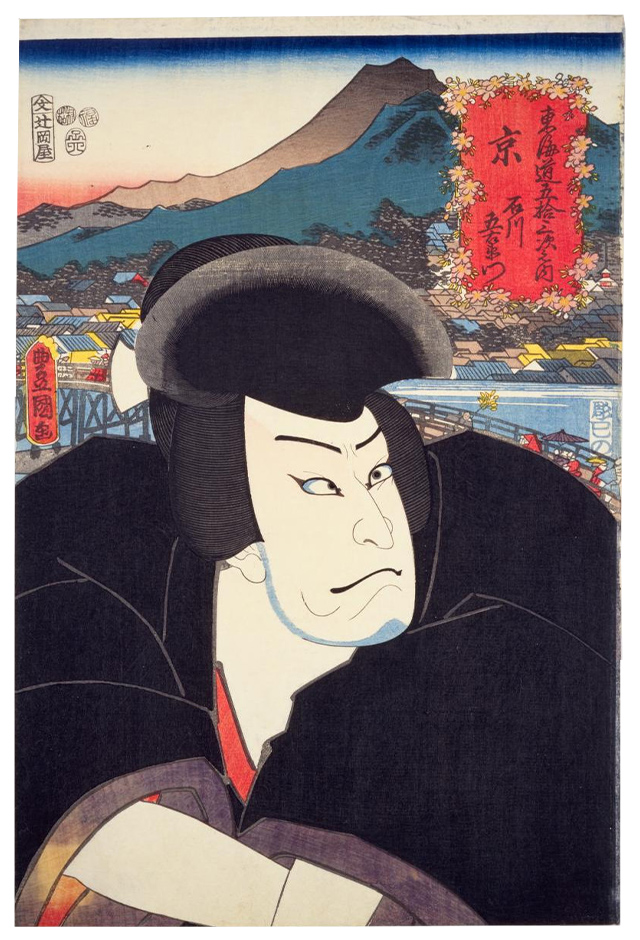
    Utagawa Kunisada (歌川国貞, 1786–1865) was one of the most commercially successful and visually influential woodblock print artists of late Edo Japan. Yet in many modern introductions to ukiyo-e, he is often mentioned less frequently than Hokusai or Hiroshige. This can create a misleading impression. Kunisada was not a secondary figure. He was one of the central image-makers of urban Edo.

    To understand Kunisada is to understand something essential about the city itself: its theaters, celebrities, fashions, and the visual pleasures of everyday life. His prints did not simply record popular culture. They participated in it, shaped it, and helped define how people saw contemporary style.

    If some ukiyo-e artists are remembered for landscape or heroic drama, Kunisada stands out as a master of people, especially people as they appeared in the circulation of fame, performance, and urban taste.


    The Artist of the Edo Public

    Kunisada worked in a highly competitive print market driven by publishers, audience demand, and fast-moving trends. This was not a slow or isolated art world. It was a bustling visual economy, and Kunisada excelled within it.

    His success was not accidental. He had an exceptional ability to produce images that were immediately appealing while remaining formally skilled and compositionally refined. In this sense, Kunisada’s popularity should not be treated as a sign of lesser artistic value. It is better understood as evidence of his precision within mass culture.

    He knew how to make an image circulate.

    That ability matters. It means that Kunisada’s work gives us direct access not only to artistic technique, but also to how visual desire worked in Edo period society.


    Actor Prints and the Performance of Identity

    Kunisada is especially celebrated for his yakusha-e (actor prints), and this is one of the best places to see his strengths clearly.

    Kabuki actors in Edo were not simply performers on a stage. They were public figures, fashion influences, and objects of fan devotion. Actor prints operated somewhere between portraiture, publicity, and performance memory. Kunisada understood this perfectly.

    In his actor prints, costume, pose, facial expression, and gesture carry layered meaning. These are not neutral likenesses. They are images of role-making. An actor is shown not only as an individual person, but as a theatrical presence shaped by character, reputation, and audience expectation.

    This gives Kunisada’s actor prints a fascinating double structure:
    they capture a person, but they also capture a public persona.

    Seen from today, they can feel surprisingly modern. They belong to a media culture in which audiences consumed personality through images, much like celebrity photography, posters, or fan publications in later eras.


    Beauties, Fashion, and the Language of the Contemporary

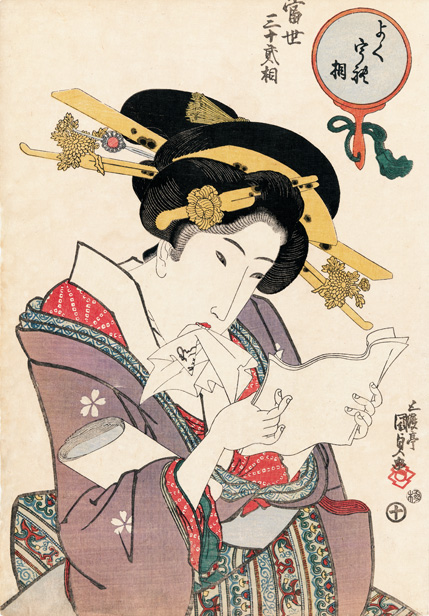
    Kunisada’s bijin-ga (pictures of beauties) reveal another major dimension of his work. Here too, he is not simply producing idealized figures. He is constructing images of social type, mood, and contemporary style.

    Clothing patterns, hair arrangements, accessories, posture, and facial expression all contribute to meaning. These images often preserve the textures of urban life: what looked stylish, what signaled elegance, what seemed current, what circulated as “taste.”

    This is one reason Kunisada remains so valuable for readers of Japanese visual culture. His prints allow us to study not only aesthetics in a narrow sense, but also the coded visual language of everyday modernity within Edo.

    Series such as Thirty-Two Physiognomies are especially compelling in this regard. They suggest that expression itself could be categorized, stylized, and enjoyed as a social and visual type. Kunisada’s interest is not only in beauty, but in how feeling, attitude, and personality become legible on the face.

    In other words, he is an artist of surfaces, but surfaces here are never shallow. They are where social life becomes visible.


    Popularity and Artistic Value

    Kunisada’s huge output has sometimes led to uneven evaluation, especially when viewed through modern habits that privilege singular masterpieces over prolific production. But this framework can obscure what made him important in the first place.

    Kunisada’s achievement lies partly in his ability to sustain quality and invention within a commercial system. He was working in a field shaped by deadlines, publishers, and changing tastes, and he still produced prints of remarkable elegance, clarity, and cultural specificity.

    Rather than asking whether he was “too popular,” a better question may be:
    what kinds of visual intelligence are required to become the artist of a city’s taste?

    Kunisada offers one answer. He demonstrates that artistic significance can emerge not only through radical rupture, but also through deep fluency in the desires and rhythms of contemporary life.


    Why Kunisada Still Matters

    Kunisada’s prints remain powerful because they preserve more than images of actors or beautiful women. They preserve ways of looking. They show how a city recognized fame, admired style, and turned everyday appearance into visual culture.

    If Hiroshige often gives us weather and distance, and Kuniyoshi gives us pressure and dramatic force, Kunisada gives us something equally essential: the social surface of Edo, where identity, fashion, and performance become visible.

    That surface is exactly where much of modern life still happens.
    For that reason, Kunisada does not feel distant. He feels legible.


    Landscape as Experience, Not Just Description

    Hiroshige’s prints are frequently tied to recognizable sites, roads, bridges, stations, and scenic points. But they are rarely just topographical records. They are structured visual experiences.

    Roads curve and recede. Bridges divide and connect space. Travelers gather and disperse. Weather changes what can be seen. Distance becomes part of the composition. The eye is guided through movement, pause, interruption, and release.

    This is one reason Hiroshige’s work remains compelling even when the actual places have changed dramatically. The enduring power of his prints lies not only in location, but in the emotional logic of how a landscape is inhabited, crossed, or remembered.

    He presents place as lived rhythm.


    Weather as Structure

    Rain showers, snowfall, haze, twilight, moonlight, and shifting skies are among Hiroshige’s most recognizable motifs. But in his work, weather is not decorative atmosphere added after the fact. It is structural.

    A diagonal rain pattern can animate an entire image. Mist can flatten depth and soften boundaries. Snow can quiet urban space and transform familiar architecture into a field of stillness. Evening light can slow movement and alter the emotional register of a route.

    Through these effects, Hiroshige turns landscape into a medium of feeling without requiring overt narrative drama. The scene does not need a major event. The weather itself becomes the event.

    This is one reason his prints continue to feel so contemporary. They train attention toward subtle changes in environment rather than only toward spectacle.


    Travel, Media, and the Expanding Imagination of Place

    Hiroshige worked in an era when travel routes, guidebooks, and place imagery were becoming increasingly important to popular culture. Roads such as the Tōkaidō were not only physical infrastructure. They were also visual and imaginative systems.

    Prints of famous places circulated widely. For some viewers, they functioned as souvenirs or visual memories. For others, they offered a form of imagined travel. Even those who did not journey extensively could move through stations, roads, and scenic points through sequences of prints.

    Hiroshige participated in this circulation, but he also shaped it. His prints did not merely reflect an interest in travel. They helped define what travel looked and felt like in visual terms.

    In that sense, his art belongs equally to geography and media culture.


    The Poetics of the Everyday Landscape

    One of Hiroshige’s quiet achievements is his ability to treat ordinary movement through space as aesthetically meaningful. Bridges, riverbanks, roadsides, ferries, and seasonal transitions become worthy of sustained attention.

    This does not mean his landscapes are empty or purely contemplative. Human figures are often present, and their scale matters. They are travelers, workers, passersby, and small markers of life moving through weather and terrain. Yet they are rarely turned into individualized protagonists. Instead, they help establish rhythm, measure, and relational scale.

    The result is a kind of pictorial poetry in which place, season, and motion interweave.

    Hiroshige does not simply show where things are.
    He shows how it feels to move through them.


    Why Hiroshige Still Feels Contemporary

    Hiroshige’s landscapes continue to resonate because they do not depend on a single heroic event or dramatic climax. Their force often lies in transitions: changing weather, passing travelers, fading light, and in-between spaces.

    In a visual culture saturated with speed and noise, Hiroshige’s prints still offer something rare: disciplined attention to atmosphere and a way of seeing place as lived time rather than static scenery.

    That is why Hiroshige remains more than a historical master of famous views.
    He remains an artist of perception.
  • Utagawa Kuniyoshi Exhibition: The Power of a Brilliant Eccentric

    Reading an Edo “Visionary” Through His Art and Human Connections

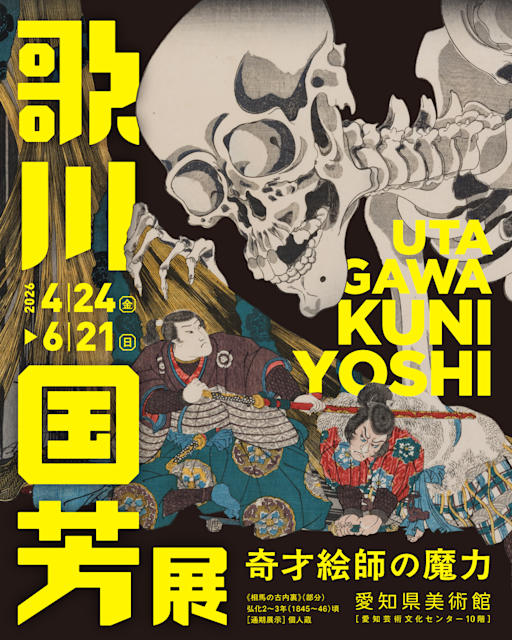
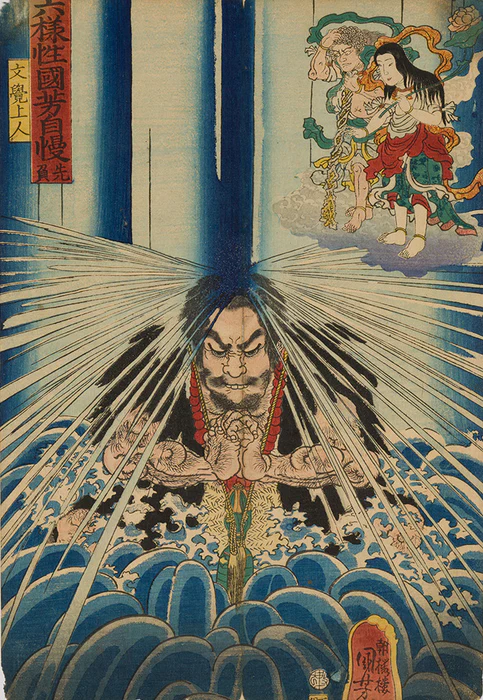
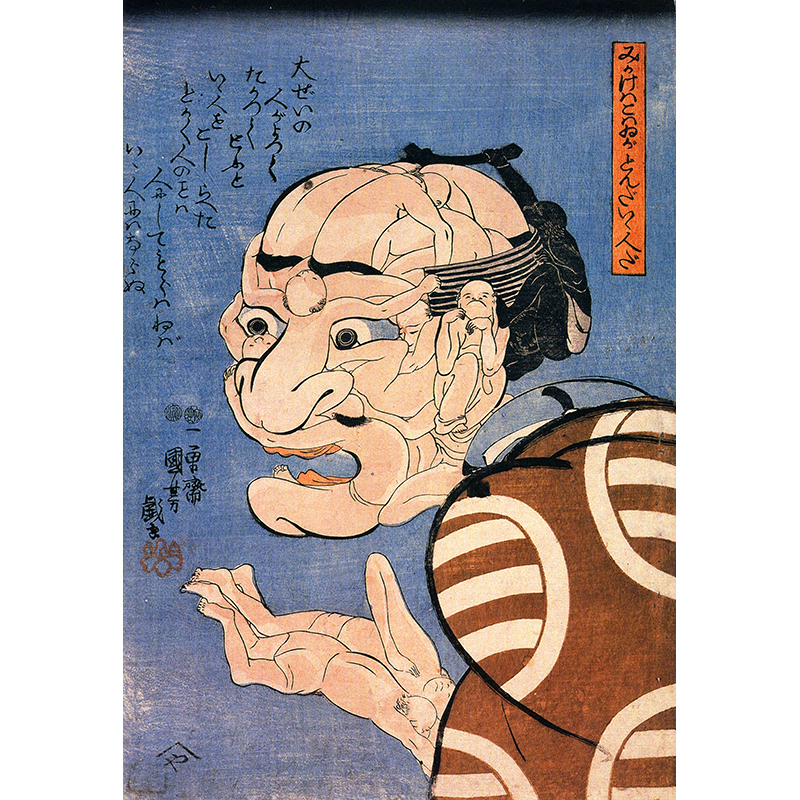
    Opening on April 24, 2026 at the Aichi Prefectural Museum of Art, Utagawa Kuniyoshi Exhibition: The Power of a Brilliant Eccentric is a large-scale exhibition featuring approximately 400 works, offering a rare chance to experience the full range of Kuniyoshi’s art.

    The exhibition is divided into Part I and Part II, with a rotation of works during the run, which means the experience changes depending on when you visit.

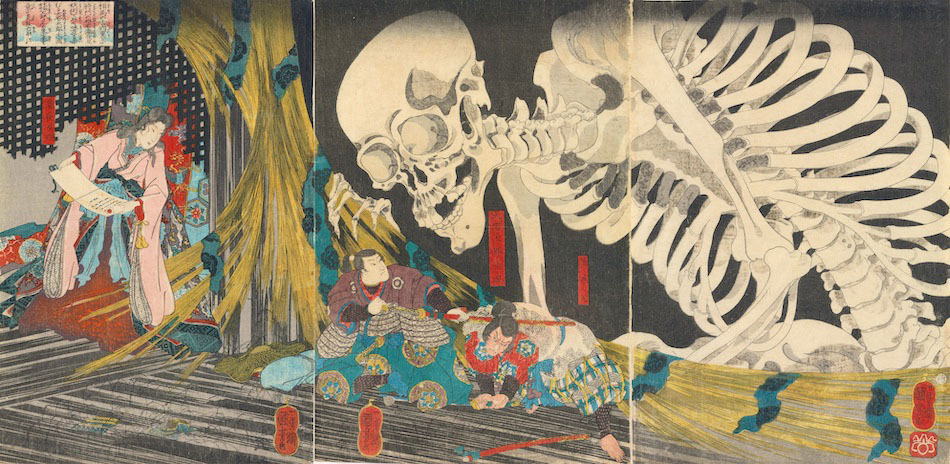
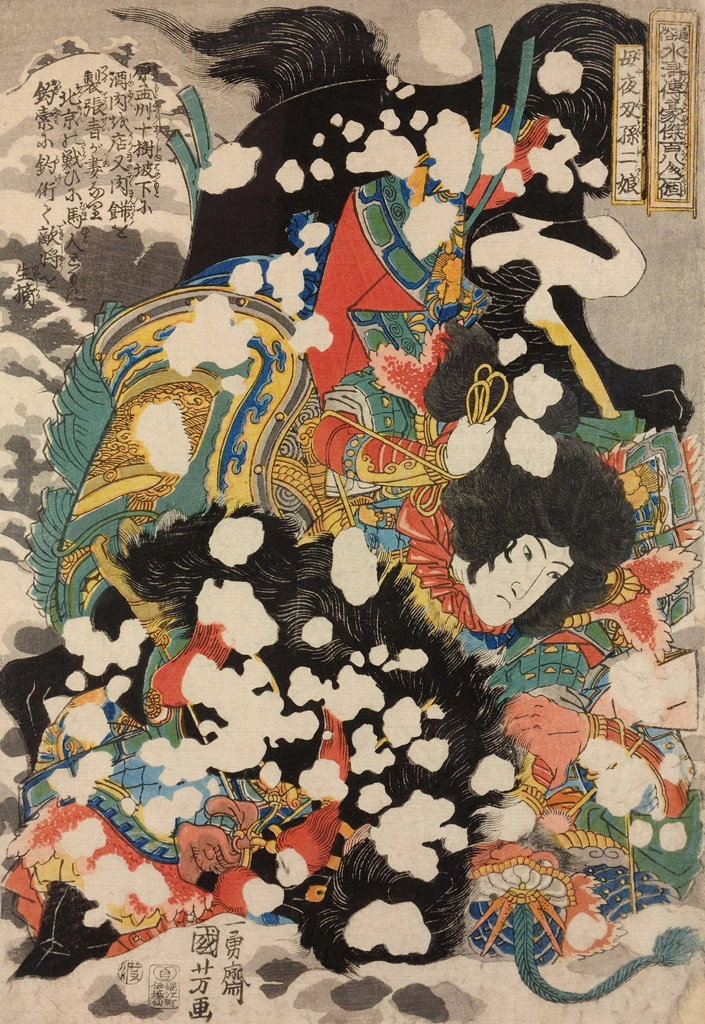
    For many people, Kuniyoshi is immediately associated with striking and unforgettable images, especially works like Takiyasha the Witch and the Skeleton Specter (Sōma no Furudairi), with its famous giant skeleton. But his real fascination goes far beyond visual shock.

    What makes Kuniyoshi truly compelling is this:
    he could move freely between warrior prints, comic and satirical images, beauties, landscapes, children’s pictures, and actor prints, and still surprise viewers each time from a completely different angle. That flexibility is at the heart of his genius.


    Why Kuniyoshi Still Feels Modern

    1) He Combined Power and Playfulness

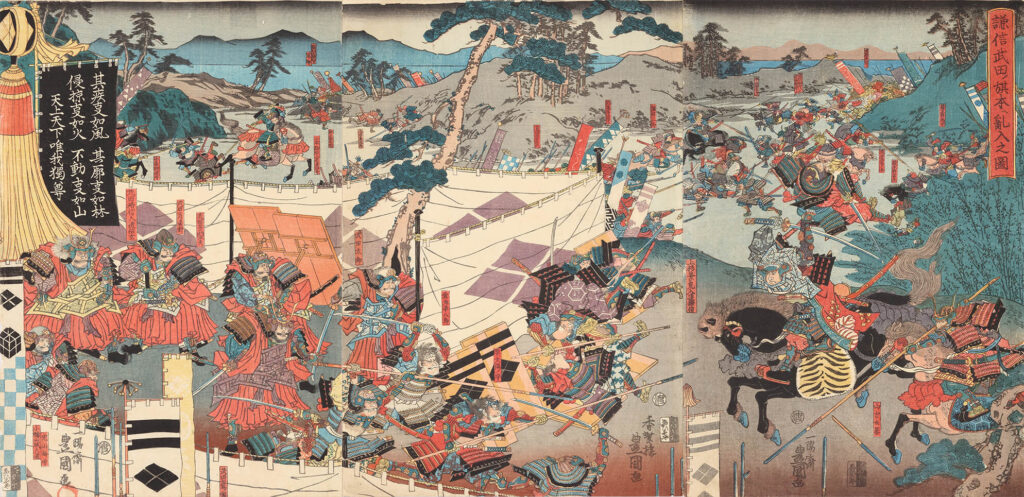
    Kuniyoshi is often remembered as a master of dramatic warrior prints, and rightly so. His heroes are full of motion, tension, and theatrical energy.

    But he was also a brilliant humorist.

    His playful images, including his well-known cat-themed works, reveal an artist who could be witty without losing technical precision. Even when he is joking, the composition is sharp, the linework is controlled, and the design is highly intentional.

    That balance, serious craftsmanship with playful imagination, is one reason Kuniyoshi still feels fresh today. He does not simply “illustrate” a subject. He performs with it.


    2) He Built Images Like a Filmmaker

    Kuniyoshi’s warrior prints and supernatural scenes are not memorable only because they are loud or strange. They work because he knew how to compress narrative into a single frame.

    A Kuniyoshi print often feels like a scene pulled from the middle of a film:
    something has just happened, and something else is about to happen.

    His compositions create momentum. Facial expressions, gestures, diagonals, and layered action all work together to imply story, emotion, and tension beyond the frame.

    That is why a work like Sōma no Furudairi remains iconic. The giant skeleton is visually overwhelming, yes, but the image endures because of its dramatic staging and narrative force.


    3) He Was Not Just a “Genius,” He Was Persistent

    Kuniyoshi’s career was not a smooth ascent from the beginning. He experienced difficult years before achieving major success.

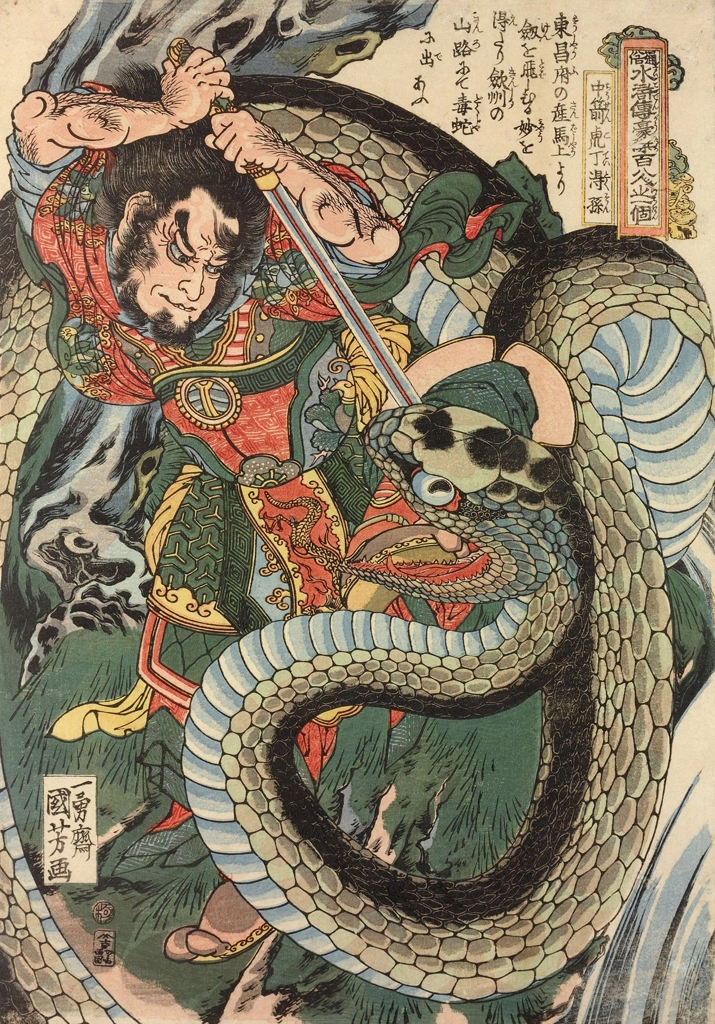
    His breakthrough came in his thirties, especially with the Suikoden hero prints (Tsūzoku Suikoden Gōketsu Hyakuhachinin no Hitori series), which helped establish his reputation.

    This matters because Kuniyoshi’s appeal is not only the sparkle of talent. It is also the resilience of an artist who kept experimenting, refining, and pushing until his style reached the public in a powerful way.

    In other words, he was both visionary and craftsman.


    Kuniyoshi’s Human Network

    Growing, Competing, and Expanding Within the Utagawa School

    To understand Kuniyoshi properly, it helps to place him within the larger world of the Utagawa school, the dominant ukiyo-e network of the late Edo period.

    Kuniyoshi was not working in isolation. He belonged to a huge artistic and commercial ecosystem shaped by publishers, audiences, market trends, and fellow artists.

    Among his contemporaries, Utagawa Kunisada, Utagawa Kuniyoshi, and Utagawa Hiroshige are often grouped as three major figures of the later Utagawa tradition, each excelling in different areas:

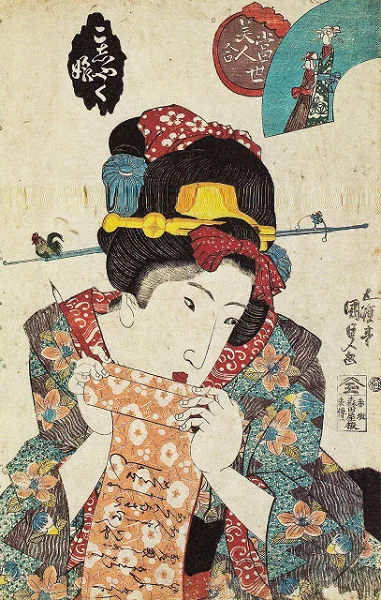
    • Kunisada: actor prints and bijin-ga (pictures of beauties), with enormous popular appeal
    • Kuniyoshi: warrior prints, satire, imaginative and unconventional compositions
    • Hiroshige: landscape prints that transformed familiar places into lyrical visual poetry

    Rather than imagining them as a friendly club, it may be more accurate to think of them as top players in the same league. They worked in the same era, within overlapping systems, and their successes likely sharpened each other.

    Seen this way, Kuniyoshi becomes even more interesting. His originality did not emerge outside the mainstream. It emerged inside a highly competitive visual culture.

    Related reading:Utagawa Kunisada (歌川国貞, 1786–1865)

    Related reading:Utagawa Hiroshige (歌川広重, 1797–1858)


    3 Things to Keep in Mind Before Visiting the Exhibition

    1) Look Beyond the Warrior Prints

    Kuniyoshi’s warrior images are essential, but do not stop there. His comic works, landscapes, and genre images reveal how inventive he really was across formats and audiences.

    2) Look for “Time” Inside the Image

    Ask yourself: what just happened, and what is about to happen?
    Kuniyoshi’s best works often feel like suspended drama.

    3) Compare Him to His Contemporaries

    Thinking about Kuniyoshi alongside artists like Kunisada and Hiroshige helps his individuality come into sharper focus.

  • Katsushika Hokusai (葛飾北斎,1760-1849)

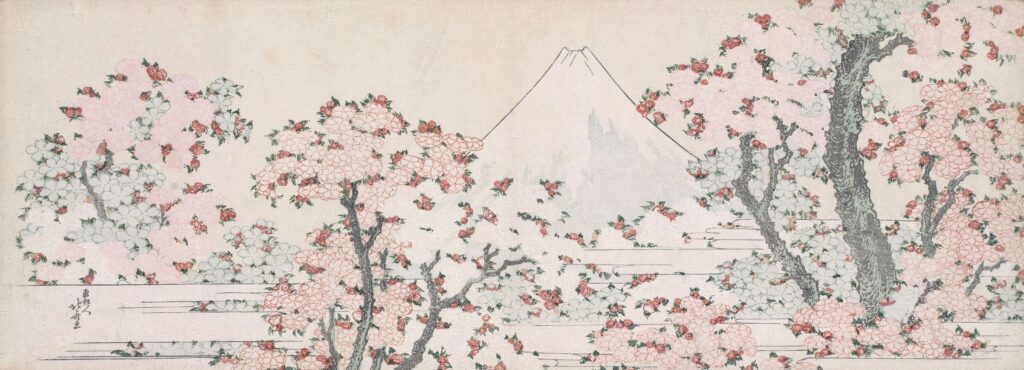
    Katsushika Hokusai (葛飾北斎), Cherry Blossoms and Mount Fuji (桜花に富士図), early 19th century.

    This work is a color woodblock print (nishiki-e), depicting Mount Fuji seen through blooming cherry blossoms. The composition places the viewer slightly below the branches, allowing the mass of blossoms to frame Fuji rather than simply decorate it. The mountain appears stable and distant, while the blossoms dominate the foreground, emphasizing seasonality and impermanence against a symbol of endurance.

    Katsushika Hokusai (葛飾北斎, 1760–1849) was one of the most influential ukiyo-e artists of the Edo period. Active across several decades, he worked in painting, illustration, and woodblock printmaking, producing images that ranged from popular culture to landscapes and instructional manuals. Born in Edo (present-day Tokyo), Hokusai trained in multiple artistic traditions and changed his artist name many times, reflecting both personal reinvention and shifting artistic ambitions.

    Cherry blossoms and Mount Fuji are both deeply familiar motifs in Japanese visual culture, but they function differently. Fuji often represents permanence, stability, and cosmic order. Cherry blossoms, by contrast, are tied to seasonality, transience, and collective experience. In this print, Hokusai does not simply combine two famous symbols; he arranges them so that neither overwhelms the other.

    The blossoms partially obscure Fuji, reminding the viewer that even the most iconic landmark is always encountered through a particular moment, season, and viewpoint. Fuji remains unchanged, but human experience does not. The image quietly emphasizes how perception is shaped by time and circumstance.

    Hokusai’s approach to landscape was innovative for its time. Rather than presenting nature as a distant, idealized backdrop, he often placed the viewer inside the scene, using strong framing elements and unusual angles. This compositional strategy appears here as well: the branches are not decorative borders, but structural components that organize the space and guide the eye.

    As with many ukiyo-e prints, this work was produced for a broad audience rather than elite patrons. Prints like this circulated widely, allowing people to engage with celebrated landscapes without traveling. In that sense, the image participates in a shared visual culture rather than a private or devotional one.

    Because Japanese visual traditions historically blend everyday life, seasonal awareness, and spiritual sensibility, it is not always productive to classify works like this strictly as religious or symbolic. Instead, they can be approached as visual records of how nature, time, and place were commonly perceived and appreciated.

    In Cherry Blossoms and Mount Fuji, Hokusai presents a familiar scene without overt narrative or instruction. The print does not explain itself. It offers a moment of balance: between permanence and change, distance and intimacy, the monumental and the fleeting.

    That restraint is part of its enduring strength.

  • Why Japanese Visuals Love Empty Space

    Ma, Silence, and Meaning

    Japanese visuals often feel too quiet.

    Not because nothing is happening, but because something is being deliberately left behind.

    In Japanese art, design, or film, what many people call “negative space” is hardly ever accidental. In many cases, it plays a structural role. It creates rhythm, produces tension, and invites the audience not into simple reception of information, but into participation.

    To understand this, it helps to move away from the idea that meaning must always be stated, filled, or explained.


    Not emptiness, but structure

    In many visual traditions, clarity is achieved by adding information: more detail, more explanation, more emphasis. Japanese visual culture often takes the opposite approach. Meaning is strengthened by removal.

    This doesn’t mean minimalism for its own sake. Empty space in Japanese visuals is not decorative silence. It functions as a frame, a pause, or a breath. The image is not incomplete; it is intentionally unfinished in a way that allows meaning to emerge.

    This logic appears across media, from traditional prints to modern graphic design, photography, and film.


    What is ma ?

    The concept most often associated with this approach is ma (間).

    Ma is frequently translated as “space” or “interval,” but those translations are incomplete. Ma refers less to physical emptiness and more to timing, distance, and the relationship between elements. It is the pause between sounds, the gap between movements, the moment before something happens.

    Importantly, ma is not passive. It is active potential.

    In visual terms, ma is the area that allows forms to breathe. It is where the viewer’s attention settles before moving on. Rather than telling the viewer what to feel, ma gives them time to feel it themselves.


    Why absence carries meaning

    Japanese visuals often assume that the viewer is capable of interpretation. This assumption changes how images are constructed.

    Instead of guiding attention with constant signals, the image creates a situation and steps back. Absence becomes meaningful because it invites the viewer to fill the gap with their own perception, memory, or emotion.

    This can feel unfamiliar to viewers from cultures where visual communication prioritizes clarity, emphasis, and explanation. In those contexts, empty space may feel like something is missing. In Japanese visuals, that “missing” space is often the point.


    From ukiyo-e to modern design

    This logic is visible in ukiyo-e prints, where large areas of sky, water, or blank background are not filler but compositional anchors. These spaces stabilize the image while directing attention toward specific forms.

    Rather than centering everything, many prints use asymmetry and openness. The subject may be pushed to the edge of the frame, balanced by a wide, quiet area. The result feels dynamic, not sparse.

    Modern Japanese graphic design inherits this logic. White space is treated not as background but as an active element. Text and images are allowed to exist without being enclosed or crowded. The page feels intentional, not empty.


    Photography and film: silence as composition

    In photography, this approach often appears as restraint. The frame includes only what is necessary, and sometimes what is not included matters more than what is shown.

    A subject may be small within the frame. A scene may feel paused. Rather than directing emotion through dramatic emphasis, the image allows atmosphere to accumulate slowly.

    Japanese cinema often extends this principle into time. Long shots, quiet scenes, and moments where nothing “important” happens are not wasted space. They create emotional context. They allow the audience to notice details, textures, and rhythms that would disappear in faster editing.

    Silence, both visual and auditory, becomes part of the composition.


    Why this can feel unsettling—or calming

    For some viewers, this approach feels calming. For others, it feels unsettling. Both reactions are understandable.

    When meaning is not spelled out, the viewer is asked to stay present. There is no shortcut. The image does not rush to reassure or explain itself.

    This difference reflects a deeper cultural contrast. In many contexts, information density is equated with kindness or clarity. In Japanese visual culture, restraint can be a form of trust. The creator trusts the viewer to look, wait, and interpret.

    Empty space becomes a shared responsibility between image and observer.


    Empty space isn’t empty

    What looks like absence in Japanese visuals is often a carefully shaped presence. It holds timing, directs attention, and gives meaning room to form.

    Rather than filling every corner, these visuals leave space for breath, pause, and thought. The result is not silence for silence’s sake, but a different way of speaking—one that says less, so that more can be felt.

  • Uehara Konen (上原古年, 1877–1940)

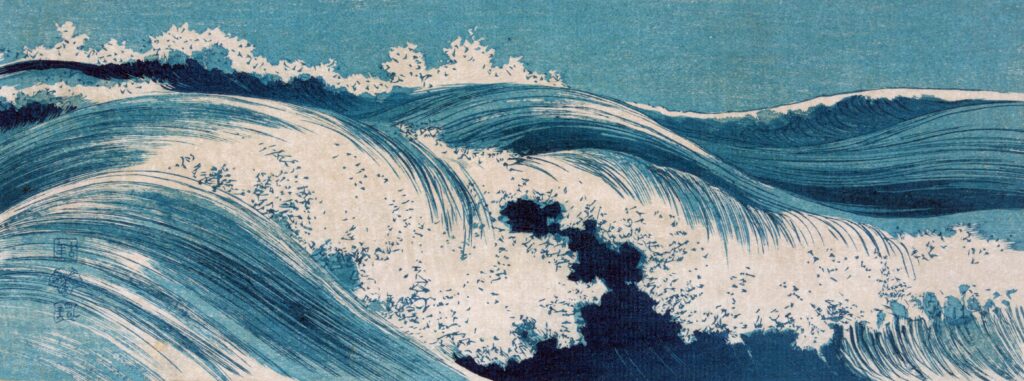
    Uehara Konen (上原古年), Ocean Waves (波濤図), c. 1910 (early 20th century).
    This work is a color woodblock print (mokuhanga), depicting dynamic ocean waves with a bold, graphic composition.

    Uehara Konen (上原古年, 1878–1940) was a Japanese painter and print artist active from the late Meiji period into the early Shōwa era. Born in Tokyo (often noted as the Asakusa area), he trained under Kajita Hanko and later Matsumoto Fūkō, and built a career centered on atmospheric landscape painting, regularly exhibiting and receiving recognition in official art circles.

    Alongside painting, Konen is also known for color woodblock prints, producing quiet, lyrical scenes that bridge traditional themes with modern print culture. His works are often appreciated for their calm composition, subtle mood, and careful attention to natural light and place.

    Because Japanese visual culture historically blends local custom with Buddhist and Shinto influences, Western categories like “religion” or “fine art” do not always map neatly onto how these images were made or understood. A useful way to approach Konen’s work is to focus on composition, atmosphere, and the modern re-framing of classical motifs through printmaking.