Ritual, Mountain Faith, and How It Quietly Continues at Home
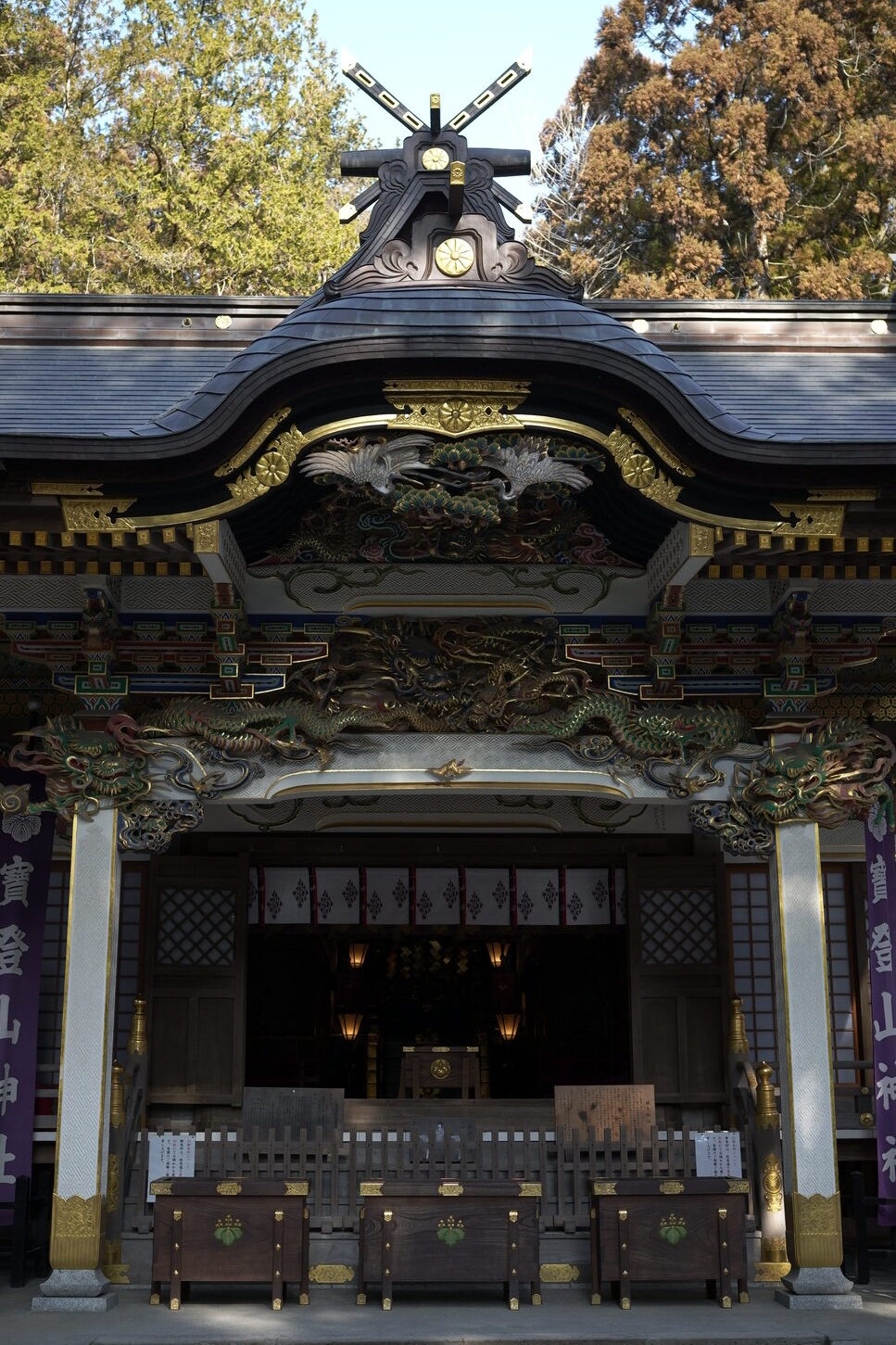
At the beginning of the year, I traveled to Chichibu–Nagatoro to take part in New Year prayers and yakuyoke—rites intended to address misfortune and reset one’s position for the year ahead.
My destination was Mount Hodo and Hodosan Shrine, a place where mountain belief, local ritual, and everyday life overlap without clear boundaries.
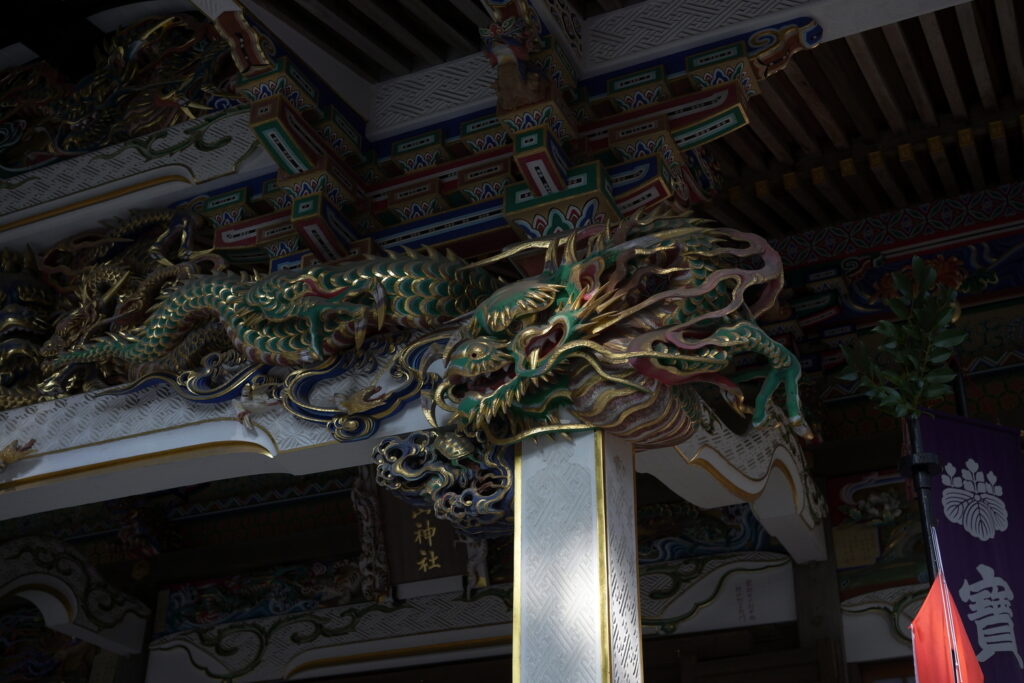
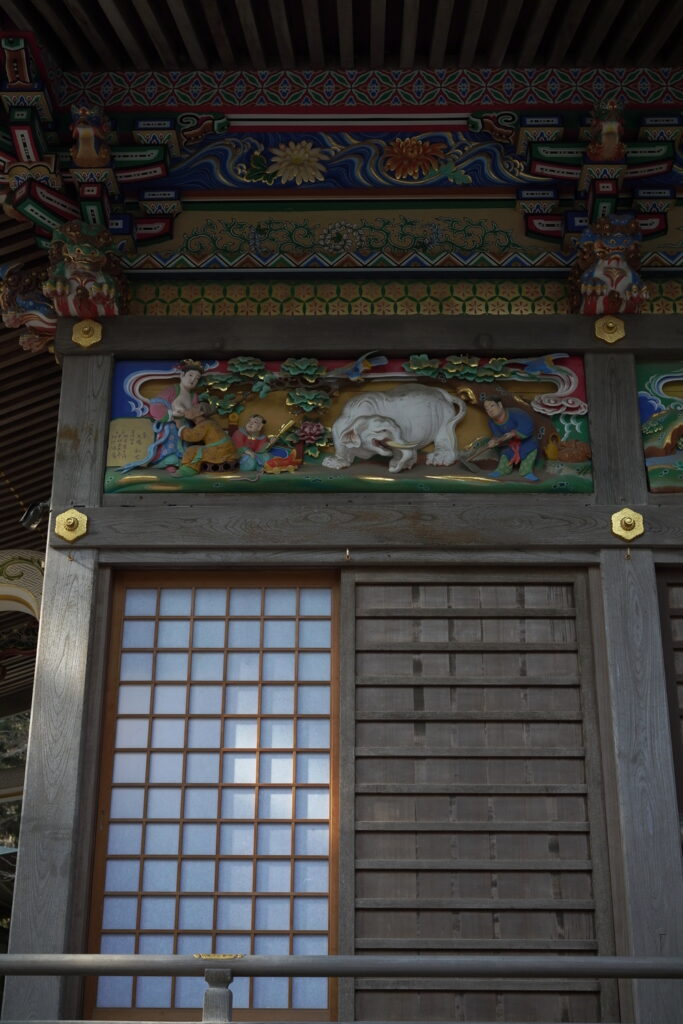
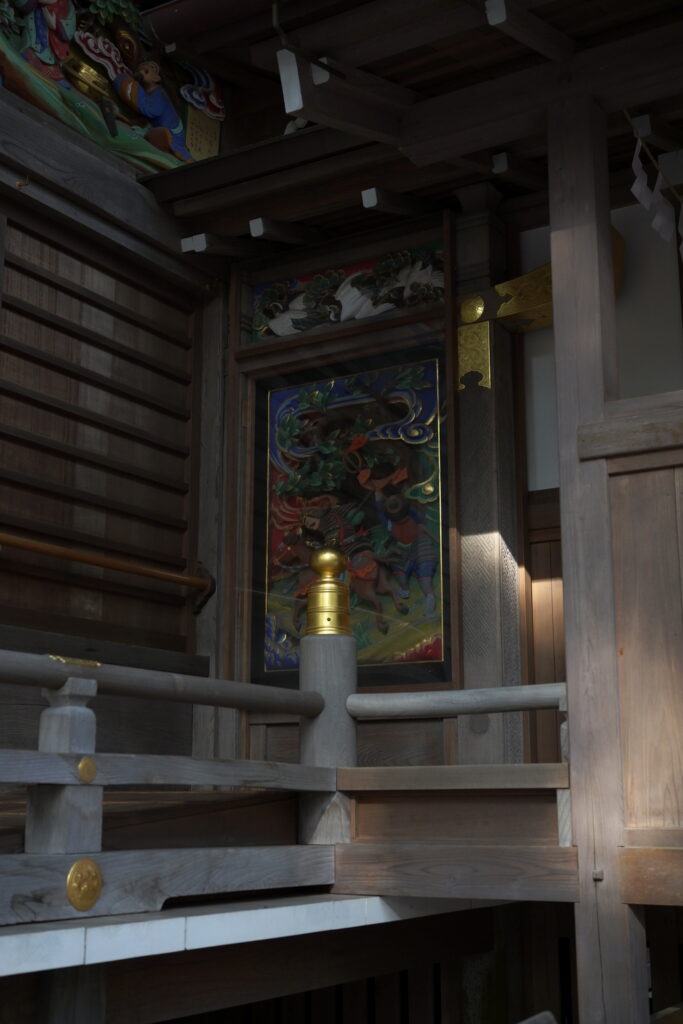
The visit included prayers at the main shrine (honden), a walk to the inner shrine (okumiya), time at the Inari shrine within the grounds, a climb up the mountain itself, and—later—small, ordinary moments that extended the experience beyond the shrine.
The main shrine: a ritual remembered by sound
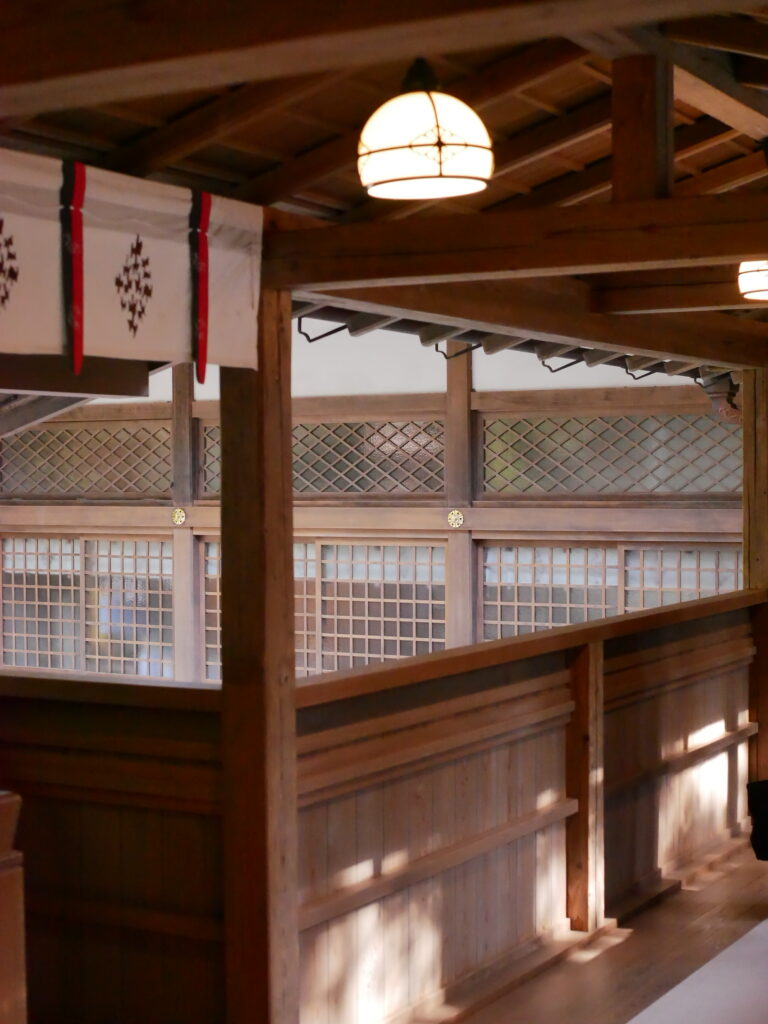
The yakuyoke ceremony took place at the main shrine.
What remains most vivid is the sound.
The deep rhythm of taiko drums filled the space, resonating through the shrine grounds and into the body. The ceremony was neither quiet nor theatrical. It was forceful, repetitive, and immersive, structured by rhythm rather than explanation.
This ritual carried two meanings at once.
One was yakuyoke, the removal or deflection of misfortune.
The other was kenzoku haishaku, the borrowing of divine attendants.
Rather than asking for protection in an abstract way, the ritual felt like aligning oneself with forces that already exist around the mountain. The drums did not seem to summon something new. They seemed to mark a moment when something was allowed to move closer.
There was no dramatic promise of safety.
Instead, it felt like being placed inside a cycle, where danger and protection, wandering and guidance, are always in motion.
You were not being sealed off from the world.
You were being given companions for moving through it.
Okumiya and the mountain as sacred space
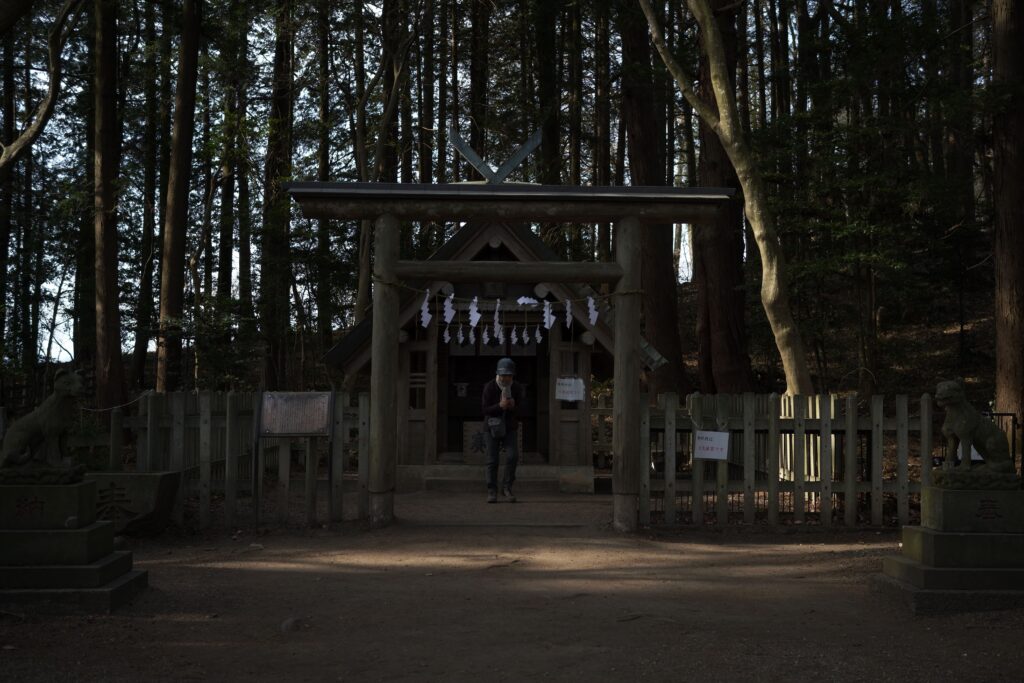
From the main grounds, I continued toward the okumiya, the inner shrine located deeper on Mount Hodo. As one moves away from the entrance, the space gradually shifts. Architecture gives way to terrain.
Here, worship does not feel confined to a building. The mountain itself becomes part of the shrine. This reflects a broader pattern in Japanese mountain belief, where sacred space expands outward rather than remaining fixed.
The act of walking matters. Movement through the landscape turns ritual into something physical, preventing it from remaining abstract.
Wolves and the boundaries of the mountain
The mountains around Chichibu and Nagatoro were once part of one of Japan’s strongest regions of wolf belief.
Here, wolves were not primarily seen as dangerous animals.
They were understood as guardians of the border between the human world and the mountains.
Wolves lived where villages ended and wilderness began.
They moved through paths that humans feared to walk at night.
They appeared in stories not as pets or monsters, but as beings that could sense what did not belong.
Over time, this practical reality became spiritual language.
Wolves came to be treated as divine attendants of mountain deities. They protected fields from wild animals, but also protected people from unseen harm. In a place where misfortune was thought to cross into the human world from outside, wolves became figures that stood watch at that crossing.
This helps explain why yakuyoke rituals feel especially at home in mountain shrines.
Misfortune is not imagined as something abstract.
It is something that enters.
Mountains are where it comes from.
Wolves are what kept it out.
Even though the Japanese wolf is now extinct, the shape of that belief remains. Shrines like Mitsumine and the traditions surrounding them preserve the idea that something still guards the boundary, even if it no longer has a physical body.
Standing on Mount Hodo, it is easy to feel this quietly.
The forest is close.
The village is close.
And between them, something watches.
Inari within the shrine grounds
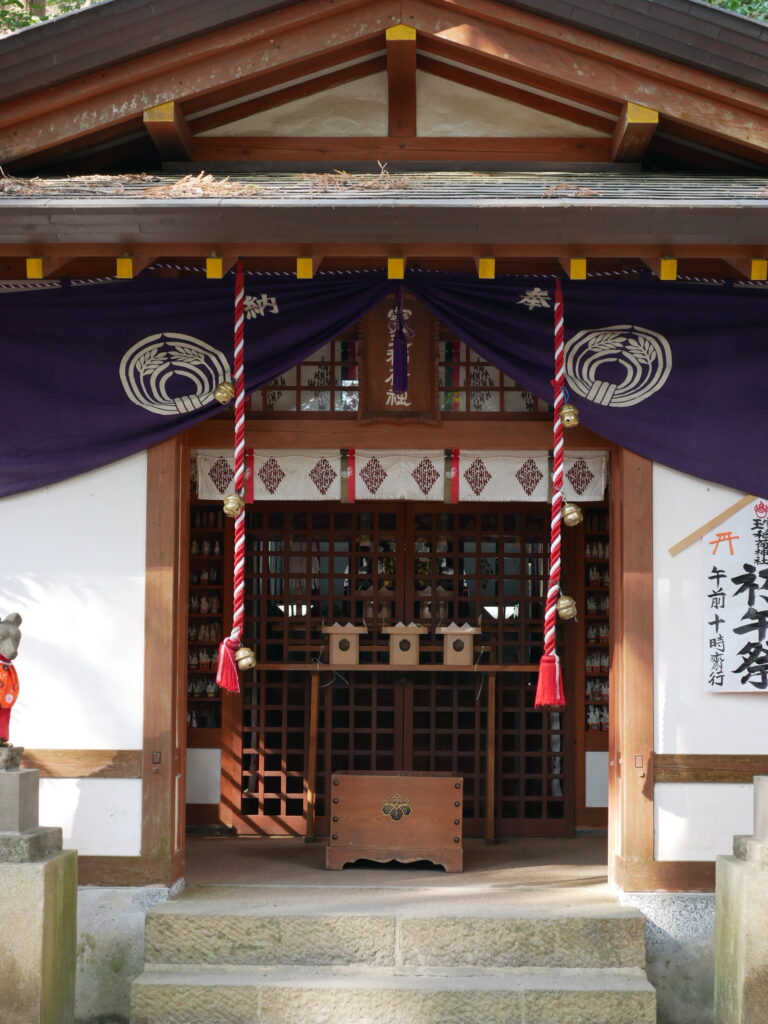
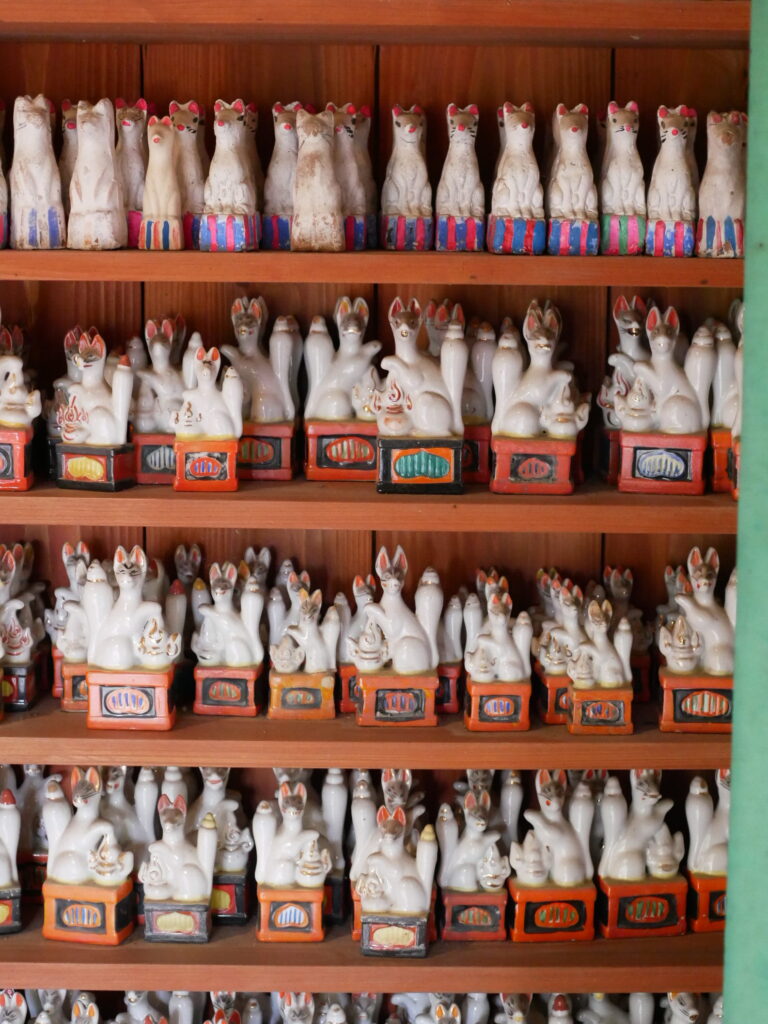
Within the precincts of Hodosan Shrine, there is also an Inari shrine.
Inari worship is closely tied to agriculture, food, and livelihood—concerns that are practical, recurring, and ordinary. While mountain deities often relate to boundaries and protection, Inari addresses continuity: harvests, work, and daily sustenance.
The coexistence of these beliefs is not contradictory. Japanese religious spaces tend to accumulate layers rather than separate them. Protection, provision, and boundary-keeping exist side by side without the need for doctrinal clarity.
Food after the mountain, and belief continuing quietly
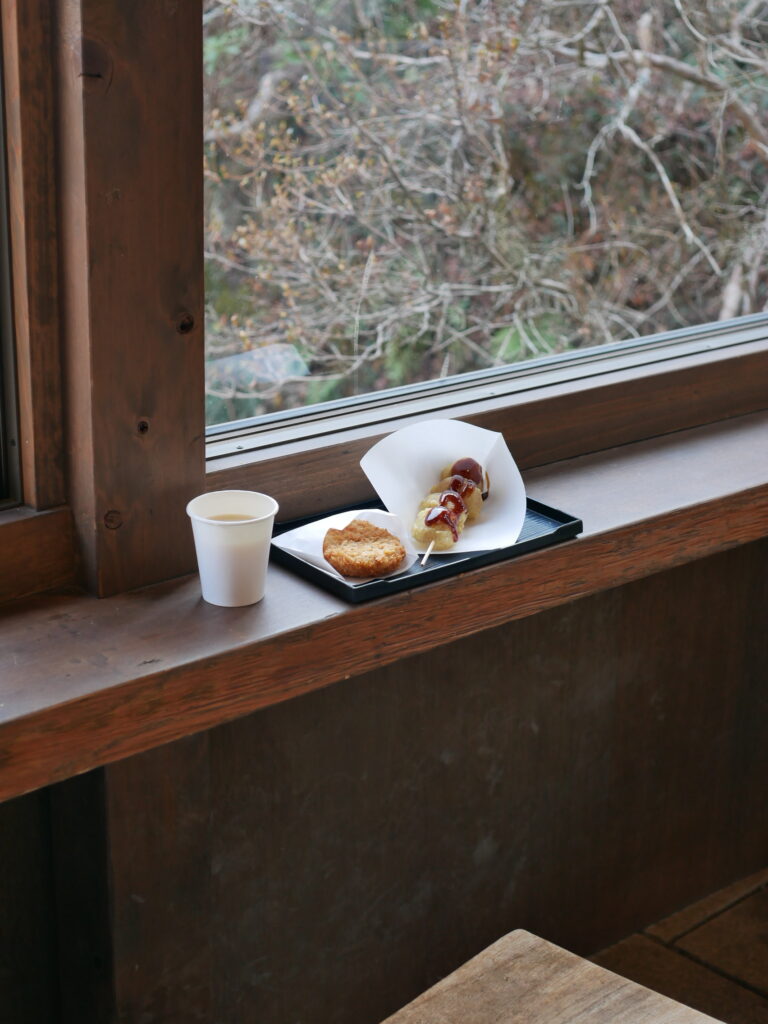
After descending, I ate miso potato, a simple local snack common in the Chichibu area. Fried potatoes with miso sauce are not refined food, but after walking, they feel exactly right.
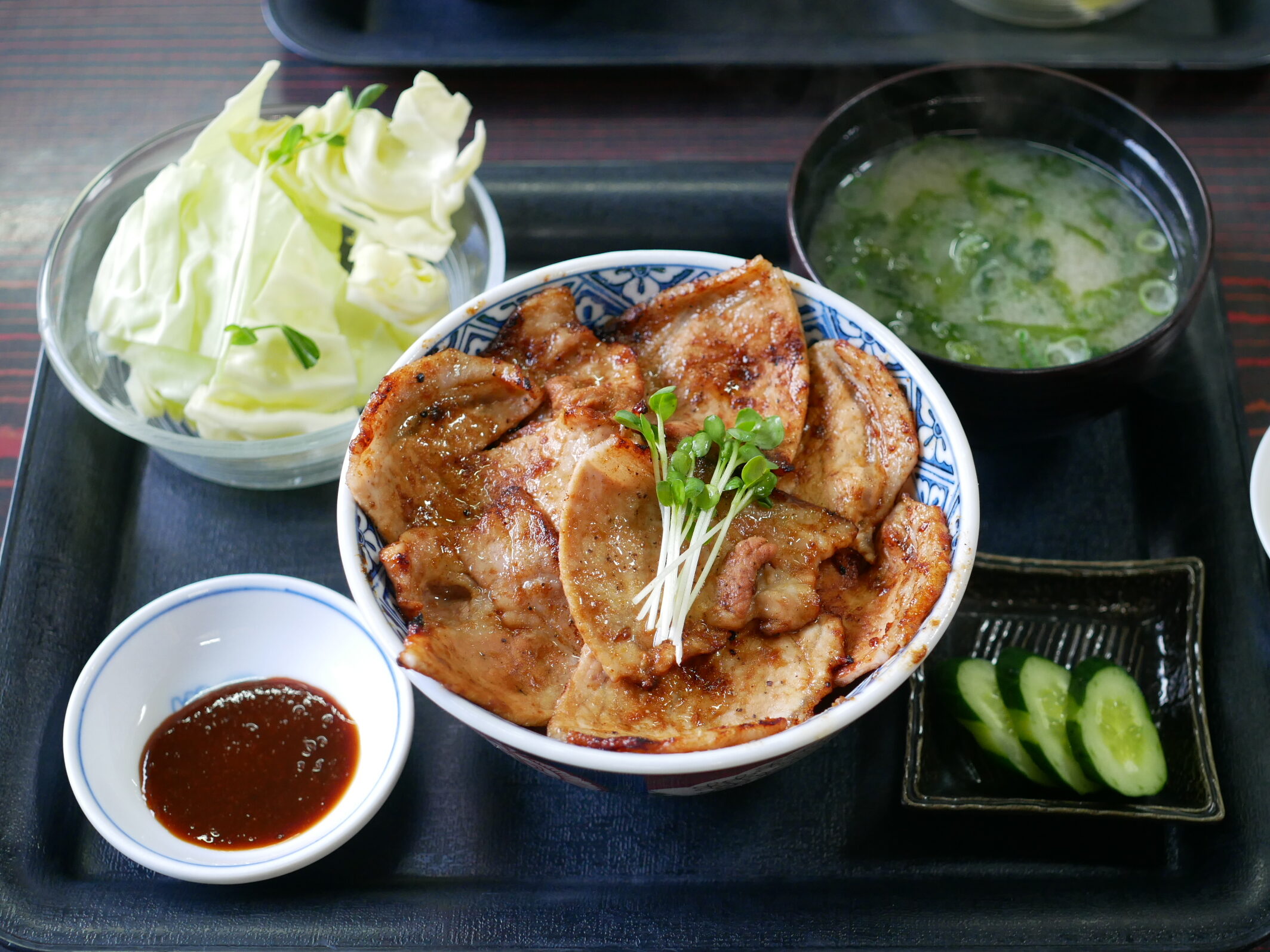
Later, in Nagatoro, I had lunch at a local yakiniku restaurant and ordered a pork bowl (butadon). Inside the restaurant, there was a kamidana. It enshrined attendants associated with Mitsumine Shrine, another site deeply connected to wolf belief in the region.
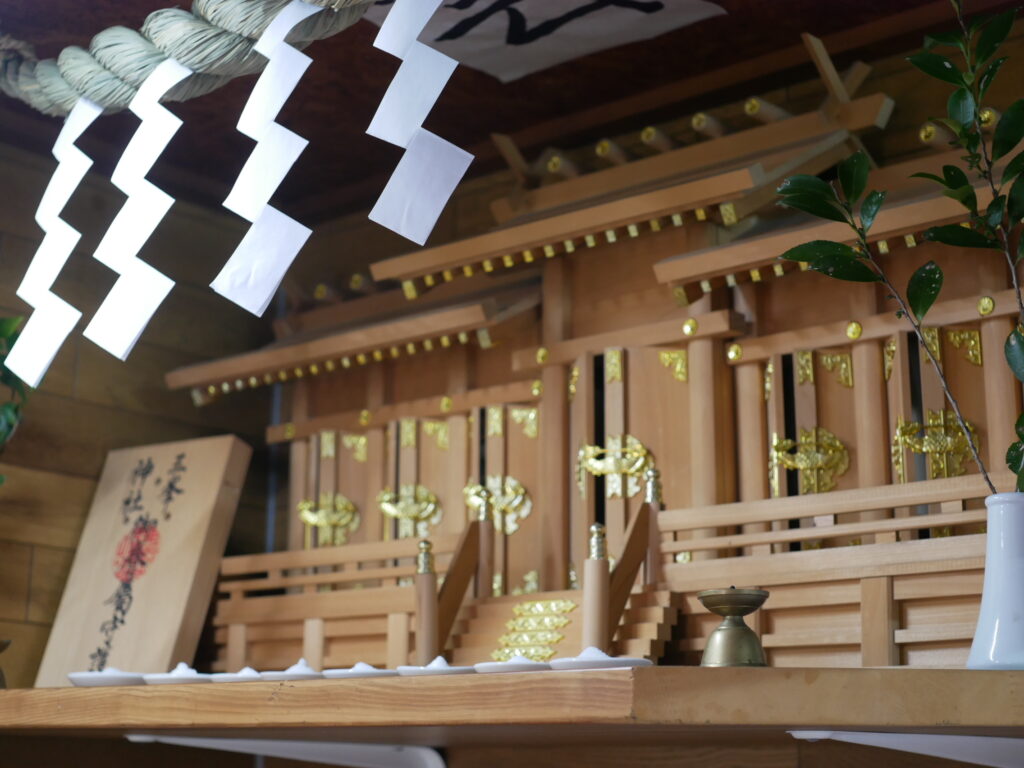
That detail stayed with me.
Even after leaving the mountain and shrine grounds, the presence of belief continued quietly into an everyday space. Not emphasized, not explained—simply there, above the counter.
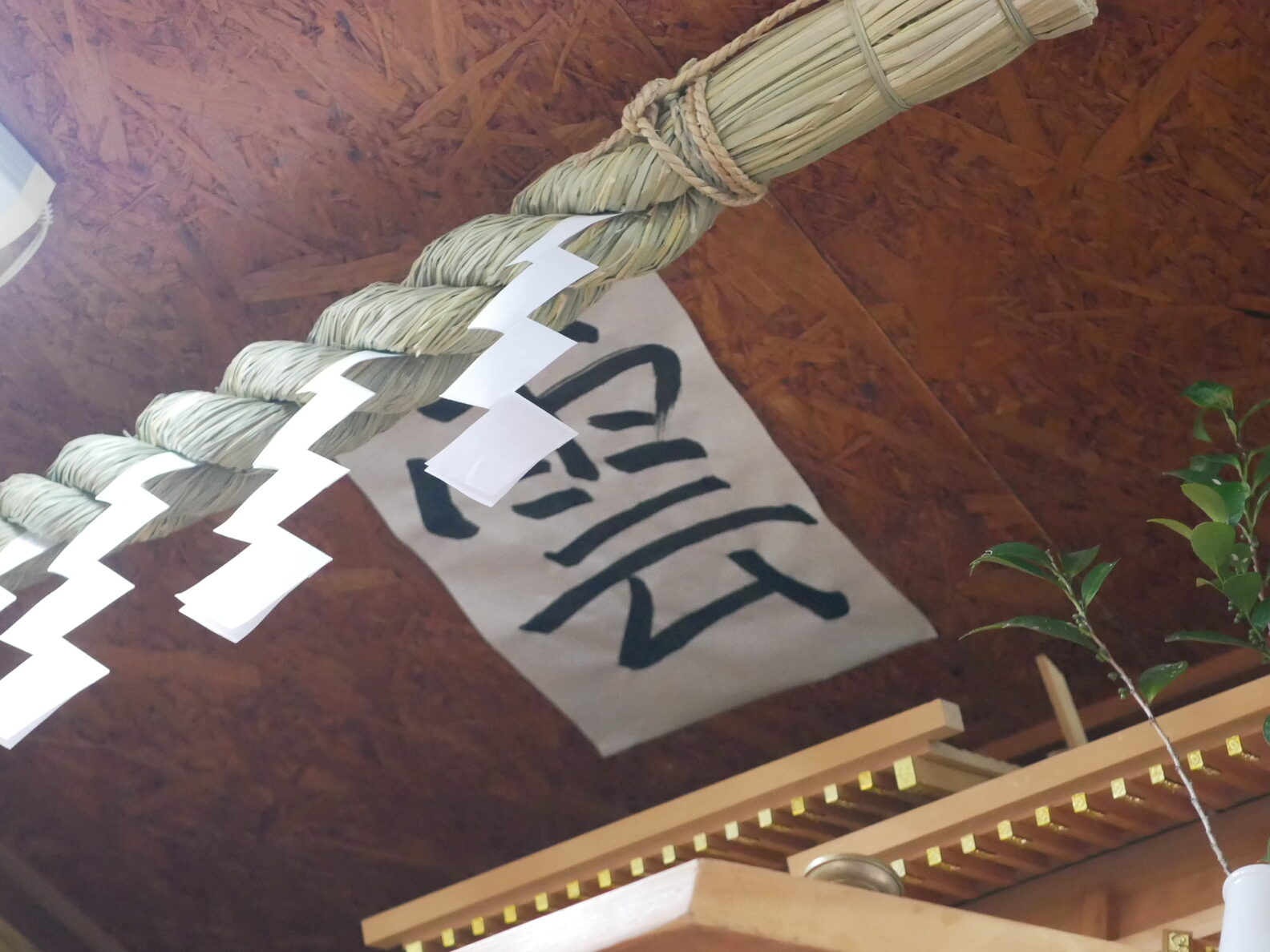
If you look up at the ceiling directly above the kamidana in this shop, you’ll notice a small sheet of paper with a single character written on it: 雲 (“cloud”).
It’s a quiet marker for something the room can’t physically provide.
In many Japanese buildings, the space above a kamidana isn’t open. There may be a second floor, a low ceiling, or solid construction directly overhead. So while the kamidana symbolically points “upward,” the architecture stops that direction short.
Placing 雲 above it is a way of restoring that missing vertical layer.
A cloud is not the sky itself, but it belongs to the sky. It suggests height, openness, and a world above the ceiling line. In other words, it functions like a small sign that says:
“From here upward is not just a ceiling. It continues.”
This is not decoration.
It is a kind of spatial adjustment.
It turns the ceiling into something closer to an “upper world,” even if only by imagination and agreement. The kamidana is not simply a miniature shrine inside a room. It is a point that creates a vertical axis in the house, a place where attention and offerings are directed upward.
Above that point, you can imagine what cannot be built into the structure: distance, elevation, and the unseen realm where gods and their attendants are thought to dwell.
A single character, 雲, is enough to make that invisible structure feel present.
Bringing the ritual home: sand, salt, and water
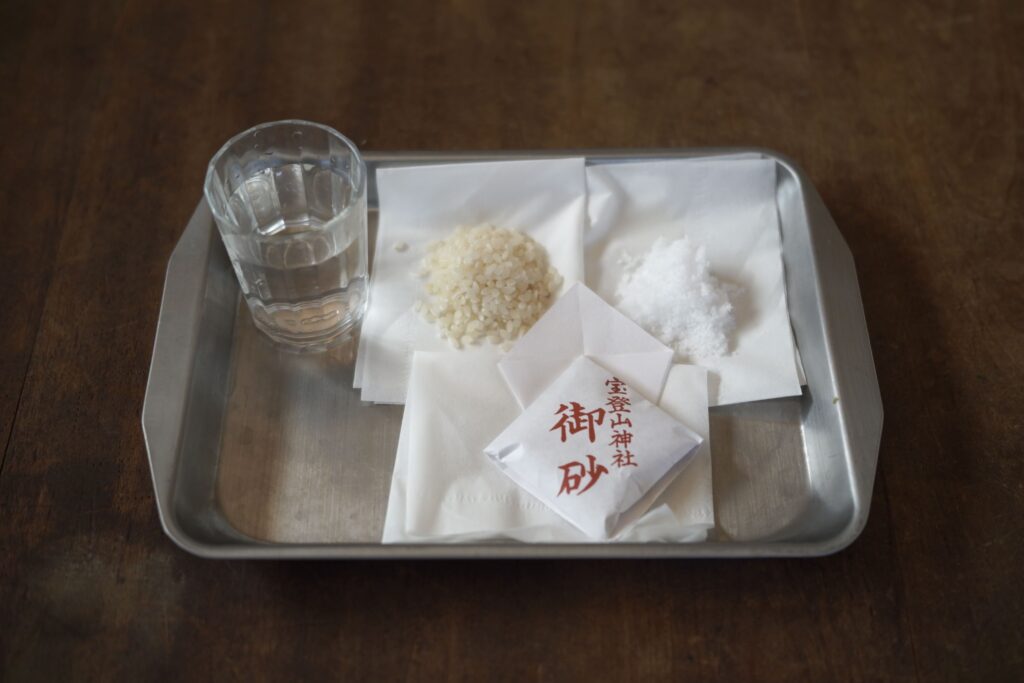
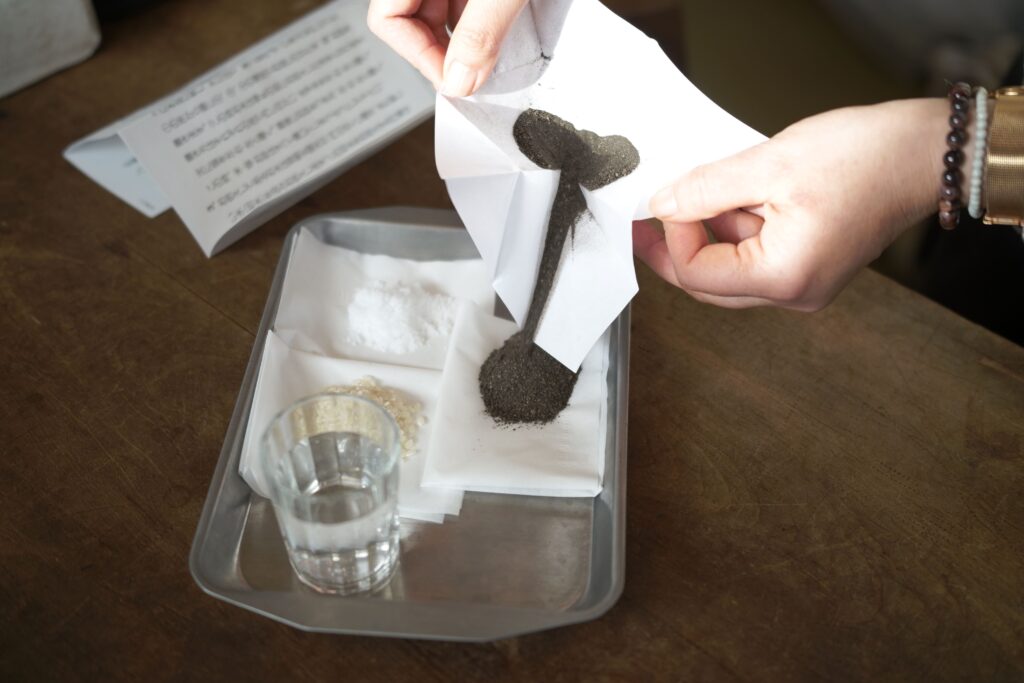
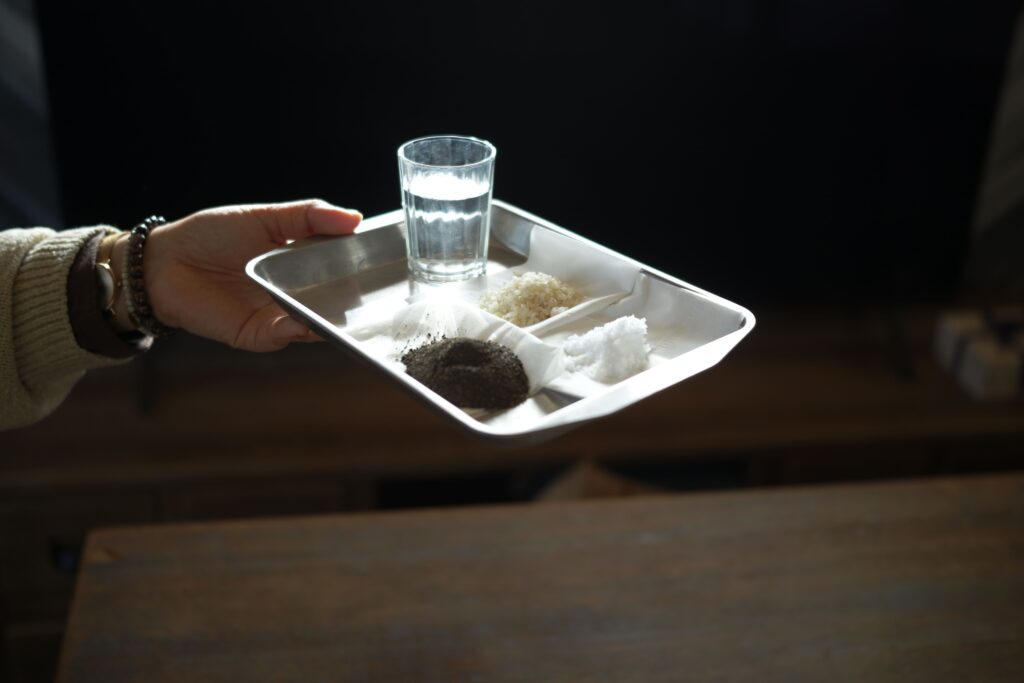
After the yakuyoke ceremony, I received sand from the shrine.
This small gesture extended the ritual beyond the shrine grounds.
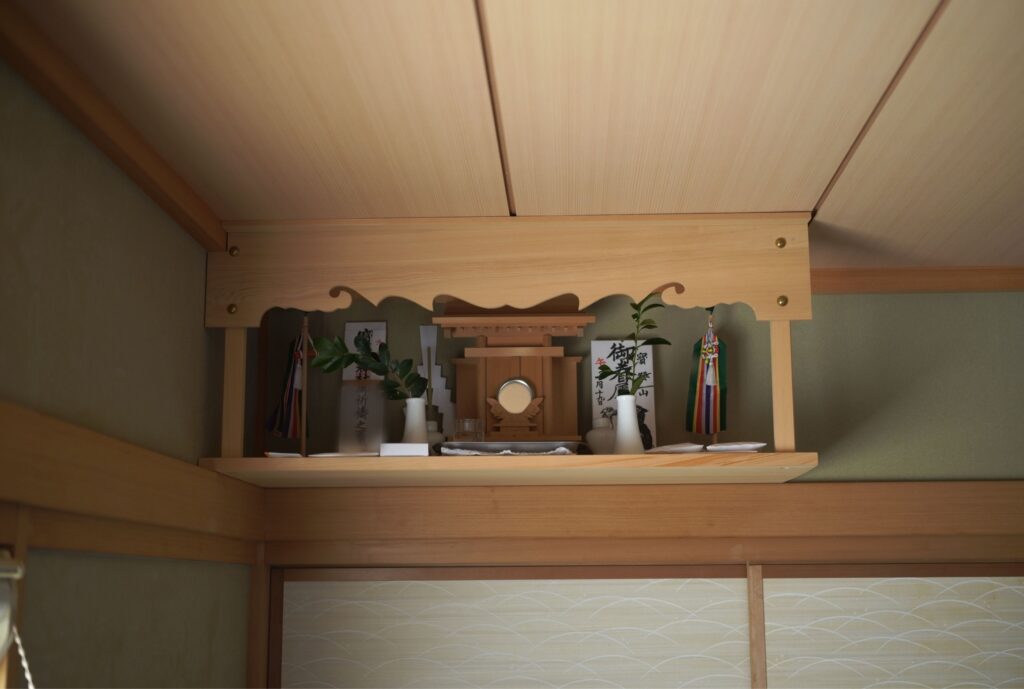
At home, I placed the sand on the kamidana, together with salt and water.
Alongside them, I also enshrined the borrowed kenzoku, the divine attendants entrusted during the ritual.
In this region, those attendants have long been imagined as wolf spirits, quiet guardians of mountains and boundaries.
The kamidana was no longer just a place for abstract prayer.
It became a point of contact, a small domestic shrine where something from the mountain was allowed to stay.
That evening, I took the sand and salt and scattered them at the four outer corners of my home, marking the boundary of the living space.
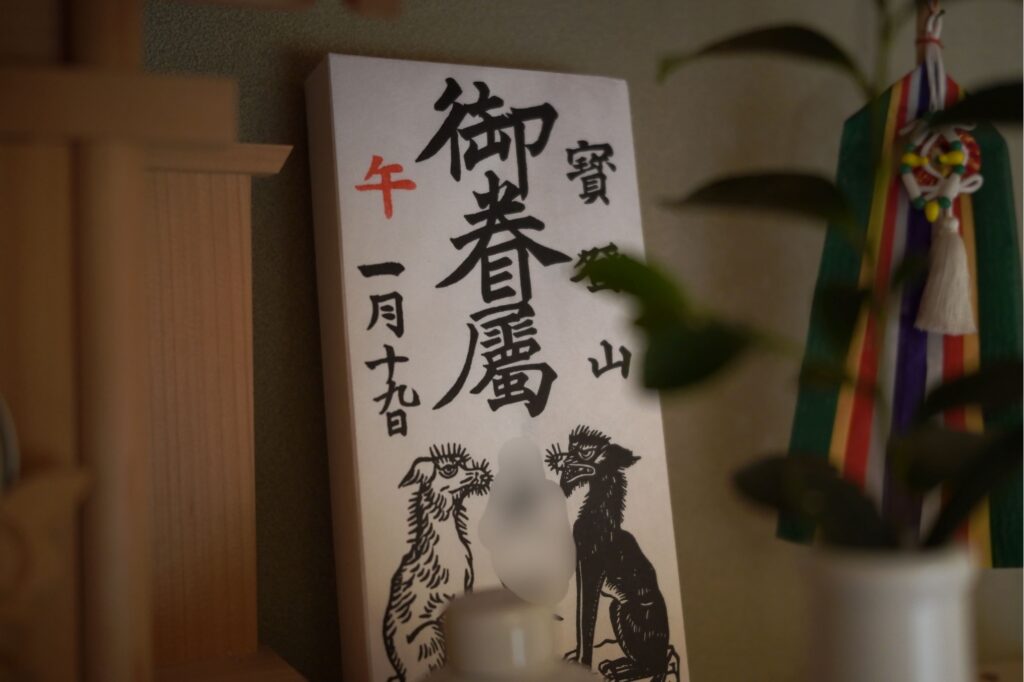
The water on the kamidana is replaced and offered for seven consecutive days.
Nothing dramatic happens during this process. There is no visible change.
The ritual unfolds through maintenance.
Sand marks space.
Salt purifies boundaries.
Water requires daily attention over time.
And the wolf kenzoku, quietly enshrined, represent a presence that watches rather than commands.
Protection here is not imagined as a shield,
but as something sustained through care, placement, and continued attention.
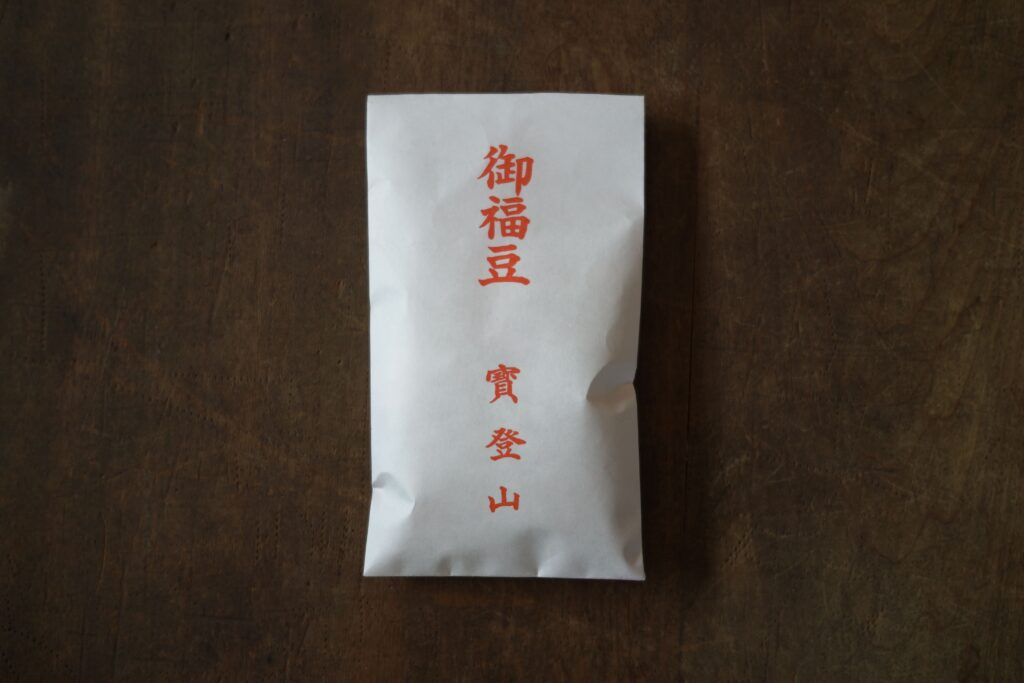
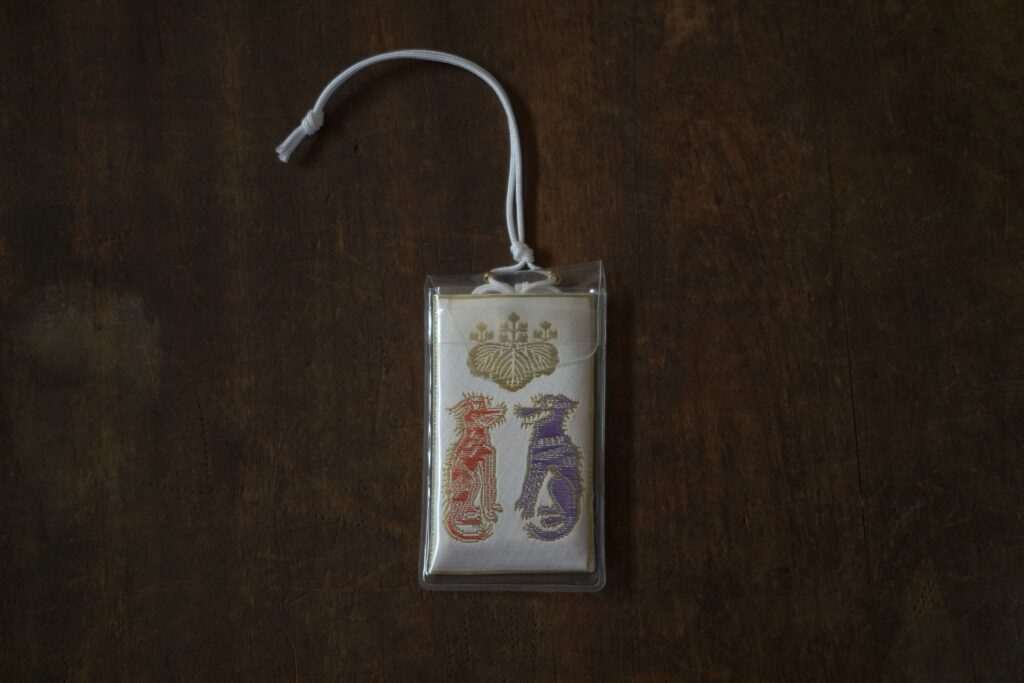
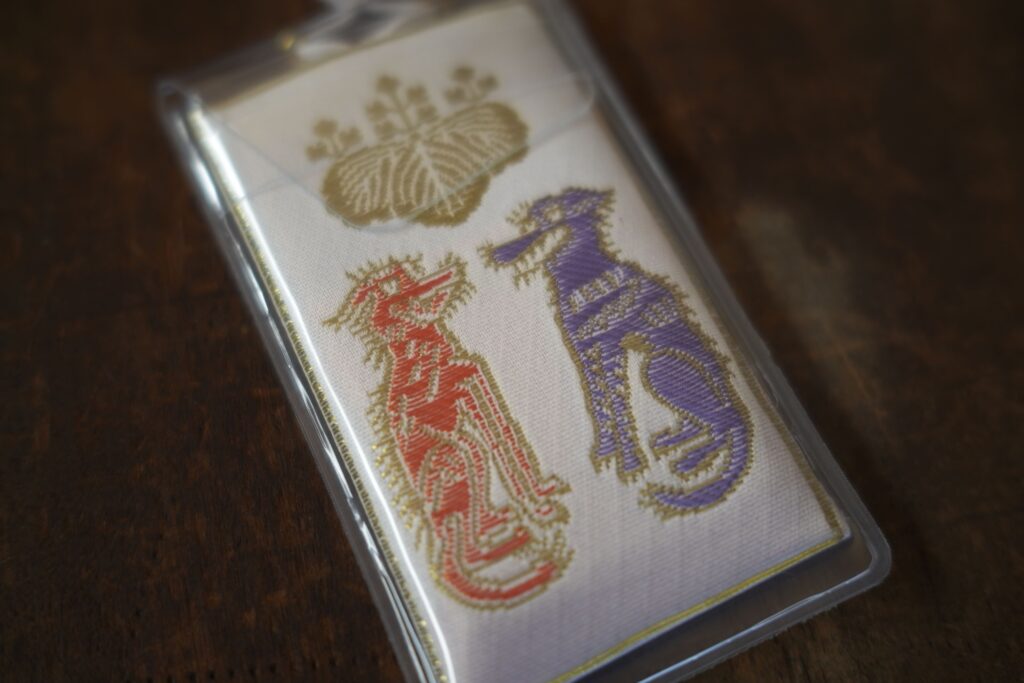
At the end of the visit, I was left with two small objects:
a packet of Setsubun beans, and a wolf talisman from Hodosan Shrine.
They are modest in size, almost quiet in their presence.
But the talisman, in particular, is finely made, with delicate embroidery and a calm, restrained beauty.
It does not try to impress. It simply is.
Together, they carry the entire logic of the day.
The beans mark a seasonal boundary.
The talisman carries a mountain spirit.
One resets time.
The other guards space.
Long after leaving the shrine, these small, carefully made things continue the ritual quietly, inside ordinary life.