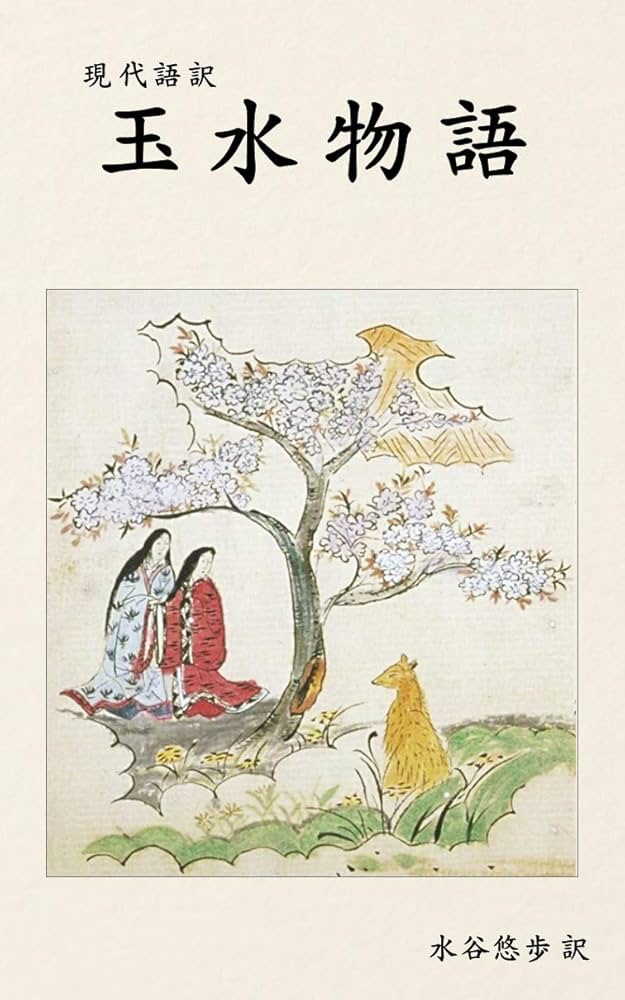
Category: Culture

  • A Fox, a Princess, and a Secret Love: Reading Tamamizu Monogatari

    At the Intersection of Animal-Human Romance Tales, Boundary Theory, and Yuri-Aware Reading

    Introduction

    Tamamizu Monogatari is generally treated as an otogizōshi (a short medieval tale) from the Muromachi period. It also became newly visible to many modern readers after it appeared on the 2019 National Center Test (classical Japanese section), where it sparked discussion online and in popular commentary.

    A useful modern entry point is the Kyoto University Rare Materials Digital Archive, which provides a reader-friendly illustrated synopsis (and explicitly notes that the synopsis prioritizes accessibility rather than being a strict modern translation). Based on that summary and related catalog notes, the story can be outlined like this: a fox falls in love with a noble princess, chooses not to approach her as a man, transforms into a beautiful young girl instead, enters human society through an adoptive household, and eventually serves the princess as a lady-in-waiting under the name Tamamizu no Mae. The relationship deepens, but the fox later leaves, revealing the truth only afterward through a letter and a box, and the princess is left to recognize the pathos of Tamamizu’s hidden devotion.

    This work is sometimes talked about today as “yuri-like,” but its significance goes far beyond internet labels. What makes it so rich is the way it compresses, within a relatively short tale, several different structures at once: an animal-human love story, a gendered transformation, courtly intimacy, secrecy, and the tragedy of a being who can cross boundaries but cannot remain safely inside them. The result is a text that rewards both literary and contemporary cultural reading.


    1. A Basic Point to Get Right First

    Tamamizu Monogatari is a story about a fox who falls in love with a princess and appears before her in female form

    This point matters, because if we miss it, the whole reading axis shifts.

    In modern summaries of the tale, the fox first considers becoming a man in order to approach the princess, but abandons that idea out of concern that it could bring her harm. Instead, the fox chooses to transform into a young girl, enters human society through another household, and then draws close to the princess by serving her as a woman attendant.

    That narrative choice is structurally crucial. The fox does not pursue straightforward possession or marriage. It chooses proximity instead. The emotional center of the tale is not “winning” the princess but remaining near her, even at the cost of concealment. This is one reason the story feels so delicate and painful to modern readers.


    2. Reading It as an Animal-Human Romance Tale

    But more precisely, as a variation on that form

    From a more academic angle, Tamamizu Monogatari is often best understood in relation to animal-human marriage/romance tales (a broader class of stories in which a human and a non-human being form an intimate bond).

    It shares a recognizable skeleton with that tradition:

    • a non-human being falls in love with a human
    • it takes human form
    • a relationship becomes possible

    But Tamamizu Monogatari also departs from common patterns in a striking way. Kyoto University’s catalog explanation explicitly notes the unusualness of the setup: instead of the fox transforming into a man and pursuing the princess directly, it transforms into a same-sex female form and serves her.

    As a result, the relationship does not unfold primarily as a marriage plot. It takes shape instead as courtly service plus intimacy. That shift changes where the emotional heat of the story goes. The tale is less about the successful completion of romance than about the joy of nearness and the grief of losing that nearness.


    3. A Boundary-Theory Reading

    The fox mediates between human/non-human, male/female, inside/outside

    From the perspective of boundary theory, Tamamizu is consistently an “in-between” being.

    3.1 Species Boundary

    Tamamizu is a fox, not a human. Yet Tamamizu enters human society, is taken in through an adoptive household, and functions within a noble courtly environment as a lady-in-waiting. This is not merely anthropomorphism. It is a temporary insertion of a non-human being into a highly structured human order.

    3.2 Gender Boundary

    This is one of the most important points in the story. The fox briefly contemplates approaching the princess in male form, then rejects that route and chooses to appear as a young woman. In that sense, Tamamizu’s gendered presentation is not simply an essence but a relationally selected form, chosen as the mode through which intimacy can become possible.

    3.3 Spatial Boundary

    Kyoto University’s summary and catalog notes also preserve details that highlight Tamamizu’s movement between worlds, including courtly scenes and episodes involving the fox’s own kin. Tamamizu belongs neither fully to the court nor fully to the fox world. This mobility marks Tamamizu as a figure who can cross worlds, but cannot be fully absorbed by either.

    3.4 Ethical Boundary

    In the episode involving possession/illness (as summarized in the archive materials), Tamamizu is not only a lover figure but also a mediator who intervenes between human and fox-side conflict. This positions Tamamizu as an ethical agent, not just a romantic subject.

    Taken together, these layers show that Tamamizu is not simply “the protagonist of a fox love story.” Tamamizu is also a being who manages traffic across boundaries.


    4. Points of Contact with Yuri Culture

    Not “this is simply yuri,” but “there are strong conditions for a yuri-aware reading”

    This part is worth explaining carefully, especially for readers who may not know the term yuri.

    4.0 What is “yuri” (beginner-friendly explanation)

    In Japanese pop culture, yuri is a term generally used for works, expressions, or reading practices centered on close relationships between women.

    But yuri does not always mean only one thing. Depending on the work and the reading community, it can include:

    • explicitly romantic relationships between women
    • relationships that hover between friendship and romance
    • intense admiration, attachment, or longing
    • forms of intimacy that resist clear naming
    • stories where separation or loss is part of what gives the relationship meaning

    So in practice, yuri can function not only as a genre label but also as a way of reading intimacy, especially intimacy marked by delicacy, ambiguity, and emotional distance.

    That is the sense in which yuri becomes useful here.

    4.1 A Necessary Caution First

    It is still important to be careful. Tamamizu Monogatari is a medieval text, while modern yuri culture developed much later through modern and contemporary print culture, manga, anime, and fan/critical communities. These are not the same historical or media conditions.

    So this essay does not claim that Tamamizu Monogatari is simply “a yuri work” in the modern genre sense.

    Instead, the claim is narrower and more useful: a yuri-aware reading sensibility can illuminate how this text stages intimacy, secrecy, and loss.

    4.2 Why Tamamizu Monogatari is so often read as “yuri-like”

    Even with that caution, it is not surprising that modern readers often respond to the tale in yuri-adjacent ways. The text offers a remarkably strong representation of intimacy that appears, on the surface and in social form, as a relationship between women: Tamamizu in the form of a young woman serving the princess in close daily proximity. The 2019 test reception is one visible sign of how strongly that reading response can emerge.

    Several features make this especially resonant with yuri-oriented reading practices:

    • A relationship that appears as woman-to-woman intimacy
      Tamamizu approaches and remains beside the princess in female form, as a lady-in-waiting.
    • Strong selective intimacy
      The princess gives Tamamizu particular attention and affection in ways that exceed ordinary service. (Modern summaries emphasize this special favor.)
    • Fine-grained emotional exchange
      The story uses letters, poems, tears, concern, and emotional misalignment as part of its dramatic texture, making intimacy legible through affect rather than formal declaration.
    • A hidden core
      Tamamizu’s true nature and desire are central to the relationship, yet cannot be openly stated.
    • Truth arriving after separation
      The emotional meaning of the bond becomes fully legible only after departure, through the box and letter.

    These structures strongly resonate with many yuri readings that value “unsayable” relationships, intimacy without stable social naming, and feelings whose full contour appears only through loss.

    4.3 Why the tale still cannot be reduced to “just yuri”

    At the same time, there are clear reasons not to collapse the work into a modern yuri category.

    • Tamamizu’s original form is a fox
    • in modern explanatory accounts, the fox is described as male before transforming into a young woman
    • the relationship is shaped by medieval court structures, rank, and the princess’s eventual movement into imperial/courtly institutions (as summarized in the archive materials)
    • the ending is not “romantic fulfillment” but departure, revelation, and retrospective pathos

    In other words, the text resists clean classification, which is precisely why it is so interesting.

    The better question is not “Is it yuri or not?” but Where and how does a yuri-like reading become possible?


    5. Shared Emotional Structures Between Tamamizu Monogatari and Yuri Reading Culture

    A key phrase: unreachable closeness

    The strongest points of contact are not at the level of genre identity, but at the level of emotional structure.

    5.1 Close, but unreachable

    Tamamizu is physically and socially close to the princess, present in daily life, emotionally legible, and deeply attached. Yet the core truth of that bond cannot be spoken in real time.

    This creates a painful distance: physically near, existentially far.

    That structure feels familiar to many yuri readings, where intimacy can be intense but still unable to fully cross the thresholds that define it.

    5.2 A bond outside formal institutions

    The princess moves toward a courtly future that can be named and institutionally recognized. Tamamizu’s bond with her cannot be stabilized in that way.

    In contemporary terms, this can be read as a form of non-institutional intimacy. That issue has long been central to many yuri works and yuri-centered reading practices, where the relationship matters deeply even when social language and institutions do not know how to house it.

    5.3 Separation does not negate the relationship

    Tamamizu does not remain and openly confess in a way that renews the relationship within the same frame. Instead, the truth is delivered after departure.

    The princess understands the meaning of the bond through absence.

    This is not simply “failure.” It is a structure in which separation becomes the condition under which emotional depth becomes visible. That logic also resonates strongly with yuri traditions that treat loss, delayed understanding, and aftereffects as meaningful rather than secondary.

    5.4 Intimacy does not erase boundaries, it reveals them

    This is where the boundary-theory reading and yuri-aware reading most clearly meet.

    In Tamamizu Monogatari, intimacy does not dissolve the boundaries between:

    • human and non-human
    • appearance and underlying form
    • court interior and outside world
    • being near someone and being able to live with them

    Instead, intimacy makes those boundaries sharper and more painful.

    A similar dynamic appears in some yuri readings as well. Closeness does not always remove social or existential limits. Sometimes it makes those limits newly visible.

    5.5 An important reservation

    These parallels are points of contact in reading, not proof of historical genre identity.

    • Tamamizu Monogatari belongs to medieval Japanese tale culture
    • modern yuri culture belongs to much later media systems, reading communities, and critical vocabularies

    If we flatten that difference and say only “it was yuri all along,” we lose what is most valuable in both.

    A more productive approach is to ask which modern reading frameworks can illuminate older texts, and where their limits are. In that sense, yuri culture is not just a label for classification here. It is a modern affective and interpretive tool for receiving the tale’s structures of intimacy, secrecy, crossing, and loss.


    6. A Useful Reading Principle

    This is not just a “true identity reveal” story, but a story about the form of a relationship

    From a contemporary angle, it is tempting to summarize the tale as a fox-disguise story whose main point is eventual revelation.

    But that summary is too thin.

    What makes the work powerful is not only what Tamamizu is, but:

    • how Tamamizu draws near
    • what form of closeness becomes possible
    • why that closeness cannot continue indefinitely
    • when and how truth is allowed to arrive

    In that sense, Tamamizu Monogatari is not exhausted by any single frame, not “just” an animal tale, not “just” a love story, not “just” a yuri-like reading object. It remains compelling because multiple interpretive frameworks remain active at once.


    Conclusion

    Tamamizu Monogatari is a medieval otogizōshi, but it continues to speak to contemporary readers with surprising force. A fox falls in love with a princess and chooses, not the route of direct male pursuit, but the path of becoming a young woman and standing beside her in service. That choice transforms the narrative from a straightforward animal-human romance into a story of service, secrecy, intimacy, and separation.

    It is precisely this transformation that makes the tale so resonant for modern readers, including those shaped by yuri reading culture. This does not mean a modern genre category can be simply projected backward into the medieval period. It means something more interesting: older texts can still challenge and refine the ways we read closeness, desire, and loss across radically different historical worlds.

    Tamamizu Monogatari feels contemporary not because it is secretly modern, but because it tests the limits of our reading in the present.
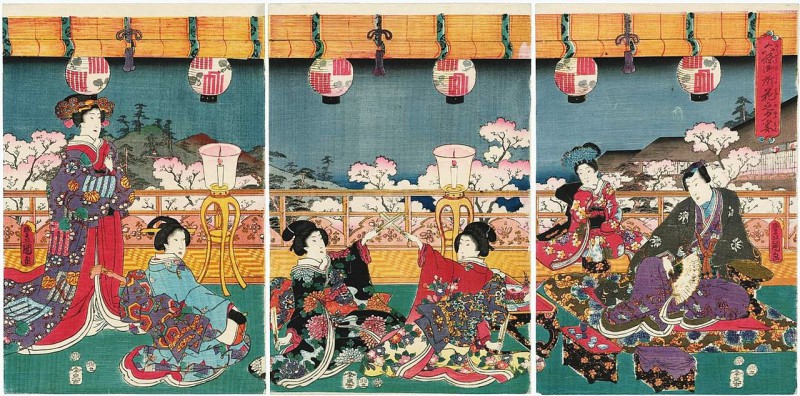
  • Hanami: The Historical Formation of Cherry Blossom Viewing in Japan

    Hanami, or cherry blossom viewing, is often described as a casual springtime activity in Japan. However, historically, it functioned as a seasonal practice shaped by court culture, agricultural belief, political symbolism, and later, public policy.

    Rather than a single tradition, hanami developed through overlapping layers of meaning that shifted depending on period, social class, and location.


    Early Forms: Flowers and Seasonal Recognition

    The earliest recorded flower-viewing practices in Japan date back to the Nara period (8th century). At this stage, the focus was not cherry blossoms but plum blossoms (ume), which were closely associated with Chinese literary culture and the imperial court.

    These early gatherings emphasized poetry composition and seasonal awareness rather than recreation. Flower viewing functioned as a means of marking time and reinforcing elite cultural identity.

    Cherry blossoms, by contrast, were initially linked to mountain environments and agricultural cycles. In rural belief systems, blooming cherry trees were understood as signs of deities descending from the mountains to oversee rice cultivation.

    Thus, viewing cherry blossoms carried connotations of agricultural forecasting and ritual observation rather than leisure.


    Heian Period: Court Culture and Aestheticization

    During the Heian period, cherry blossoms gradually replaced plum blossoms as the central object of elite seasonal gatherings.

    Court records describe banquets held beneath cherry trees, accompanied by poetry, music, and sake. These events framed cherry blossoms as objects of aesthetic contemplation, but the emphasis remained on temporality rather than permanence.

    Importantly, the flowers were admired precisely because they bloomed briefly. Their short lifespan reinforced a worldview in which seasonal change and impermanence were central organizing principles.


    Warrior Culture and Symbolic Reinterpretation

    From the medieval period onward, cherry blossoms were increasingly adopted within warrior culture.

    Samurai ideology emphasized readiness, sacrifice, and acceptance of death. Cherry blossoms, which fall at their peak rather than withering slowly, became a convenient symbolic reference within this framework.

    This association was not an inherent meaning of the flower itself but a cultural reinterpretation. Cherry blossoms were used as metaphor and ideal rather than as objects of religious devotion.


    Edo Period: Publicization and Institutionalization

    A major shift occurred during the Edo period, when cherry blossom viewing expanded beyond elite circles.

    Authorities actively promoted the planting of cherry trees in public spaces, including riverbanks and temple grounds. These initiatives transformed hanami into a widely accessible seasonal activity.

    Although hanami became more festive during this period, it did not lose its function as a temporal marker. Gatherings still coincided with agricultural calendars and seasonal transitions, even as entertainment elements increased.


    Modern Hanami: Ambiguity as Structure

    In contemporary Japan, hanami resists strict definition.

    Participants may drink alcohol, eat meals, walk quietly, or simply observe. There is no formal doctrine or shared belief required. This lack of prescription is not a weakness but a defining feature.

    Modern hanami operates as an open-ended seasonal practice. Its persistence lies in its flexibility: it allows individuals to project meaning or ignore meaning altogether.


    Continuity Without Doctrine

    Cherry blossoms bloom briefly and fall quickly.
    Afterward, parks are cleaned and daily routines resume.

    Yet hanami returns every year.

    Not as a ritual enforced by belief, but as a socially maintained recognition of seasonal change. It survives not because it demands interpretation, but because it accommodates it.

  • New Year Prayer at Mount Hodo

    Ritual, Mountain Faith, and How It Quietly Continues at Home

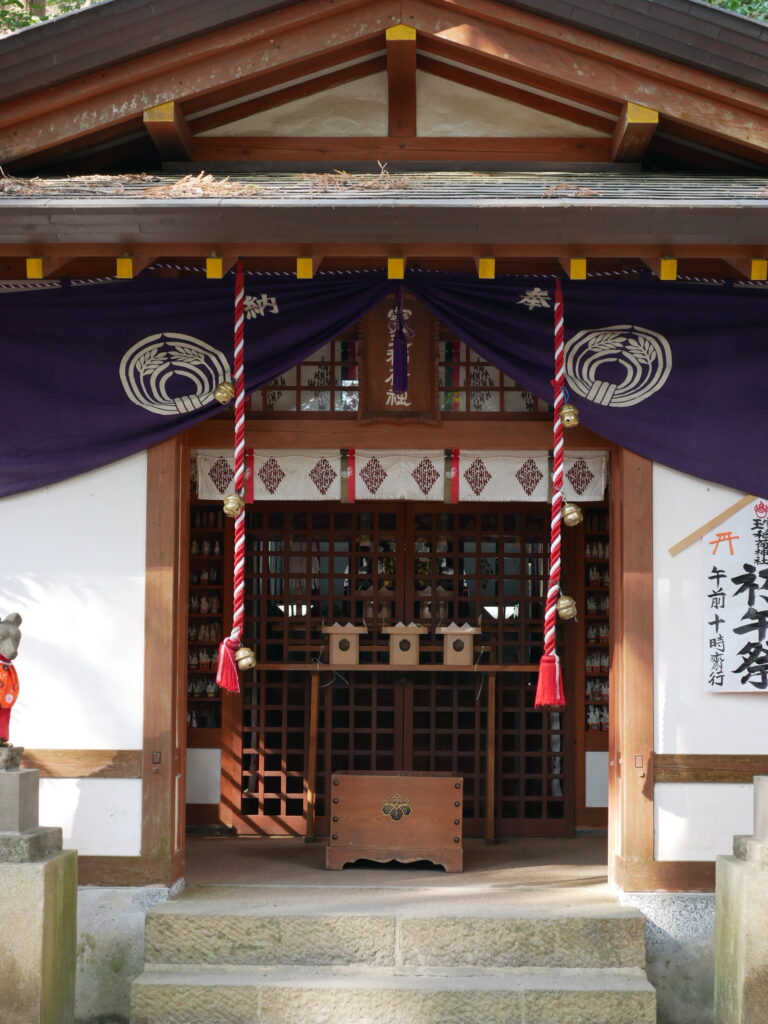
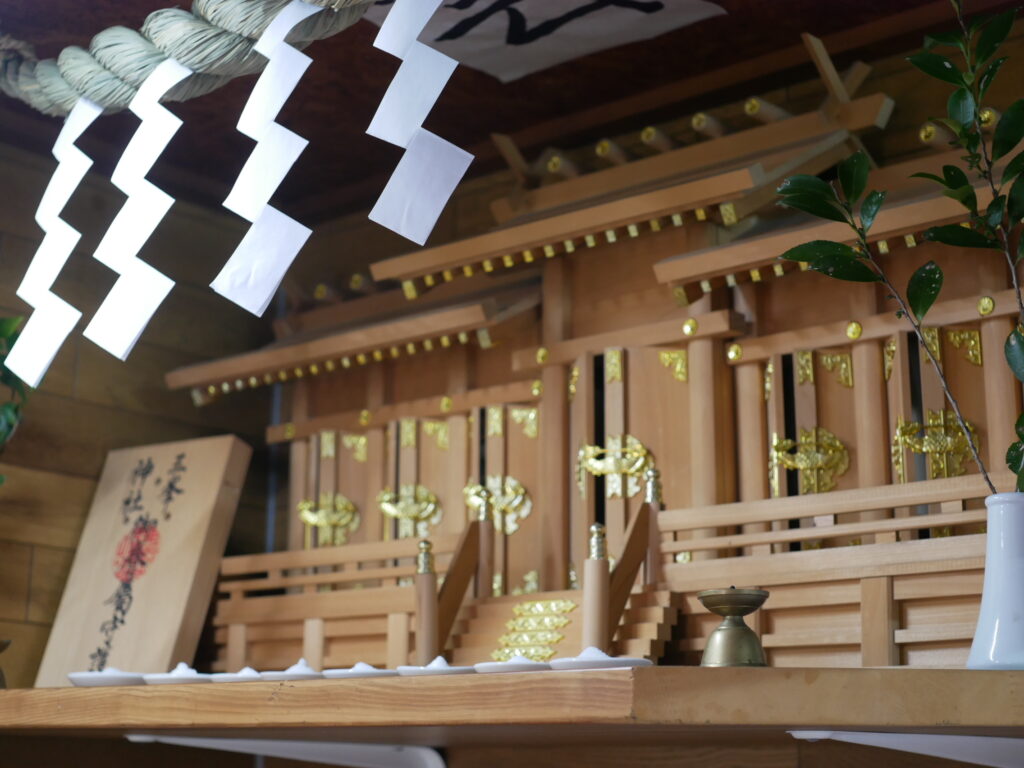
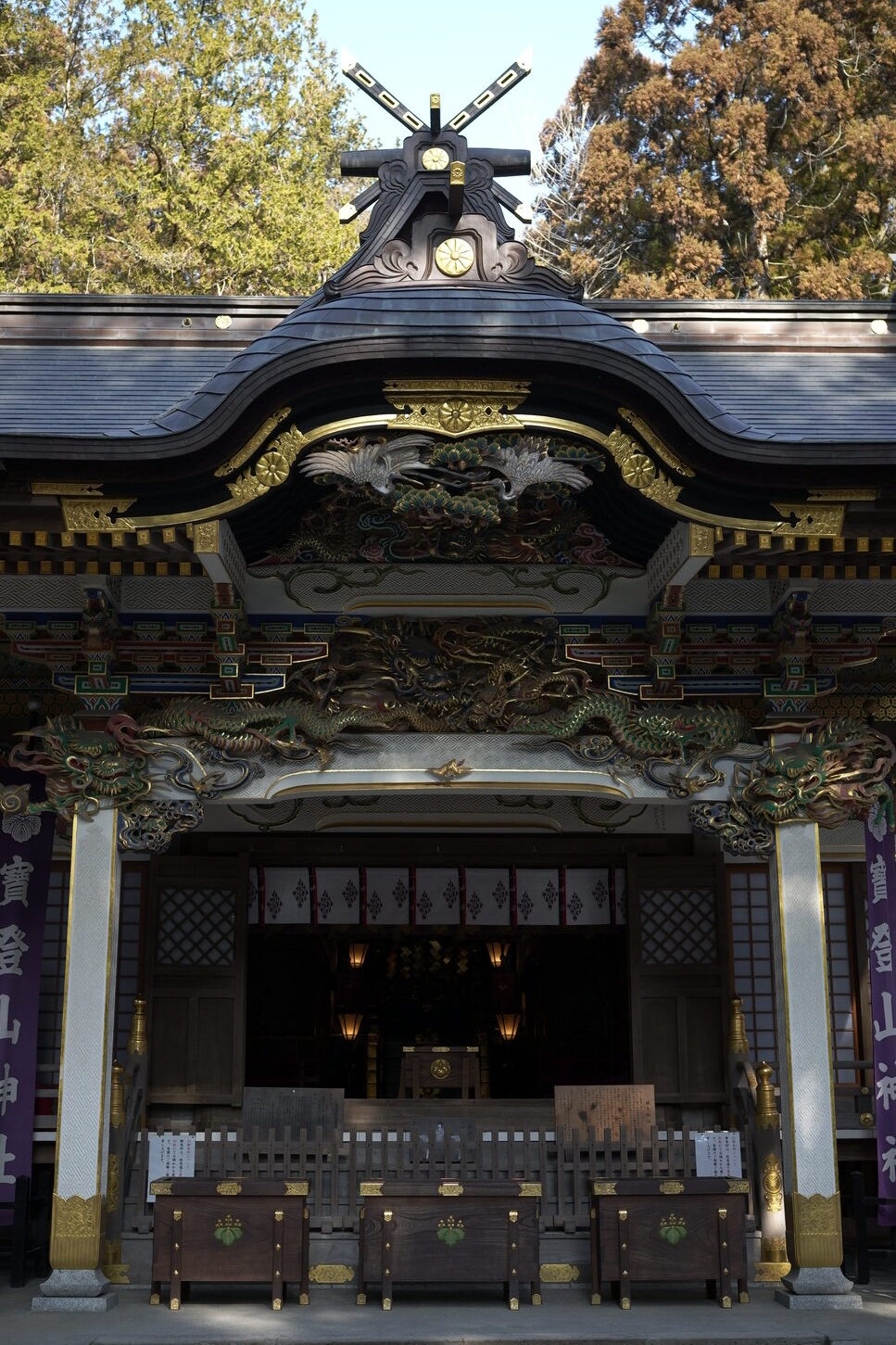
    main shrine (honden)

    At the beginning of the year, I traveled to Chichibu–Nagatoro to take part in New Year prayers and yakuyoke—rites intended to address misfortune and reset one’s position for the year ahead.
    My destination was Mount Hodo and Hodosan Shrine, a place where mountain belief, local ritual, and everyday life overlap without clear boundaries.

    The visit included prayers at the main shrine (honden), a walk to the inner shrine (okumiya), time at the Inari shrine within the grounds, a climb up the mountain itself, and—later—small, ordinary moments that extended the experience beyond the shrine.


    The main shrine: a ritual remembered by sound

    The yakuyoke ceremony took place at the main shrine.

    What remains most vivid is the sound.

    The deep rhythm of taiko drums filled the space, resonating through the shrine grounds and into the body. The ceremony was neither quiet nor theatrical. It was forceful, repetitive, and immersive, structured by rhythm rather than explanation.

    This ritual carried two meanings at once.

    One was yakuyoke, the removal or deflection of misfortune.
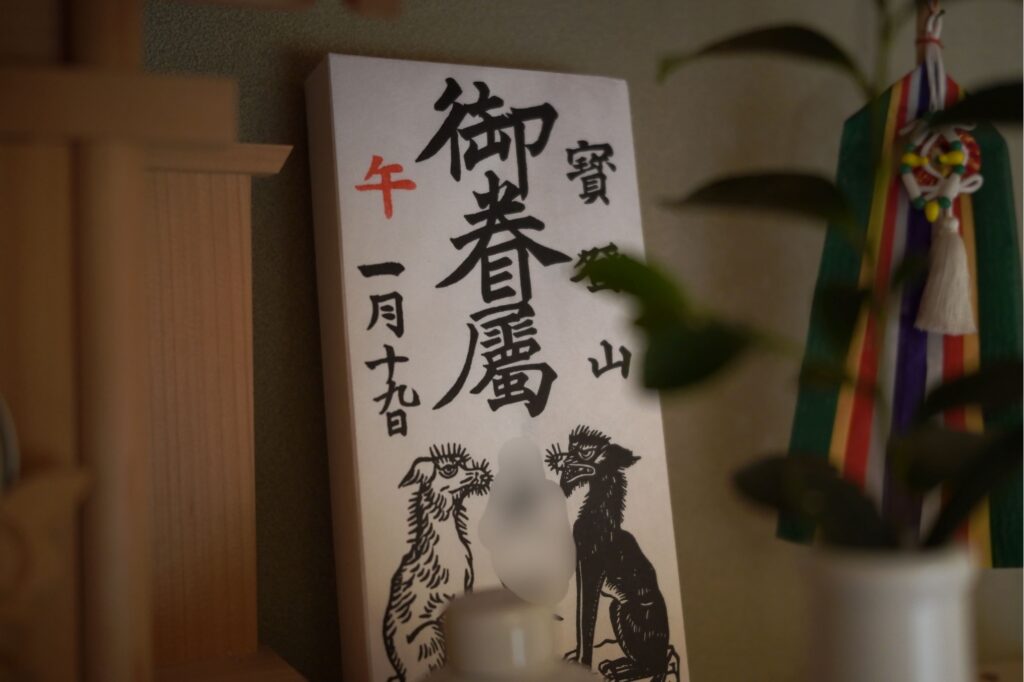
    The other was kenzoku haishaku, the borrowing of divine attendants.

    Rather than asking for protection in an abstract way, the ritual felt like aligning oneself with forces that already exist around the mountain. The drums did not seem to summon something new. They seemed to mark a moment when something was allowed to move closer.

    There was no dramatic promise of safety.
    Instead, it felt like being placed inside a cycle, where danger and protection, wandering and guidance, are always in motion.

    You were not being sealed off from the world.
    You were being given companions for moving through it.


    Okumiya and the mountain as sacred space

    From the main grounds, I continued toward the okumiya, the inner shrine located deeper on Mount Hodo. As one moves away from the entrance, the space gradually shifts. Architecture gives way to terrain.

    Here, worship does not feel confined to a building. The mountain itself becomes part of the shrine. This reflects a broader pattern in Japanese mountain belief, where sacred space expands outward rather than remaining fixed.

    The act of walking matters. Movement through the landscape turns ritual into something physical, preventing it from remaining abstract.


    Wolves and the boundaries of the mountain

    The mountains around Chichibu and Nagatoro were once part of one of Japan’s strongest regions of wolf belief.

    Here, wolves were not primarily seen as dangerous animals.
    They were understood as guardians of the border between the human world and the mountains.

    Wolves lived where villages ended and wilderness began.
    They moved through paths that humans feared to walk at night.
    They appeared in stories not as pets or monsters, but as beings that could sense what did not belong.

    Over time, this practical reality became spiritual language.

    Wolves came to be treated as divine attendants of mountain deities. They protected fields from wild animals, but also protected people from unseen harm. In a place where misfortune was thought to cross into the human world from outside, wolves became figures that stood watch at that crossing.

    This helps explain why yakuyoke rituals feel especially at home in mountain shrines.

    Misfortune is not imagined as something abstract.
    It is something that enters.

    Mountains are where it comes from.
    Wolves are what kept it out.

    Even though the Japanese wolf is now extinct, the shape of that belief remains. Shrines like Mitsumine and the traditions surrounding them preserve the idea that something still guards the boundary, even if it no longer has a physical body.

    Standing on Mount Hodo, it is easy to feel this quietly.

    The forest is close.
    The village is close.
    And between them, something watches.


    Inari within the shrine grounds

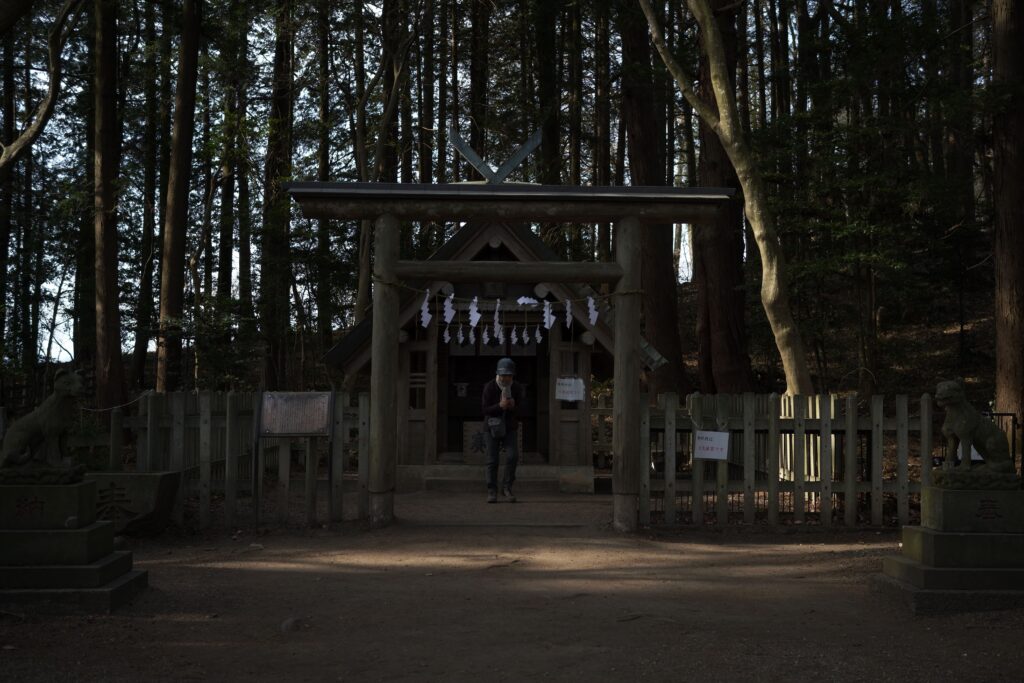
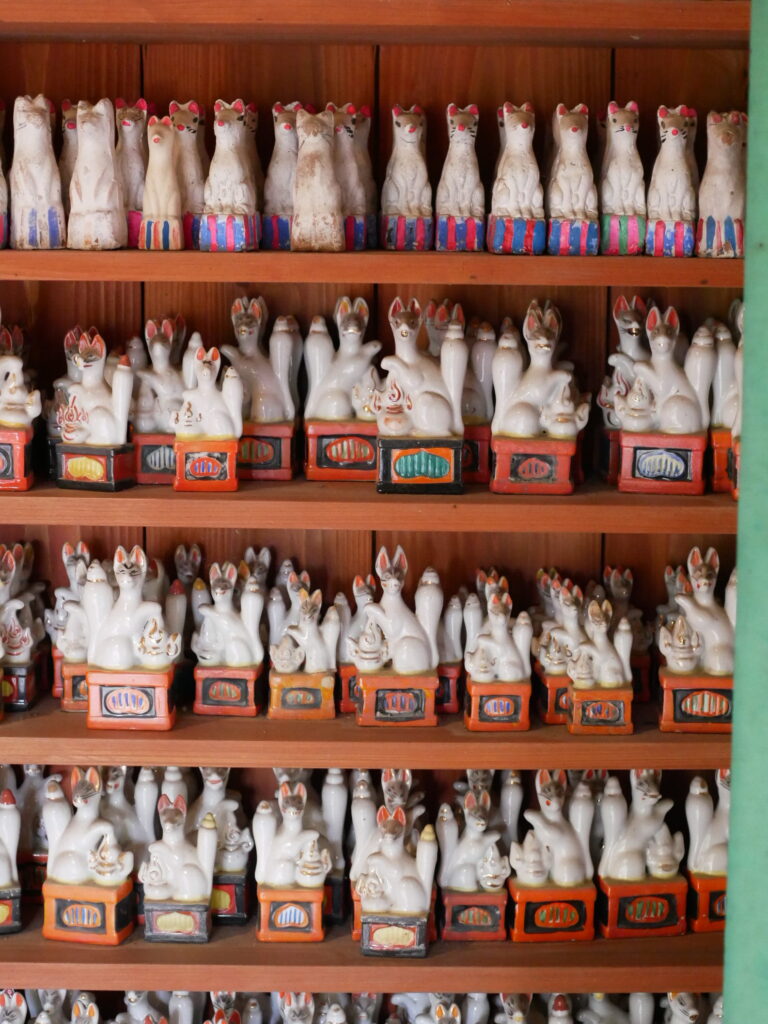
    Within the precincts of Hodosan Shrine, there is also an Inari shrine.

    Inari worship is closely tied to agriculture, food, and livelihood—concerns that are practical, recurring, and ordinary. While mountain deities often relate to boundaries and protection, Inari addresses continuity: harvests, work, and daily sustenance.

    The coexistence of these beliefs is not contradictory. Japanese religious spaces tend to accumulate layers rather than separate them. Protection, provision, and boundary-keeping exist side by side without the need for doctrinal clarity.


    Food after the mountain, and belief continuing quietly

    miso potato

    After descending, I ate miso potato, a simple local snack common in the Chichibu area. Fried potatoes with miso sauce are not refined food, but after walking, they feel exactly right.

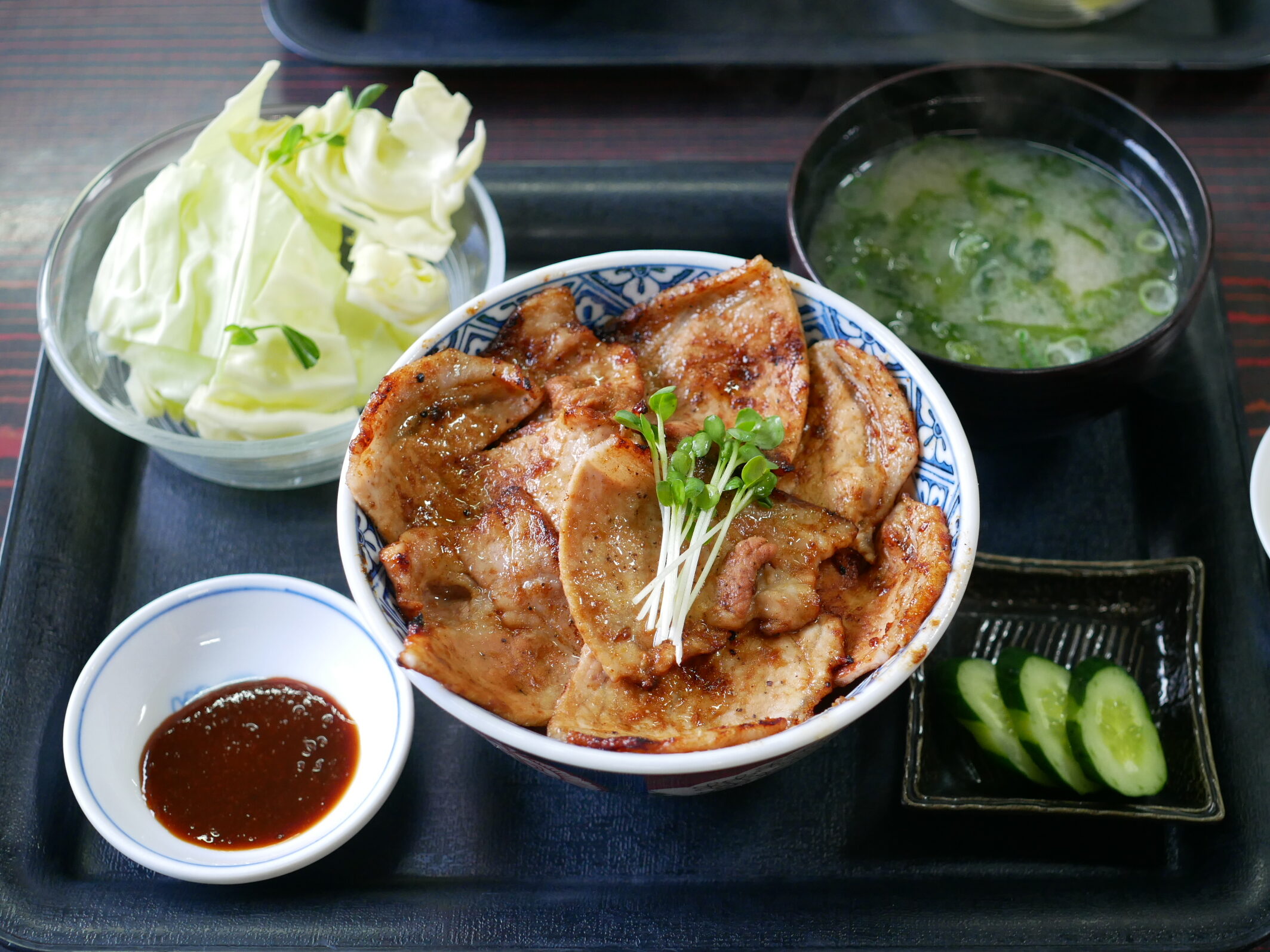
    pork bowl (butadon)

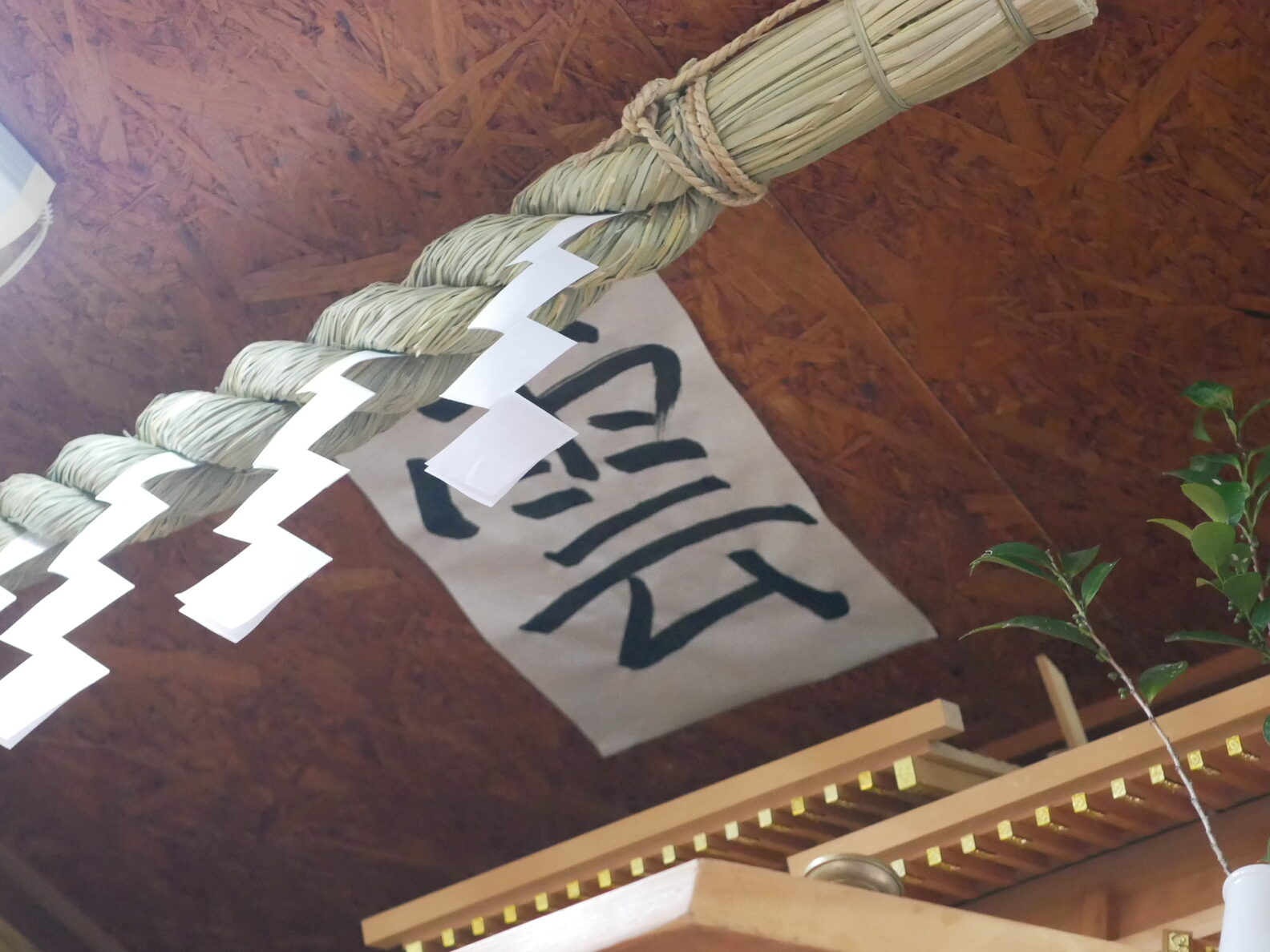
    Later, in Nagatoro, I had lunch at a local yakiniku restaurant and ordered a pork bowl (butadon). Inside the restaurant, there was a kamidana. It enshrined attendants associated with Mitsumine Shrine, another site deeply connected to wolf belief in the region.

    That detail stayed with me.

    Even after leaving the mountain and shrine grounds, the presence of belief continued quietly into an everyday space. Not emphasized, not explained—simply there, above the counter.

    If you look up at the ceiling directly above the kamidana in this shop, you’ll notice a small sheet of paper with a single character written on it: (“cloud”).

    It’s a quiet marker for something the room can’t physically provide.

    In many Japanese buildings, the space above a kamidana isn’t open. There may be a second floor, a low ceiling, or solid construction directly overhead. So while the kamidana symbolically points “upward,” the architecture stops that direction short.

    Placing above it is a way of restoring that missing vertical layer.

    A cloud is not the sky itself, but it belongs to the sky. It suggests height, openness, and a world above the ceiling line. In other words, it functions like a small sign that says:

    “From here upward is not just a ceiling. It continues.”

    This is not decoration.
    It is a kind of spatial adjustment.

    It turns the ceiling into something closer to an “upper world,” even if only by imagination and agreement. The kamidana is not simply a miniature shrine inside a room. It is a point that creates a vertical axis in the house, a place where attention and offerings are directed upward.

    Above that point, you can imagine what cannot be built into the structure: distance, elevation, and the unseen realm where gods and their attendants are thought to dwell.

    A single character, , is enough to make that invisible structure feel present.


    Bringing the ritual home: sand, salt, and water

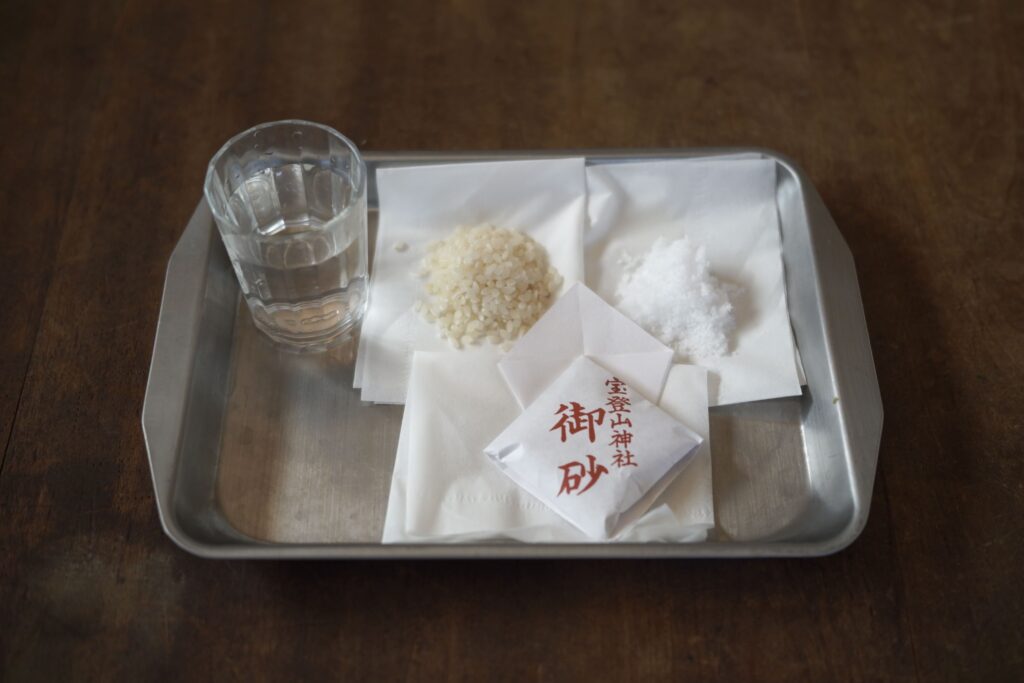
    After the yakuyoke ceremony, I received sand from the shrine.
    This small gesture extended the ritual beyond the shrine grounds.

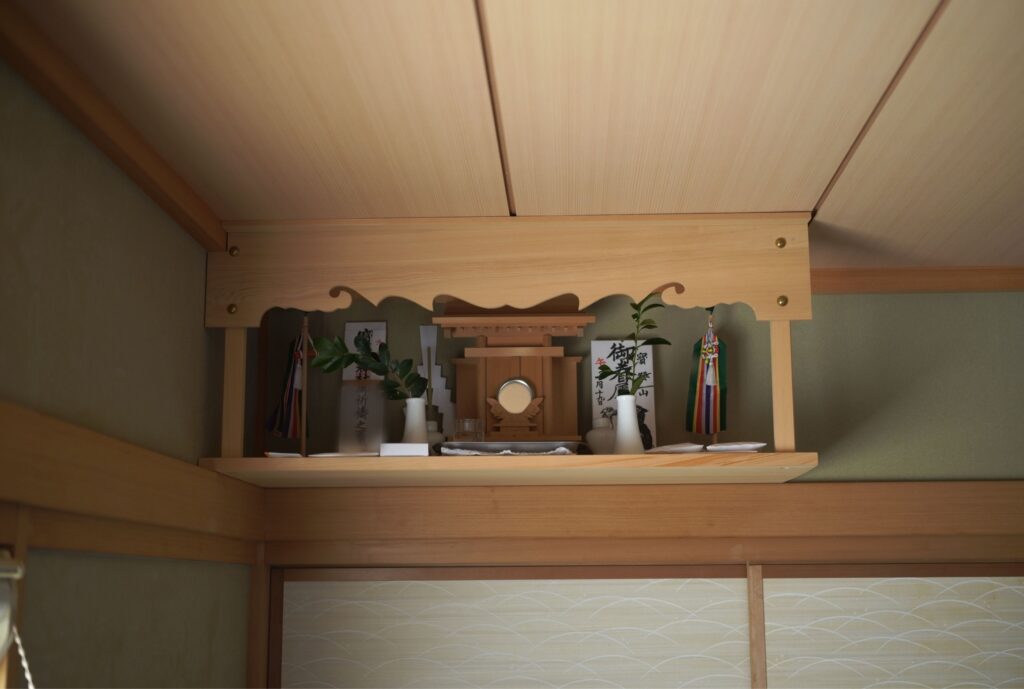
    At home, I placed the sand on the kamidana, together with salt and water.
    Alongside them, I also enshrined the borrowed kenzoku, the divine attendants entrusted during the ritual.

    In this region, those attendants have long been imagined as wolf spirits, quiet guardians of mountains and boundaries.
    The kamidana was no longer just a place for abstract prayer.
    It became a point of contact, a small domestic shrine where something from the mountain was allowed to stay.

    That evening, I took the sand and salt and scattered them at the four outer corners of my home, marking the boundary of the living space.

    The water on the kamidana is replaced and offered for seven consecutive days.

    Nothing dramatic happens during this process. There is no visible change.
    The ritual unfolds through maintenance.

    Sand marks space.
    Salt purifies boundaries.
    Water requires daily attention over time.

    And the wolf kenzoku, quietly enshrined, represent a presence that watches rather than commands.

    Protection here is not imagined as a shield,
    but as something sustained through care, placement, and continued attention.


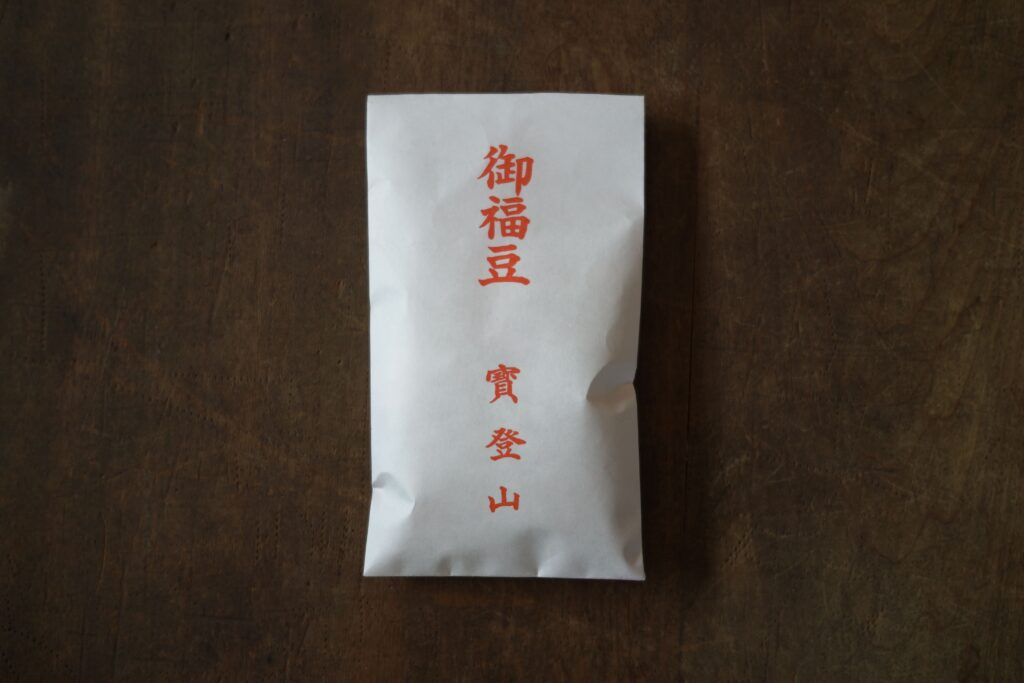
    Setsubun beans
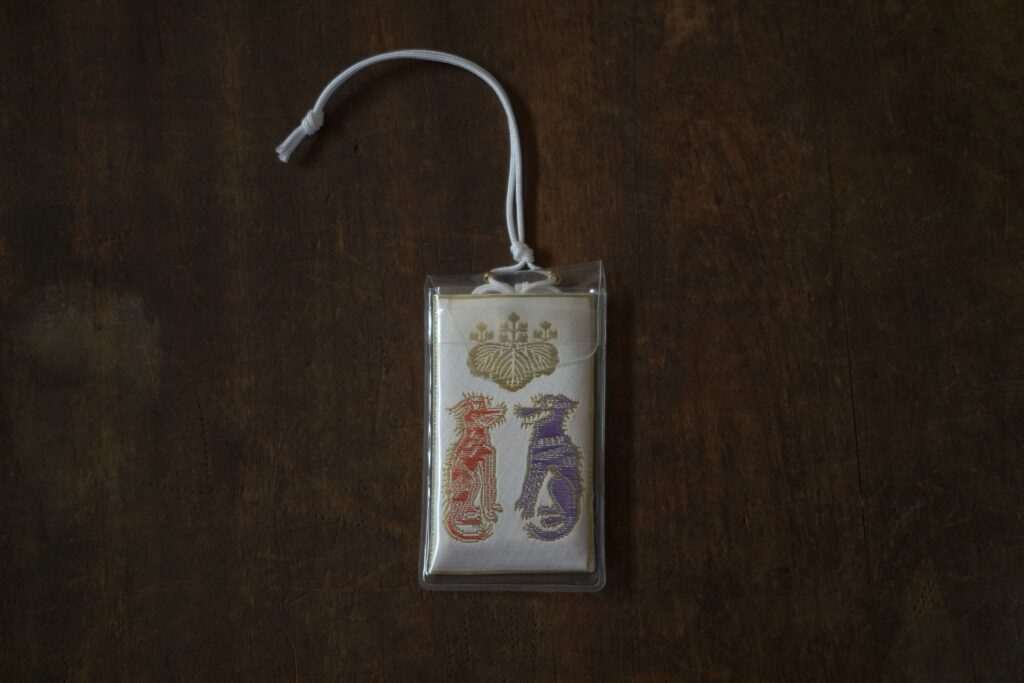
    wolf talisman

    At the end of the visit, I was left with two small objects:
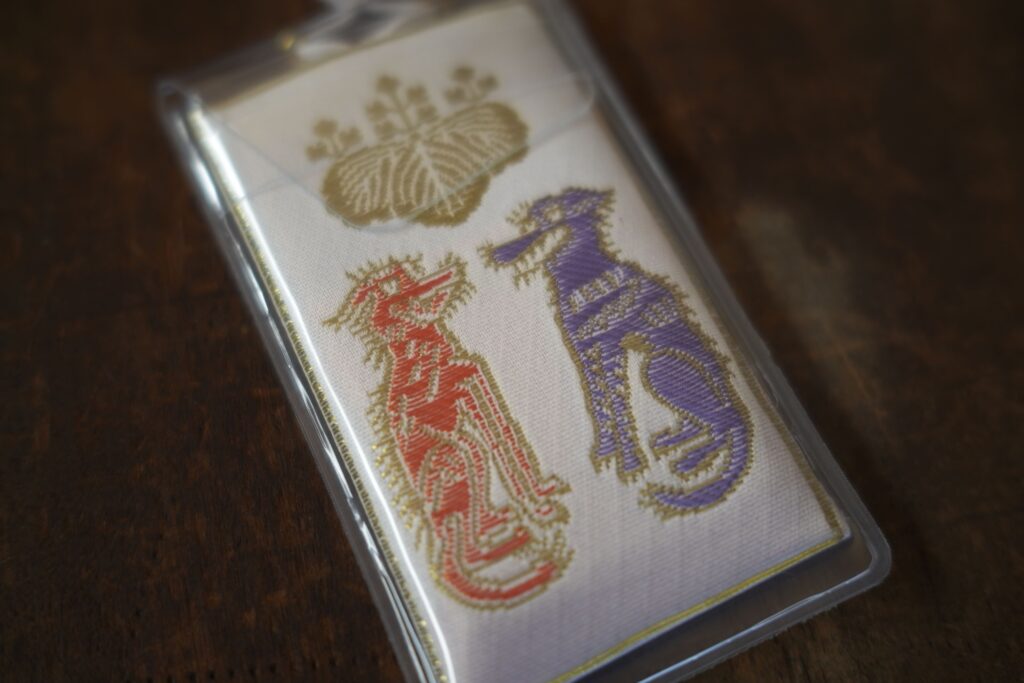
    a packet of Setsubun beans, and a wolf talisman from Hodosan Shrine.

    They are modest in size, almost quiet in their presence.
    But the talisman, in particular, is finely made, with delicate embroidery and a calm, restrained beauty.
    It does not try to impress. It simply is.

    Together, they carry the entire logic of the day.

    The beans mark a seasonal boundary.
    The talisman carries a mountain spirit.

    One resets time.
    The other guards space.

    Long after leaving the shrine, these small, carefully made things continue the ritual quietly, inside ordinary life.

  • Setsubun in Tokyo: 10 Places to Catch Lucky Beans (Famous + Hidden Spots)

    If you are visiting Tokyo in early February, there is a seasonal tradition you can participate in rather than simply observe: Setsubun (節分). This event marks the transition from winter to spring in the traditional calendar and is still practiced across Japan today.

    During Setsubun ceremonies, you will hear the familiar chant:

    “Oni wa soto! Fuku wa uchi!”
    Out with demons, in with good fortune.

    From large public gatherings at major temples to small, local ceremonies in residential neighborhoods, Setsubun offers a rare opportunity for visitors to engage directly with a living seasonal custom.


    What is Setsubun?

    Setsubun literally means “seasonal division.” In contemporary usage, it usually refers to the day immediately before the beginning of spring according to the traditional calendar.

    The central ritual is mamemaki, in which roasted soybeans (fukumame, or “fortune beans”) are thrown to symbolically drive away misfortune, represented by demons (oni), and to invite good fortune into the coming season.

    Common customs associated with Setsubun include:

    • eating the same number of beans as one’s age, plus one for good luck,
    • purchasing seasonal charms,
    • and eating ehōmaki, a sushi roll consumed while facing the year’s auspicious direction.

    The exact date of Setsubun varies by year, often falling on February 2 or 3. Some temples and shrines also hold events on adjacent days, so it is advisable to check official schedules in advance.


    Practical advice for visitors

    Arrive early
    Popular venues fill quickly, especially before the bean-throwing ceremonies begin.

    Choose your viewing position carefully
    Standing near the front can be intense. Those traveling with children, or anyone preferring a calmer experience, may wish to observe from the sides.

    Catching beans is not essential
    Many locations distribute beans directly or sell official Setsubun packages.

    Bring a small bag
    Useful for carrying beans or small festival items.


    Experiencing Setsubun in Tokyo

    Major venues and lesser-known options

    Below are ten locations in Tokyo, beginning with well-known sites and moving toward smaller, more localized experiences.


    1) Sensō-ji (Asakusa)

    Sensō-ji is one of Tokyo’s most prominent sites for Setsubun. The atmosphere is energetic, with large crowds and a distinctly festive mood.

    Why visit:

    • One of the city’s most established Setsubun events
    • Convenient if you are already exploring Asakusa

    2) Zōjō-ji (Shiba Park)

    Zōjō-ji offers a visually striking setting, with traditional temple buildings framed by Tokyo Tower.

    Why visit:

    • A contrast between historic architecture and the modern skyline
    • Often features large-scale ceremonies

    3) Kanda Myōjin (near Akihabara)

    Kanda Myōjin is known for ceremonies that feel closely tied to Tokyo’s urban energy.

    Why visit:

    • Processions and lively ritual atmosphere
    • Easy to combine with nearby districts

    4) Ikegami Honmon-ji (Ōta)

    Ikegami Honmon-ji is a large temple that attracts many locals while remaining less tourist-focused.

    Why visit:

    • Spacious grounds
    • A strong sense of ritual continuity

    Smaller and distinctive Setsubun experiences


    5) Fukagawa Fudō-dō (Monzen-Nakachō)

    Known for its fire rituals, Fukagawa Fudō-dō offers a more intense ceremonial atmosphere during Setsubun.

    Why visit:

    • Visually powerful rituals
    • Located in a neighborhood with traditional character

    6) Tokyo Tower (Main Deck)

    Setsubun ceremonies are sometimes held inside Tokyo Tower, offering a distinctly modern interpretation of the tradition.

    Why visit:

    • An unusual setting
    • Suitable for visitors with limited time

    7) Koami Shrine (Nihonbashi)

    Koami Shrine is small but well regarded locally as a place associated with good fortune.

    Why visit:

    • Quiet, intimate atmosphere
    • Central location

    8) Kasama Inari Shrine (Tokyo branch)

    A neighborhood-scale shrine offering a more modest Setsubun ceremony.

    Why visit:

    • Less crowded
    • A chance to observe local participation

    9) Hōsen-ji (Suginami)

    Some Setsubun events here include rare processions or performances.

    Why visit:

    • Uncommon ceremonial elements
    • Strong historical atmosphere

    10) Ōkunitama Shrine (Fuchū)

    Located outside central Tokyo, Ōkunitama Shrine provides a regional-scale festival experience.

    Why visit:

    • A slower pace
    • Suitable for a day trip

    Suggested ways to plan your visit

    • Single-location visit: Sensō-ji for a classic experience
    • Temple and cityscape: Zōjō-ji and Tokyo Tower
    • Local atmosphere: Koami Shrine and Fukagawa Fudō-dō

    Etiquette and safety

    • Follow instructions from shrine and temple staff
    • Avoid aggressive movement during ceremonies
    • Photography is usually permitted, but flash and obstruction should be avoided
  • Early Japanese Yakuza Films: Honor, Duty, and the Birth of a Genre

    Early Japanese Yakuza Films

    Honor, Duty, and the Birth of a Genre

    Before Japanese yakuza films became associated with silence, disillusionment, and moral collapse, they were built around order. Early yakuza cinema, especially from the 1950s through the 1960s, was structured by clear ethical frameworks: honor (ninkyō), obligation (giri), and emotional restraint.

    These films did not present yakuza life as realistic crime reportage. Instead, they functioned as moral dramas, using the yakuza figure to explore how a person should act when loyalty, duty, and personal feeling come into conflict.


    The historical background

    The rise of early yakuza films coincided with Japan’s postwar reconstruction. In the 1950s and early 1960s, Japanese cinema frequently addressed questions of order, responsibility, and social belonging. Yakuza films emerged as one way to stage these questions in heightened form.

    Scholars and film historians generally describe this period as the era of the ninkyō eiga (chivalry films). These works were not concerned with organized crime as it actually functioned, but with an idealized code of conduct attributed to yakuza figures in popular imagination.


    The yakuza as a moral figure

    In early yakuza films, the protagonist is not defined by ambition. He is defined by role.

    Typically, the central character:

    • belongs to an organization that demands loyalty,
    • inherits obligations he did not choose,
    • and faces situations where fulfilling one duty violates another.

    What matters is not whether he survives or succeeds, but whether he acts correctly within the code he has accepted.

    This structure distinguishes early Japanese yakuza films from many Western gangster narratives, which often emphasize individual rise, dominance, or rebellion. Here, individuality is secondary to responsibility.


    Honor over victory

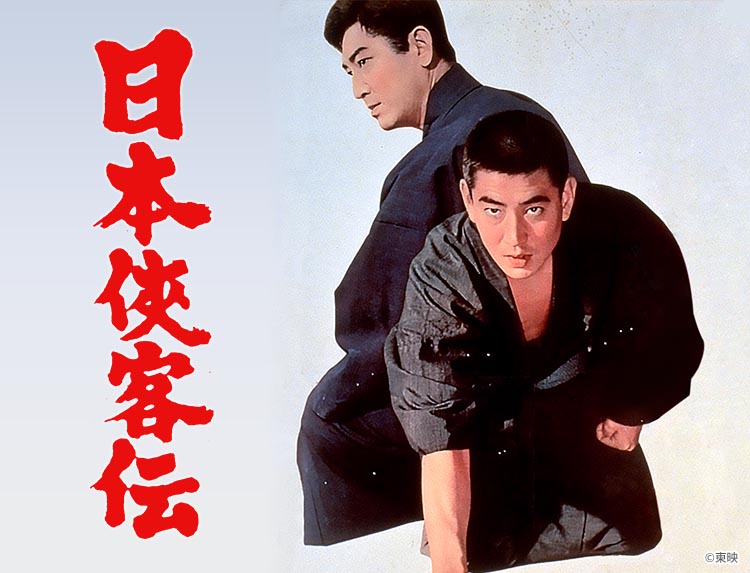
    Image source: © Toei Company / Nihon Kyōkakuden (1964)
    Used for commentary and critical discussion purposes.
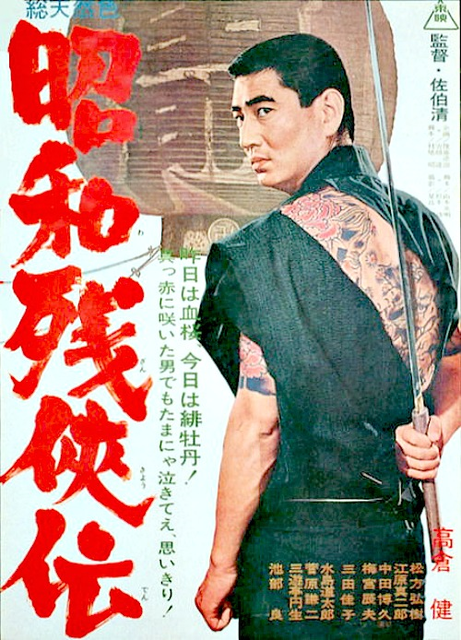
    Image source: © Toei Company / Shōwa Zankyōden (1965)
    Used for commentary and critical discussion purposes.

    One consistent feature of early yakuza cinema is that moral correctness does not guarantee a good outcome.

    Films such as 日本侠客伝, 昭和残侠伝, establish a pattern in which the protagonist upholds honor even when doing so leads to isolation, injury, or death.

    This recurring tragedy is not framed as failure. On the contrary, it confirms the value of the code itself. The films suggest that acting correctly matters more than being rewarded.


    Obligation as structure

    Early yakuza films repeatedly stage conflicts between:

    • giri (social obligation),
    • ninjō (personal feeling),
    • and loyalty to hierarchical relationships.

    These tensions were not unique to yakuza narratives; they appeared across Japanese literature and drama. Yakuza films intensified them by placing characters in rigid systems where compromise was impossible.

    Importantly, these films do not ask whether the system is just. They ask whether a person can maintain integrity inside it.


    Visual and narrative style

    Stylistically, early yakuza films favor clarity and formality.

    • Compositions are stable.
    • Characters are positioned clearly within hierarchies.
    • Dialogue is often explicit about duty and obligation.
    • Silence exists, but it functions as restraint rather than emptiness.

    This visual language reinforces the moral structure of the stories. The world is legible. Rules are known. Tragedy arises not from confusion, but from inevitability.


    Repetition and ritual

    Many early yakuza films repeat similar story patterns, character types, and emotional beats. Rather than diminishing their impact, this repetition serves a ritual function.

    Audiences were not watching to be surprised by outcomes. They were watching to see how the protagonist would uphold the code under pressure.

    This predictability is central to understanding why the genre worked. The films offered emotional stability during a period of rapid social change.


    The limits of the code

    By the late 1960s, however, the distance between cinematic codes and social reality became harder to ignore. Economic growth, urbanization, and shifting labor structures made the idealized yakuza figure feel increasingly abstract.

    This growing tension did not immediately destroy the genre, but it weakened its moral certainty. When later filmmakers dismantled yakuza mythology in the 1970s, they were responding to a code that had already begun to feel out of place.


    Why early yakuza films still matter

    Early Japanese yakuza films are valuable not because they depict historical yakuza accurately, but because they reveal how Japanese cinema once imagined ethical order.

    They present a world in which:

    • rules exist,
    • obligations are binding,
    • and personal sacrifice is meaningful, even when it leads nowhere.

    Understanding this foundation is essential for understanding why later yakuza films feel empty, silent, or bitter. Collapse only has meaning when there was once something solid to collapse from.

  • Japanese Things People Do at the Start of the Year

    A simple guide to New Year habits in Japan

    In Japan, New Year isn’t only one night. It’s a slow transition: the year is closed, the air is reset, and small routines mark the first steps into the next cycle. People do these things with different levels of seriousness. Some do everything, some do only one or two. But the overall rhythm is surprisingly consistent.

    Here are some of the most common things Japanese people do at the start of the year — and what they’re for.


    1) Say “Akemashite omedetō gozaimasu”

    This is the standard New Year greeting: “Happy New Year.” You’ll hear it in family chats, on phone calls, and in the first messages exchanged after midnight or on January 1st.

    It’s not just a phrase. It’s a reset button for relationships: the first greeting of the year is a way to keep social ties warm and alive.


    2) Visit a shrine or temple (Hatsumōde)

    Many people do hatsumōde, the first shrine or temple visit of the year. Some go on January 1st, others go later during the first few days.

    People might pray for health, safety, exams, work, or simply a calm year. They may also draw omikuji (fortunes) and buy omamori (amulets).

    Even if someone isn’t “religious,” hatsumōde still makes sense as a ritual: it gives shape to the beginning.


    3) Eat seasonal New Year food

    New Year in Japan has its own food language.

    • Osechi: special dishes arranged in boxes
    • Ozōni: mochi soup, often very regional
    • Toshikoshi soba: eaten around New Year’s Eve as a “year-crossing” marker

    You don’t need to memorize every symbolic meaning to understand the role these foods play. They’re edible tradition: repetition, continuity, and a sense of “this is the season.”


    4) Send New Year’s cards (Nengajō)

    New Year’s cards, nengajō, are still common. Some people write them by hand; many now use printing services.

    It’s a very Japanese kind of social care: short, formal, seasonal, and widely shared — a way of saying, “I remember you.”


    5) Give otoshidama

    Otoshidama is money given to children in small envelopes. It’s exciting for kids, but it’s also a social ritual: it makes family roles visible, and it marks growth year by year.


    6) Watch or listen to New Year TV and music

    Many households have a “New Year media routine,” whether it’s a famous year-end broadcast, a countdown program, or simply background TV while relaxing with family.

    This matters because New Year is also about atmosphere. Media becomes part of the seasonal mood.


    7) Set goals or make small promises (but quietly)

    Japan doesn’t always do dramatic “new year, new me” declarations. Many people keep it modest: a small intention, a short plan, a simple habit they want to continue.

    The cultural logic is often less about transformation and more about maintenance: staying healthy, staying steady, doing better little by little.


    8) Ease back into normal life

    New Year ends gradually. Decorations come down, routines return, and the season fades. That slow landing is part of what makes Japanese New Year feel different: it’s not a single fireworks moment, but a soft beginning.

  • I Ate Osechi — A Quiet Start to the Japanese New Year

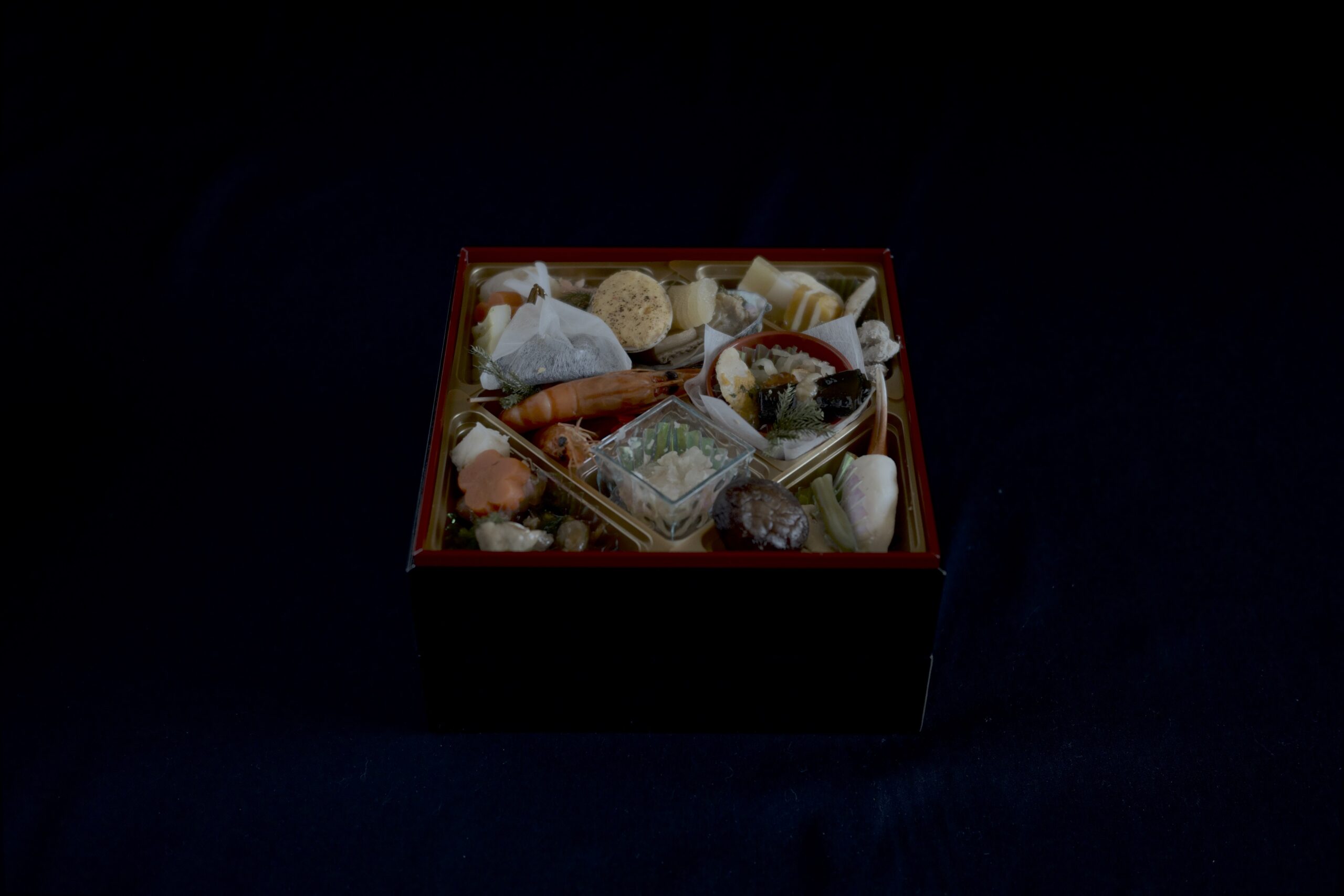
    Osechi
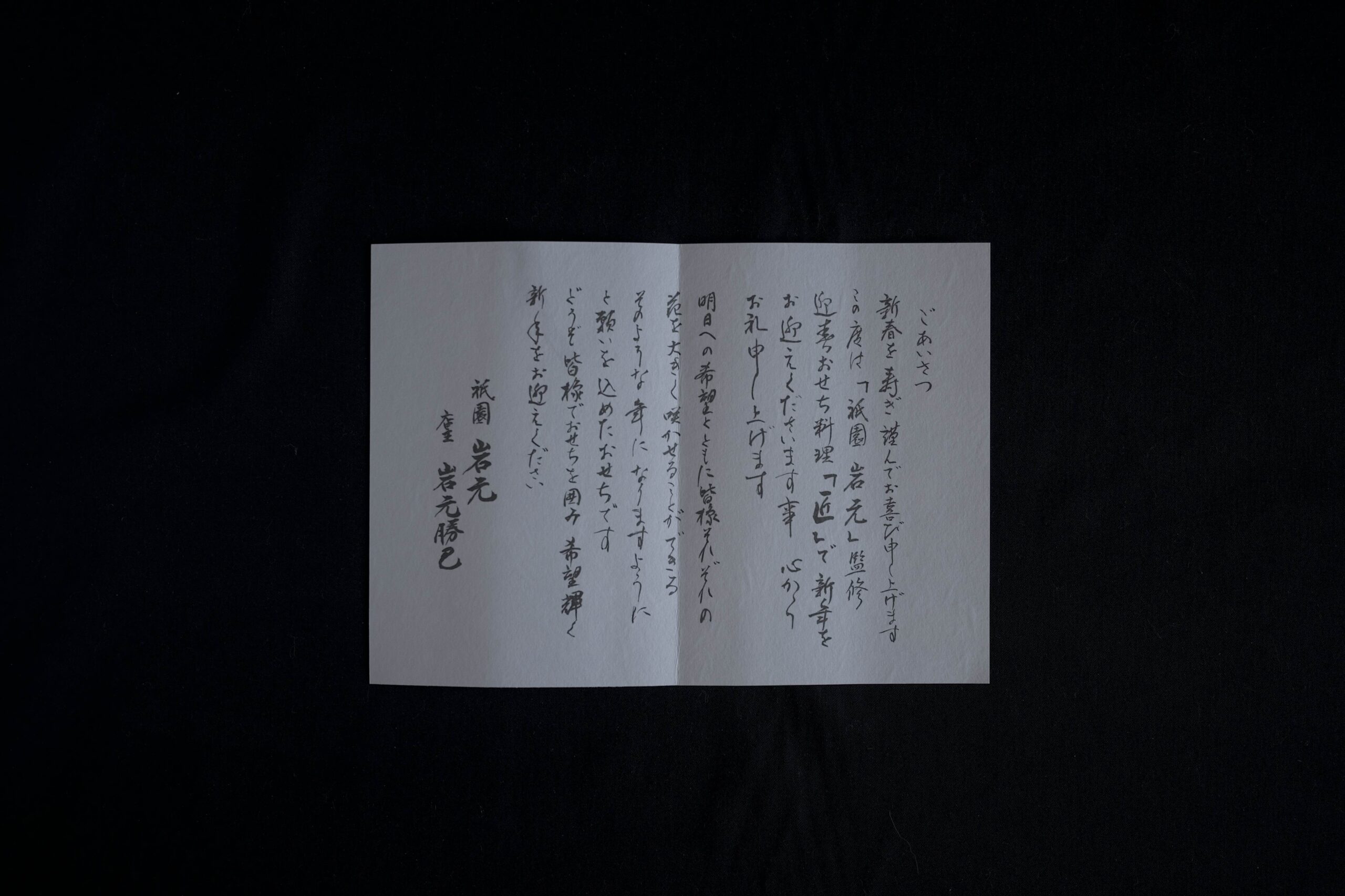
    a New Year’s greeting note

    I had osechi this year.

    Osechi ryōri is the traditional set of dishes eaten during the Japanese New Year, usually packed into layered boxes called jūbako. Even people who don’t cook it themselves often encounter it in some form — homemade, ordered from a shop, or shared with family.

    What always stands out to me about osechi isn’t just the food, but the mood around it. It’s quiet. There’s no rush. The dishes are prepared in advance so that cooking can pause for a few days, and meals become more about sitting, talking, and letting time pass slowly.

    Each item has a meaning — health, longevity, prosperity — but in daily life, those meanings often sit gently in the background. You don’t need to recite them to eat osechi properly. You just eat, knowing that this is how the year begins.

    Some dishes I enjoy more than others. Some I eat mostly because they’re supposed to be there. That mix of personal preference and tradition feels very Japanese to me. Osechi isn’t about perfection; it’s about continuity.

    Eating osechi feels less like celebrating something new and more like acknowledging that another year has quietly arrived.

    In Japanese, there’s a phrase said after a meal: gochisōsama. It doesn’t just mean “thank you for the food,” but gratitude for the time, effort, and care behind it.

    So, after osechi — gochisōsama.

  • Japanese New Year Traditions Explained

    What Happens at Year-End and Why It Matters

    In Japan, the New Year is less a single party night and more a carefully staged transition. The year is “closed,” the space is reset, and the next cycle is welcomed with small actions that carry a larger logic: purification, renewal, and gratitude. Even for people who don’t think of themselves as religious, the season can feel quietly ceremonial, because the customs are woven into family life, public spaces, and the calendar itself.

    This article walks through the main traditions from late December to early January and explains what they do culturally, not just what they are.


    1) Year-end cleaning: Ōsōji (大掃除)

    Many households do ōsōji, a deep cleaning toward the end of December. On the surface it’s practical. Culturally, it functions like a reset: clearing dust, clutter, and “last year’s atmosphere” before the new year begins.

    A helpful way to understand ōsōji is that it treats the home as something with a mood. Cleaning is not only hygiene, it’s preparation.


    2) Ōmisoka (大晦日): closing the year

    Ōmisoka is New Year’s Eve, and it often feels calm rather than loud. Families may eat toshikoshi soba (年越しそば), noodles associated with “crossing over” into the next year. The meal is simple, but it acts like a marker: this is the border between cycles.

    Some people watch traditional year-end TV programs, visit family, or stay home quietly. The vibe is closer to “closing ceremonies” than countdown chaos.


    3) Joya no Kane (除夜の鐘): 108 bells

    At many Buddhist temples, bells are rung on New Year’s Eve in a tradition known as joya no kane. You’ll often hear “108” explained in connection with human desires and attachments. Even if you don’t memorize the doctrine, the sensory effect is unmistakable: slow, heavy sound that turns the night into a ritual.

    This is one reason Japan’s New Year mood can feel reflective. It’s designed to slow you down.


    4) Shōgatsu (正月): the New Year season

    In Japan, New Year is a season (Shōgatsu), not just one day. Many businesses close or operate on limited schedules. Families visit relatives. People eat special foods. And public spaces, especially shrines, become stages for the first actions of the year.


    5) Hatsumōde (初詣): the first shrine visit

    Hatsumōde is the first shrine (or temple) visit of the year. For overseas readers, this is one of the best examples of how Japanese ritual works: participation doesn’t always require strong doctrinal identity. People go to pray for health, safety, luck, or a better year.

    Common hatsumōde elements include:

    • offering a small coin
    • a brief prayer
    • receiving omikuji (fortunes)
    • buying protective amulets (omamori)

    The important point is the feeling: you start the year by placing yourself inside a calmer frame.


    6) Kadomatsu and shimenawa: marking the threshold

    During New Year, you’ll see decorations that mark entrances and boundaries:

    • Kadomatsu (pine/bamboo arrangements) near doorways
    • Shimenawa ropes used to indicate a set-apart, “clean” boundary

    Even without knowing the religious vocabulary, the visual message is clear: the home becomes a place prepared for a new cycle.


    7) Kagami mochi (鏡餅): a quiet symbol of the season

    Kagami mochi is a New Year decoration of stacked mochi, often placed in homes. It’s part symbol, part seasonal object. Later, there is a custom of breaking and eating it (kagami biraki), which turns the decoration into food and ends the New Year period in a tangible way.

    That movement, decoration → shared eating, is very Japanese: symbols are often made edible.


    8) Osechi and ozōni: New Year foods

    New Year foods can be divided into two famous categories:

    Osechi (おせち)

    Osechi is a set of dishes prepared for the New Year, traditionally arranged in special boxes (jubako). Many items are associated with auspicious meanings. Even if you don’t memorize each symbol, the overall message is abundance, care, and a deliberate start.

    Ozōni (お雑煮)

    Ozōni is a mochi soup eaten around New Year. What’s fascinating is how regional it is: broth types, ingredients, and mochi styles vary across Japan. If you want to taste “local identity,” ozōni is one of the cleanest ways to do it.


    9) Otoshidama (お年玉): money for children

    Otoshidama is money given to children in small envelopes. It’s not just a gift. It’s also a ritual of family roles: adults acknowledge growth, children receive a marker of the new year, and the family structure becomes visible in a gentle way.


    10) When does New Year end?

    New Year doesn’t end the morning after January 1st. Decorations often remain for part of early January, and the season gradually fades as normal schedules return. The feeling is not “done,” but “settled.”


    A simple way to summarize the cultural logic

    If you want one sentence to carry the whole season:

    Japan’s year-end and New Year customs treat the calendar as something you cross with intention: you clean, you mark boundaries, you slow down, you visit, you eat symbolic foods, and you begin again.