Japanese urban legends are not “ancient myths in modern clothes.” They are modern folk stories that travel fast, feel plausible, and often come with a familiar hook: “This happened to a friend of a friend.”
In Japan, these stories are commonly called 都市伝説 (toshi densetsu), literally “city legends.” Dictionaries describe them as rumors that spread spontaneously in many forms, usually false, yet popularly believed and often colored by humor or fear.[2]
What makes an urban legend “urban” in Japan?
Folklorists often describe urban legends as bizarre but believable tales set in everyday life, framed as something that “really happened” nearby. Japan’s modern wave is tightly tied to the media environment that carried it.
A researcher interviewed by Nippon.com describes the late 1970s slit-mouthed woman as a key spark for Japan’s modern urban legend boom, and explains how changes in children’s routines and communication helped the rumor spread nationwide.[3] The same article notes how the term “urban legend” entered Japan through a late-1980s translation of Jan Harold Brunvand’s work and the way the genre became a legitimate object of study.[1]
How they spread: from schoolyards to the internet
Urban legends spread through the routes where anxiety travels best: school, commuting, and the quiet gaps in adult supervision.
- Late 1970s: Stories spread through children, cram schools, telephones, and then newspapers and TV.
- Early 1990s: A boom period, followed by a cooling-off mid-1990s.
- 2000s onward: A second wave driven by blogs, forums, and copy-paste culture, where stories either stay identical or mutate drastically.
That “copyable fear” is why modern Japanese urban legends often feel like they come with a user manual: rules, choices, consequences.
Five iconic Japanese urban legends (and what they’re really about)
1) Kuchisake-onna (The Slit-Mouthed Woman)
A masked woman stops children and asks, “Am I pretty?” Answer wrong and the story turns violent. Nippon.com reports one origin theory placing early rumors around late 1978 in Gifu Prefecture, then describes how variations multiplied and the story spread nationwide within months.
What it reflects: night streets, children commuting, and “strangers you don’t recognize” becoming newly visible in everyday life.[3]
2) Toire no Hanako-san (Hanako of the Toilet)
A school bathroom ghost you can “summon” with a ritual: third floor, third stall, three knocks. Accounts vary on her origin, but modern tellings center on school toilets and the dare-like way kids pass the story along.A Japanese folklore scholar quoted by Atlas Obscura describes bathrooms as liminal spaces, a “portal” feeling that makes them perfect for horror.
What it reflects: school as a closed world, and bathrooms as the place where you are most alone, most vulnerable, and therefore most imaginative.[4]
3) Aka Manto (Red Cape, Red Paper/Blue Paper)
A spirit appears in a toilet stall and offers a choice: red or blue. Either answer leads to a bad end in many versions, and the “correct” move is to refuse the game entirely.[5]
What it reflects: the trap of forced choices, and the fear of being cornered when you can’t leave.
4) Teke Teke (The Legless Spirit)
A vengeful spirit, often described as a schoolgirl cut in half by a train, drags herself with a “teke-teke” scraping sound.The train station setting makes it feel chillingly normal: a place you pass through without thinking, until the story stains it.
What it reflects: commuting infrastructure as modern fate, and the way accidents become moralized into “don’t wander alone at night.”
5) Kisaragi Station (The Internet-Age Otherworld Station)
A woman posts online in 2004: her usual commute has gone wrong, and she’s arrived at an unstaffed station she’s never heard of. The story grows through replies into a collaborative horror thread. Nippon.com describes it as a legend that developed over more than a decade, moving from 2channel to Twitter.
What it reflects: the fear of being “off the map” in a hyper-mapped society, plus the internet’s ability to turn a single post into a shared nightmare.[3][7]
Why these stories hit so hard (even when you don’t “believe” them)
A pattern shows up again and again:
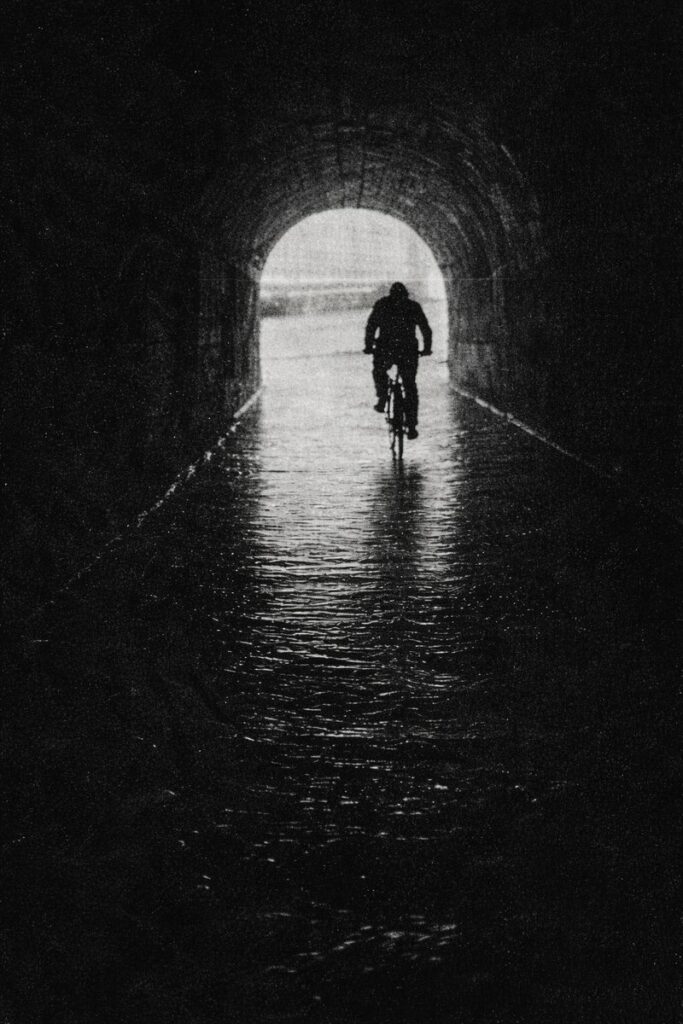
- Liminal places: toilets, tunnels, stations, stairwells. Spaces that feel like thresholds.
- Rule-based dread: pick red or blue, knock three times, don’t look back.
- Everyday plausibility: school corridors, train platforms, neighborhood streets.
- A social function: warning, bonding, testing courage, or giving form to vague anxieties.
In short, Japanese urban legends are less about “proof” and more about pressure points in ordinary life.
Sources
[1] Nippon.com, “Japanese Urban Legends from the ‘Slit-Mouthed Woman’ to ‘Kisaragi Station’.
[2] Tanoshii Japanese Dictionary, entry for toshidensetsu.
[3] Nippon.com (spread mechanics, 1978–1979 rumor spread, 2000s internet wave, Kisaragi Station development).
[4] Atlas Obscura, “Get to Know Your Japanese Bathroom Ghosts” (Hanako-san, Aka Manto, liminal space quote).
[5] Aka Manto overview (general legend description).
[6] Teke Teke overview (general legend description).
[7] Kisaragi Station overview (2004 2channel origin).