Reading an Edo “Visionary” Through His Art and Human Connections
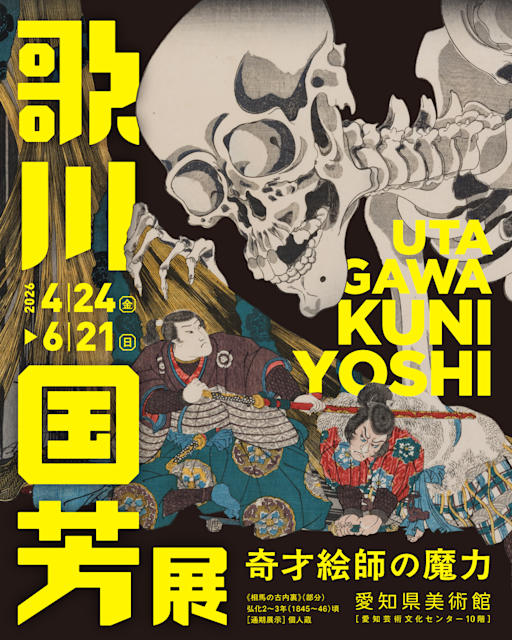
Opening on April 24, 2026 at the Aichi Prefectural Museum of Art, Utagawa Kuniyoshi Exhibition: The Power of a Brilliant Eccentric is a large-scale exhibition featuring approximately 400 works, offering a rare chance to experience the full range of Kuniyoshi’s art.
The exhibition is divided into Part I and Part II, with a rotation of works during the run, which means the experience changes depending on when you visit.
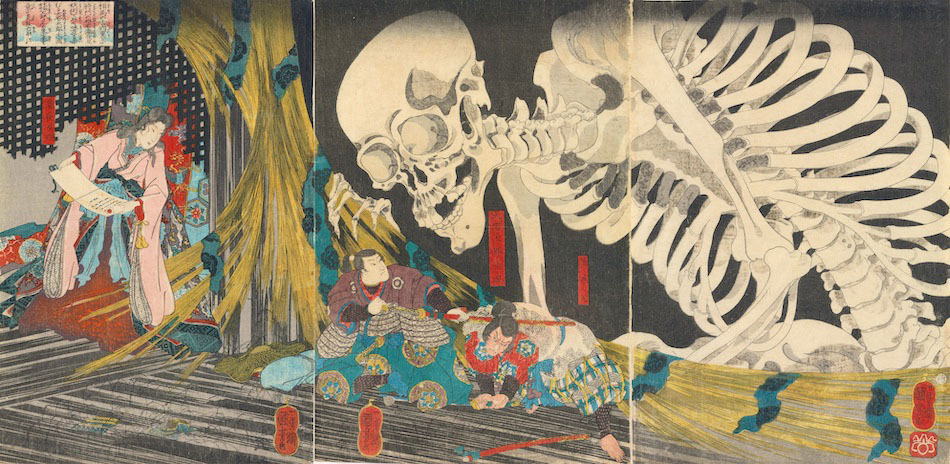
For many people, Kuniyoshi is immediately associated with striking and unforgettable images, especially works like Takiyasha the Witch and the Skeleton Specter (Sōma no Furudairi), with its famous giant skeleton. But his real fascination goes far beyond visual shock.
What makes Kuniyoshi truly compelling is this:
he could move freely between warrior prints, comic and satirical images, beauties, landscapes, children’s pictures, and actor prints, and still surprise viewers each time from a completely different angle. That flexibility is at the heart of his genius.
Why Kuniyoshi Still Feels Modern
1) He Combined Power and Playfulness
Kuniyoshi is often remembered as a master of dramatic warrior prints, and rightly so. His heroes are full of motion, tension, and theatrical energy.
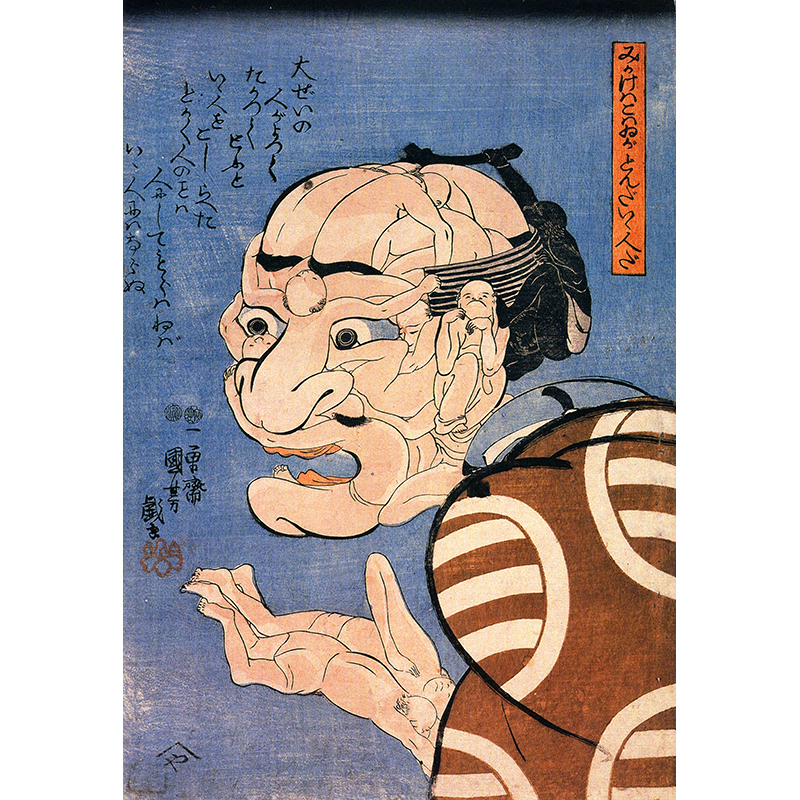
But he was also a brilliant humorist.
His playful images, including his well-known cat-themed works, reveal an artist who could be witty without losing technical precision. Even when he is joking, the composition is sharp, the linework is controlled, and the design is highly intentional.
That balance, serious craftsmanship with playful imagination, is one reason Kuniyoshi still feels fresh today. He does not simply “illustrate” a subject. He performs with it.
2) He Built Images Like a Filmmaker
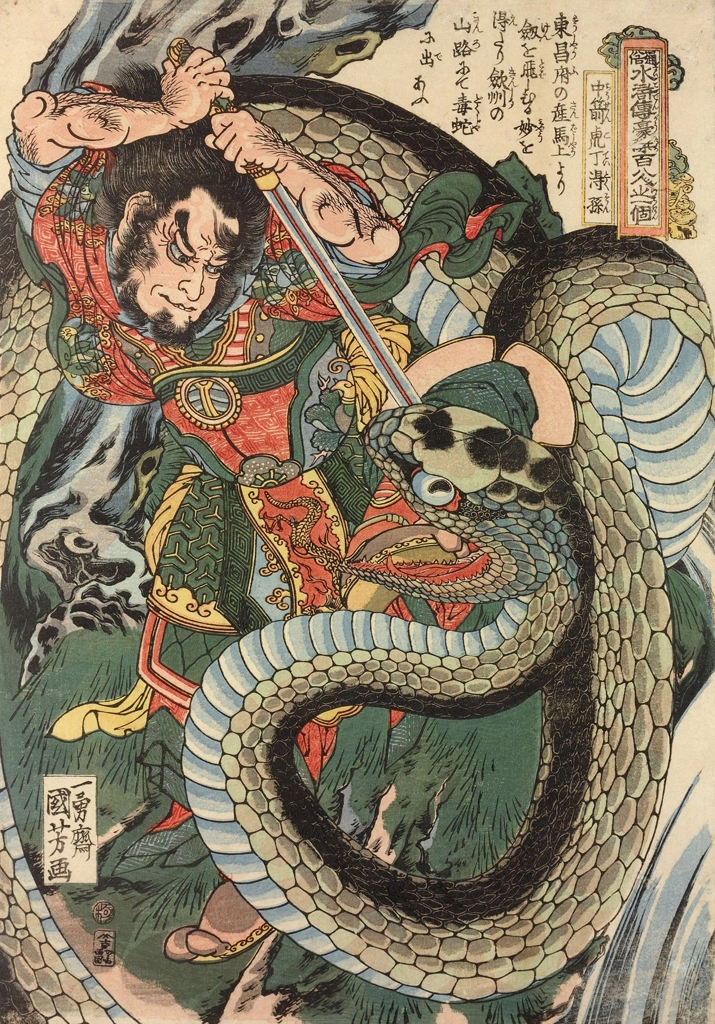
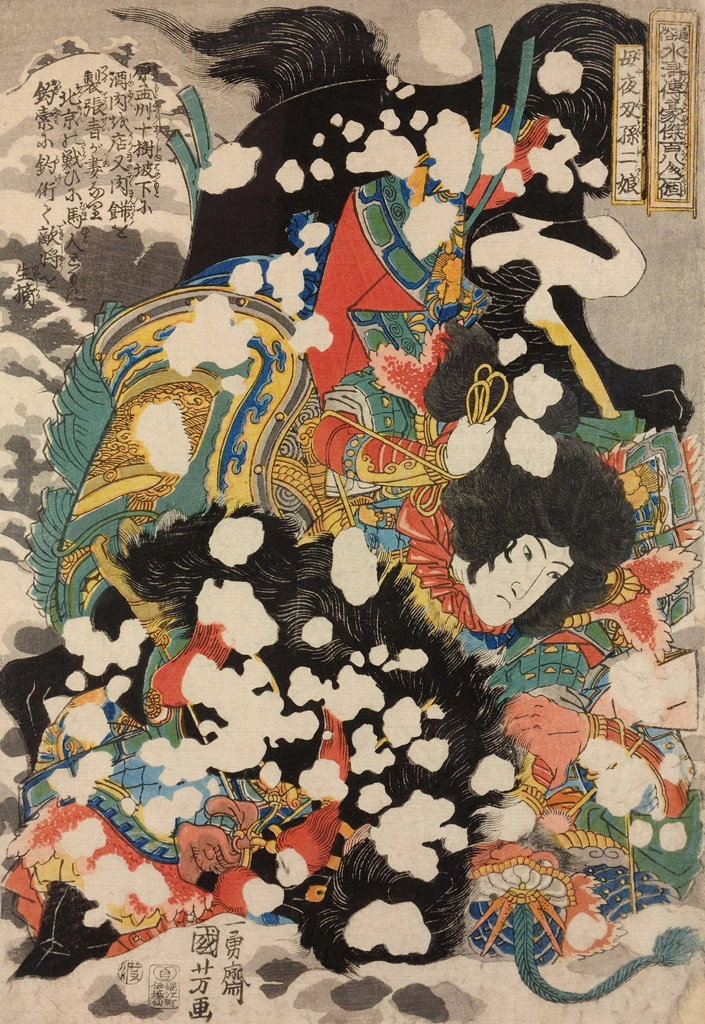
Kuniyoshi’s warrior prints and supernatural scenes are not memorable only because they are loud or strange. They work because he knew how to compress narrative into a single frame.
A Kuniyoshi print often feels like a scene pulled from the middle of a film:
something has just happened, and something else is about to happen.
His compositions create momentum. Facial expressions, gestures, diagonals, and layered action all work together to imply story, emotion, and tension beyond the frame.
That is why a work like Sōma no Furudairi remains iconic. The giant skeleton is visually overwhelming, yes, but the image endures because of its dramatic staging and narrative force.
3) He Was Not Just a “Genius,” He Was Persistent
Kuniyoshi’s career was not a smooth ascent from the beginning. He experienced difficult years before achieving major success.
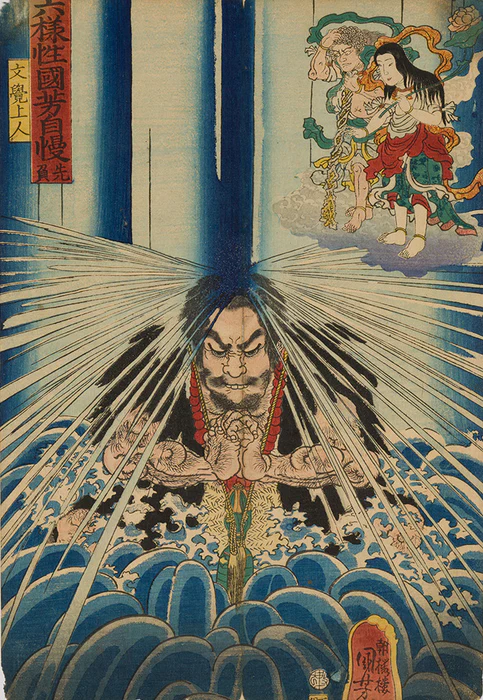
His breakthrough came in his thirties, especially with the Suikoden hero prints (Tsūzoku Suikoden Gōketsu Hyakuhachinin no Hitori series), which helped establish his reputation.
This matters because Kuniyoshi’s appeal is not only the sparkle of talent. It is also the resilience of an artist who kept experimenting, refining, and pushing until his style reached the public in a powerful way.
In other words, he was both visionary and craftsman.
Kuniyoshi’s Human Network
Growing, Competing, and Expanding Within the Utagawa School
To understand Kuniyoshi properly, it helps to place him within the larger world of the Utagawa school, the dominant ukiyo-e network of the late Edo period.
Kuniyoshi was not working in isolation. He belonged to a huge artistic and commercial ecosystem shaped by publishers, audiences, market trends, and fellow artists.
Among his contemporaries, Utagawa Kunisada, Utagawa Kuniyoshi, and Utagawa Hiroshige are often grouped as three major figures of the later Utagawa tradition, each excelling in different areas:
- Kunisada: actor prints and bijin-ga (pictures of beauties), with enormous popular appeal
- Kuniyoshi: warrior prints, satire, imaginative and unconventional compositions
- Hiroshige: landscape prints that transformed familiar places into lyrical visual poetry
Rather than imagining them as a friendly club, it may be more accurate to think of them as top players in the same league. They worked in the same era, within overlapping systems, and their successes likely sharpened each other.
Seen this way, Kuniyoshi becomes even more interesting. His originality did not emerge outside the mainstream. It emerged inside a highly competitive visual culture.
Related reading:Utagawa Kunisada (歌川国貞, 1786–1865)
Related reading:Utagawa Hiroshige (歌川広重, 1797–1858)
3 Things to Keep in Mind Before Visiting the Exhibition
1) Look Beyond the Warrior Prints
Kuniyoshi’s warrior images are essential, but do not stop there. His comic works, landscapes, and genre images reveal how inventive he really was across formats and audiences.
2) Look for “Time” Inside the Image
Ask yourself: what just happened, and what is about to happen?
Kuniyoshi’s best works often feel like suspended drama.
3) Compare Him to His Contemporaries
Thinking about Kuniyoshi alongside artists like Kunisada and Hiroshige helps his individuality come into sharper focus.
Leave a Reply